In today’s connected world, businesses are prime targets for cyber attacks and unintentional missteps can result in critical exposure of consumers’ sensitive personal information.
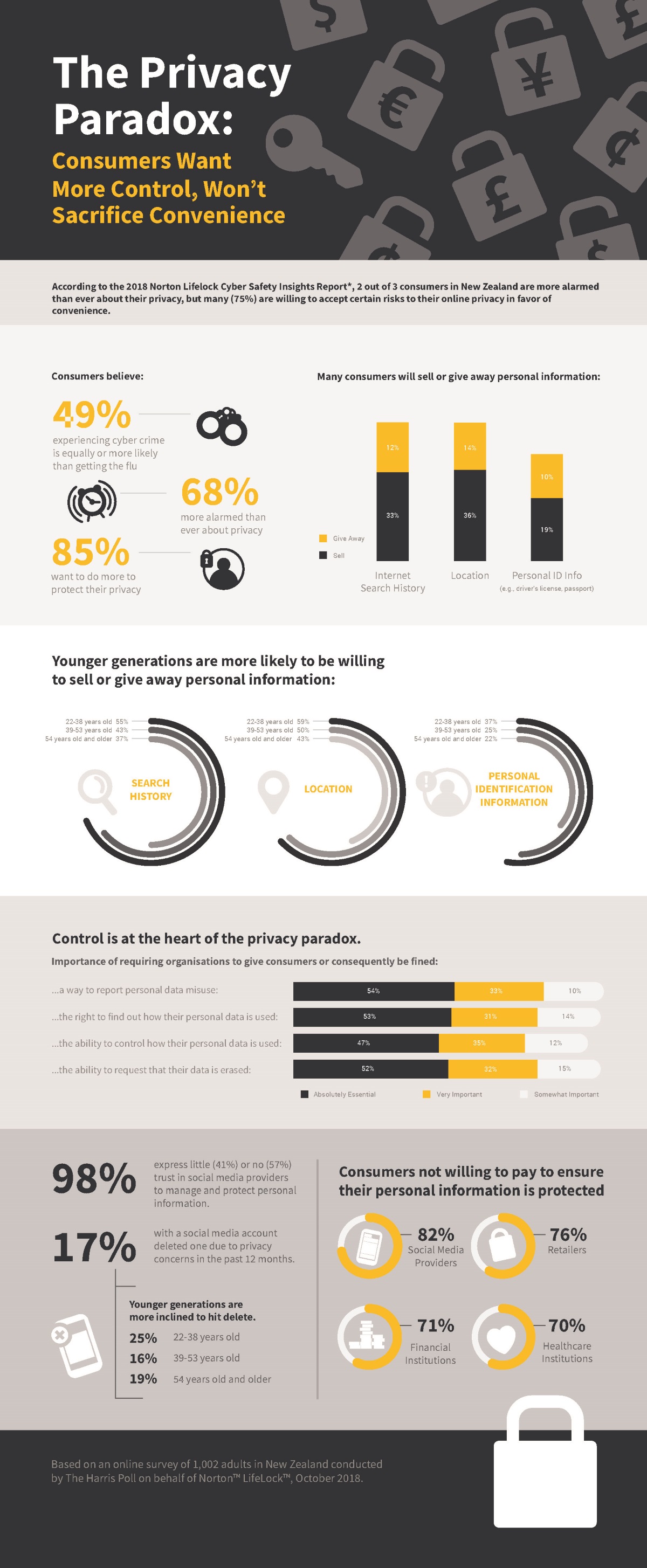
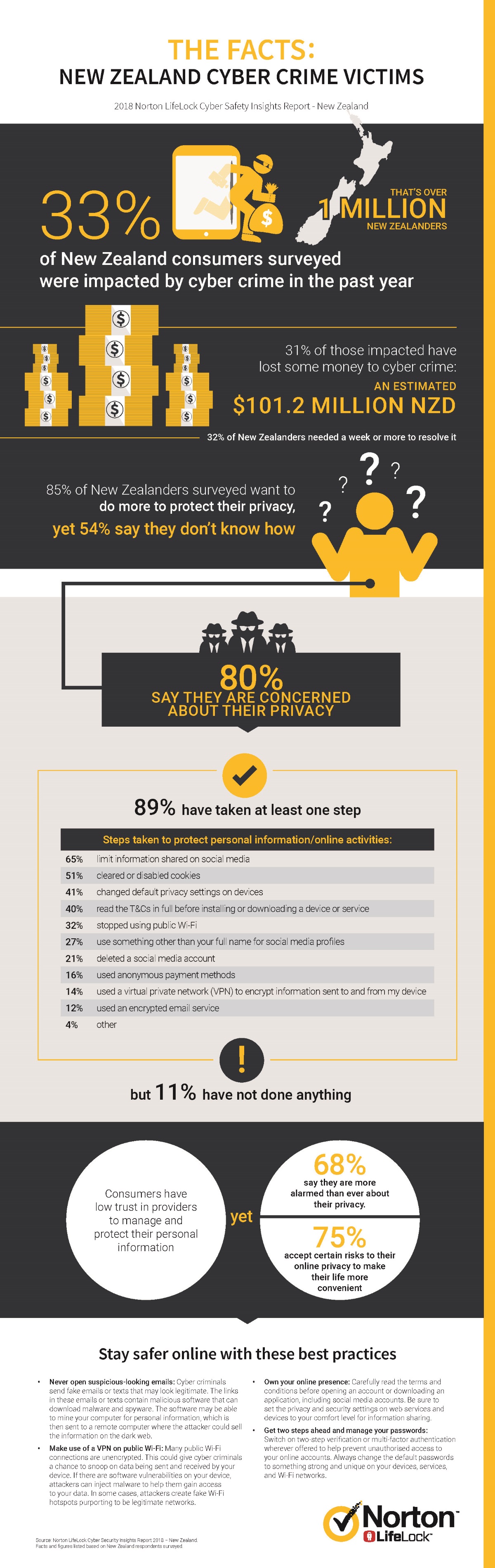
According to the 2018 Norton LifeLock Cyber Safety Insights Report, from Norton LifeLock, a Symantec company, based on an online survey conducted by The Harris Poll of over 1,000 adults, just over two out of three New Zealanders (68 percent) are more alarmed than ever about their privacy. However, the majority accept certain risks to their online privacy in exchange for convenience (75 percent) and many are willing to sell or give away certain personal information, such as their location (50 percent) and internet search history (45 percent), to companies.
In the age of information sharing, control is now at the heart of society’s privacy paradox – from who should have it to what the consequences should be when it is mishandled. A large majority (97 percent) believe it is important to require that companies give customers control of how their personal data is used. Nearly half (47 percent) believe it is absolutely essential. Adequate recourse is also expected when personal information is not protected, with 54 percent of people believing it is absolutely essential that companies be required to provide a way for consumers to report misuse of their personal data, or consequently be fined.
“Our cyber safety is inherently tied to trust,” said Mark Shaw, Technology Strategist, Symantec Asia Pacific. “Most people are aware their data is being captured from the websites they visit, the social media they share and the apps they use. And they trust their information is being properly secured. However, these same people are often unaware how and why data is captured and what companies do with it. The sheer amount of personal information being collected about us shows no signs of slowing and there is greater value placed on it than ever before.”
Over the last year alone, one in three New Zealanders (33 percent) were the victims of cyber crime, and 54 percent believe it’s likely they will experience cyber crime in the next year. As a result of cyber crime in the past year, losses totalled an estimated $101.2 million and 5.8 million hours lost dealing with the aftermath, with nearly one out of three (32 percent) spending a week or longer dealing with the problem.
Additional New Zealand findings include:
Shaw adds, “Although consumers want greater control over their privacy and action taken against those that mishandle personal data, they want this control to come without hassle or cost, so they are willing to take risks in favour of convenience. Convenience continues to reign supreme when it comes to sharing personal data.”
There are several best practices consumers can follow to help safeguard against online threats: