
Fitbit, now a Google company, is a pioneer in health tracking technology. It started with step tracking devices, hiding the technology complexity behind its easy-to-use interfaces and introducing gamification with weekly leaderboards and friends lists.
This evolved to a more complex health ecosystem with stress management, general health tracking and wellness systems in place.
The number of devices and platforms covering this space is incredible, but Fitbit is still a synonym with tracking devices.
Enters the Fitbit Charge 5, its most advanced tracker to date. It comes with a larger new 1.04” AMOLED colour display that is much brighter than any previous model, protected by Corning Gorilla 3 glass. The Fitbit Charge 5 supports an always-on display, which can be active for daily usage or for workout use only.
You interact with the Fitbit Charge 5 using on-screen gestures, swiping left/right and up/down to select the features you want to use. It is very responsive and simple to use.
The Fitbit Charge 5 comes with a built-in smart GPS used for activity tracking. It is smart because you can set its mode to automatic, phone or built-in. In automatic mode the Fitbit Charge 5 will try using your connected phone’s GPS during workouts thus saving battery. If you don’t have your phone on you the tracker will fall back to using its built-in GPS. You can switch it to use always use the phone or always the built-in GPS.
Logged workouts are synchronised to the Fitbit platform via its phone app, which also shows you important information about your exercises, including real-time pace, distance and heart rate zones throughout your workout.
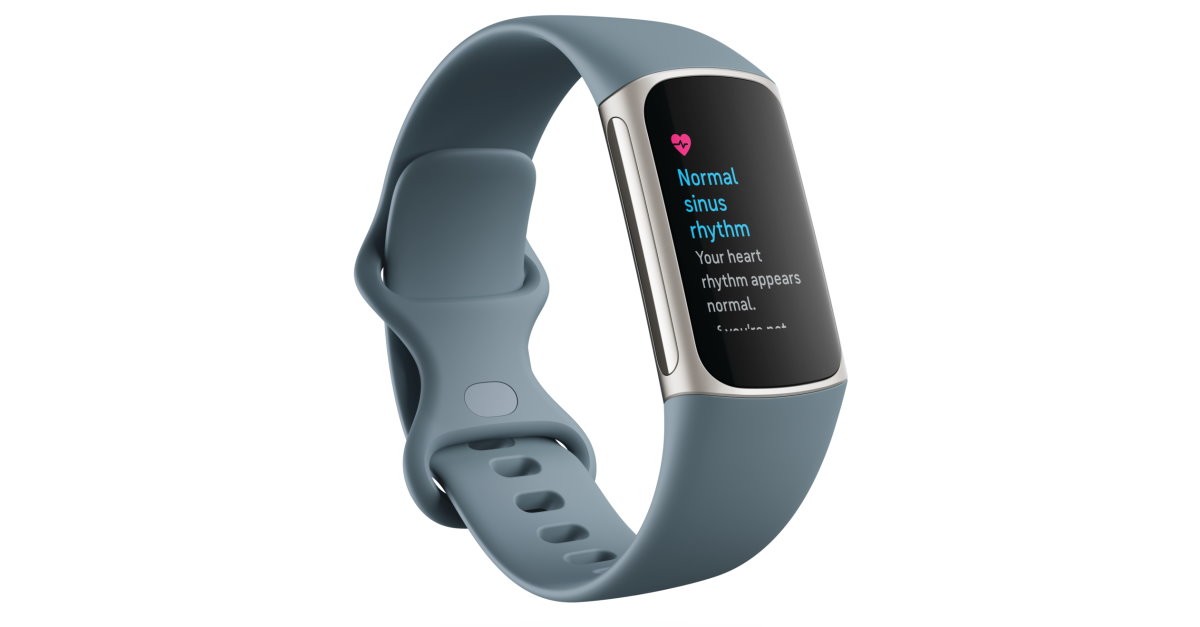
Fitbit Charge 5 brings a lot of health tracking features. Let’s start with the ECG function, which allows you to record 30-second ECGs and receive an immediate assessment for atrial fibrillation, with the option of sharing results with your doctor. In my case results were pretty much the same when compared to other platforms I use – and I have had previous results looked at by my GP before so I am confident the tracking here is accurate.
It also tracks your heart rate 24/7 and gives you trend information on heart rate variability over the last 30 days, as well as breathing rate. This data is collected at one reading per second during exercises, or every five seconds when not doing workouts.
Another health tracking feature is Oxygen saturation (SpO2) monitoring. I found it a little different from other trackers as you can’t start an on-demand reading. Instead, the SpO2 app monitors Oxygen levels during your sleep and creates a report based on that data. Again, in this case, I’ve seen results that were similar to data collected by other platforms over the same period.
Talking about sleep, the Fitbit Charge 5 has a Skin Temperature Tracking feature that will monitor variations of skin temperature each night, which can be used as an indicator for fever or ovulation.
For those worried about stress and how it impacts your life, the Electrodermal Activity (EDA) Scan will help you keep an eye on how your body responds to stressful events on your life. It will record stress conditions over a two-minute scan and synchronise this data via the app so that with time you can have a good picture of how exercise, sleep and other mindfulness practices can help your body cope with stress.
With all this health data the platform can give you lots more information about your body. For example, it can give you a Daily Readiness Score that tells you if your body is ready for more exercise or if you should give it a rest and recover from previous activities. It also shows your current Cardio Fitness Level based on VO2 max, giving you data points that help you improve your workouts.
You can configure your Fitbit Charge 5 to show notifications received from your phone and scroll through a history of these notifications too.
Another feature to note is Fitbit Pay – with ASB currently being the only local bank supporting this platform. I did manage to load my Wise card to it though, which seems to have worldwide support. Once you add your card to the Fitbit Pay wallet you can use your Fitbit Charge 5 very much like your phone when paying on contactless terminals, simply waving your wrist close to the EFTPOS terminal for those payments. You do need to enter a PIN before the Fitbit Charge 5 switch to payment mode, so it’s secure as it can be.
Even with all these functions, the Fitbit Charge 5 still gives you up to seven-day battery life. I think the best I got out of the review model I have here was five days, but I played with having the always-on screen and built-in GPS – options that you can turn off for longer battery life.
The silicone-based band is comfortable and fits a variety of wrist sizes – you even get a spare size in the box. It has a quick-release feature so you can easily swap it for other stylish bands that come in a variety of colours and materials.
These are all basic features and Fitbit offers a Premium Membership that use all this data to expand on recommended workouts, challenges and mindfulness sessions. The Premium Membership also includes more detailed health insights specific to your body and stress levels. It even gives you guided audio workouts. New users get a six-month Premium Membership preview with the new Fitbit Charge 5.


