
I started using health trackers early on, when the devices showed up in the market. I always had a problem with the design that screamed “gadget”. I then found a series of watches that blended the classic dive watch design with the health sensors, the digital experience and long battery life I wanted.
Since then, I had a series of the classic smartwatches for review. What I mean by classic is that they usually have a digital screen, are very good at tracking health and exercises, have lots of smarts and have some bad battery life.
The new OPPO Watch S sits somewhere between those two extremes. It’s a smartwatch with a sleek design, great at tracking what I want, and have a good battery life.
So, what does it have?
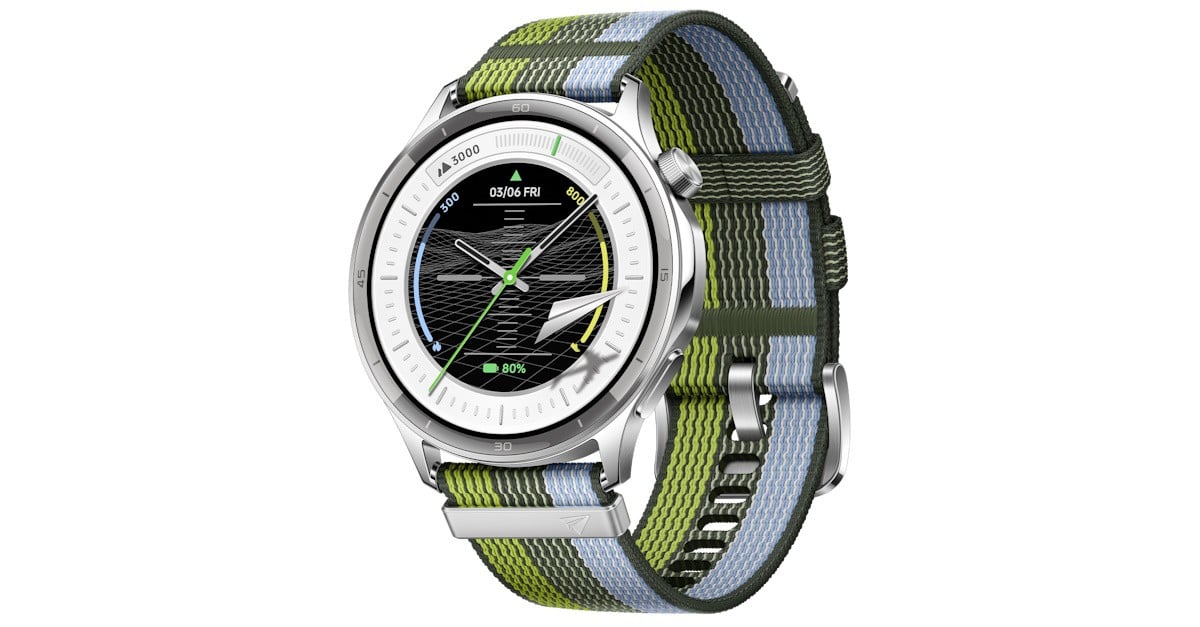
To start with its design is amazing. OPPO managed to get a full 1.46” AMOLED display (464x464 pixels) inside a watch that measures 44.98mm and only 8.9mm height. This little wonder weighs only 35g, 83g if you use it with the woven strap.
The display is bright and the touchscreen display is responsive, although the specs just specific glass as the cover. On this display you can see the watch face, menu shortcuts to different features and access to your vitals.
From the app you can manage some of the watch settings, and select new watch faces to try. I was happy with the options available and managed to find something I liked, from over 50 options. Most of those also allow you to change the complications, to show some the indicators you value most.
The crown on the top left of the stainless stell case is used to go back home, and the long press can be customised for quick access to your favourite feature. You can also use it to scroll through menus, up and down.
On the bottom right of the body there is a sensor, used as a terminal when running ECG or the Wellness Overview.
The OPPO Watch S packs a lot in that small space: accelerometer, gyroscope, geomagnetic, air pressure, optical heart rate, optical blood oxygen, ECG, wrist temperature and ambient light sensors.
I personally like the sleep tracking, with wrist temperature variance detection and the 60s Wellness check, which quickly collects all this data and presents as a simple to understand dashboard for you. You also get an always on Mind and Body tracking, giving you control over your stress and letting you know when you need to slow down your day. Bear in mind that some of these functions will need a few days to get things right. For example, the skin temperature collects data for five days, creating a baseline, before you can view daily results.
The ECG and SpO2 reading are quick, done in 30 seconds, with instant results. You can see sinus rhythm, atrial fibrillation status on the watch, or the app and you can share these with your doctor as a PDF file. But it doesn't seem to have a notification in case of any rhythm problems detected outside the tests.
You can record a variety of exercises including walk, run, cycling and other sports such as tennis, swimming, mountain climbing. These records are used, with the other sensors, to give you indicators and guidance, like cardiopulmonary capacity, recovery time, heart rate recovery and track running.
It also has built-in support for location, including GPS, Galileo, Glonass and QZSS. This means you can exercise and track your location even without a phone on you.
The OPPO Watch S connects to your phone through Bluetooth. It can be configured to show you notifications for apps you select but doesn’t have a reply function.
You can control your phone’s music player from your wrist, and it works well with apps like Spotify and others using the standard music interface (including iHeart, for example.
Other apps of interest are the Barometer, Weather (which gives you a summary first thing in the morning) and Compass.
There’s no app store for the OPPO Watch S. In fact, it runs OPPO’s own ColosOS Watch 7.1, which is not part of the Android Wear platform.
There is a NFC chip on this watch, but it can only be used for cloning access cards, not for mobile payments, so I didn’t see much use of this function.
The diminutive battery (330mAh) can last up to ten days with minimal use, and the specs promise four days with always-on-display. In reality, I got about six days between charges. What I found out is that a quick charge while in the shower works well and will give you enough for a few more days.
The charger is a USB cable with a magnetic dock that will ensure your watch is always in the right position and secured while charging.
The specs page says it has an IP68 rating and water resistance up to 5ATM, meaning you can have the occasional splashes and pool swimming. The documentation mentions that you shouldn't take showers with the watch or practice dive.
Sure, the OPPO Watch S may not have the variety of apps other watches have, but that’s not what I was looking for. My needs of health tracking and moderate exercise were fully covered with this watch. The fact it’s three times lighter than my previous watch makes it more comfortable to wear at any time. And the always-on display option makes it a stylish addition to your day. At $329, it seems like a smart watch.


