Geekzone: technology news, blogs, forums
Guest
Welcome Guest.
You haven't logged in yet. If you don't have an account you can register now.
Filter this topic showing only the reply marked as answer View this topic in a long page with up to 500 replies per page Create new topic
1 | ... | 106 | 107 | 108 | 109 | 110 | 111 | 112 | 113 | 114 | 115 | 116 | ... | 150
acsylaa
86 posts

Master Geek
+1 received by user: 66

Just Internet

  #3432044 8-Nov-2025 08:16
Send private message quote this post

chimera:


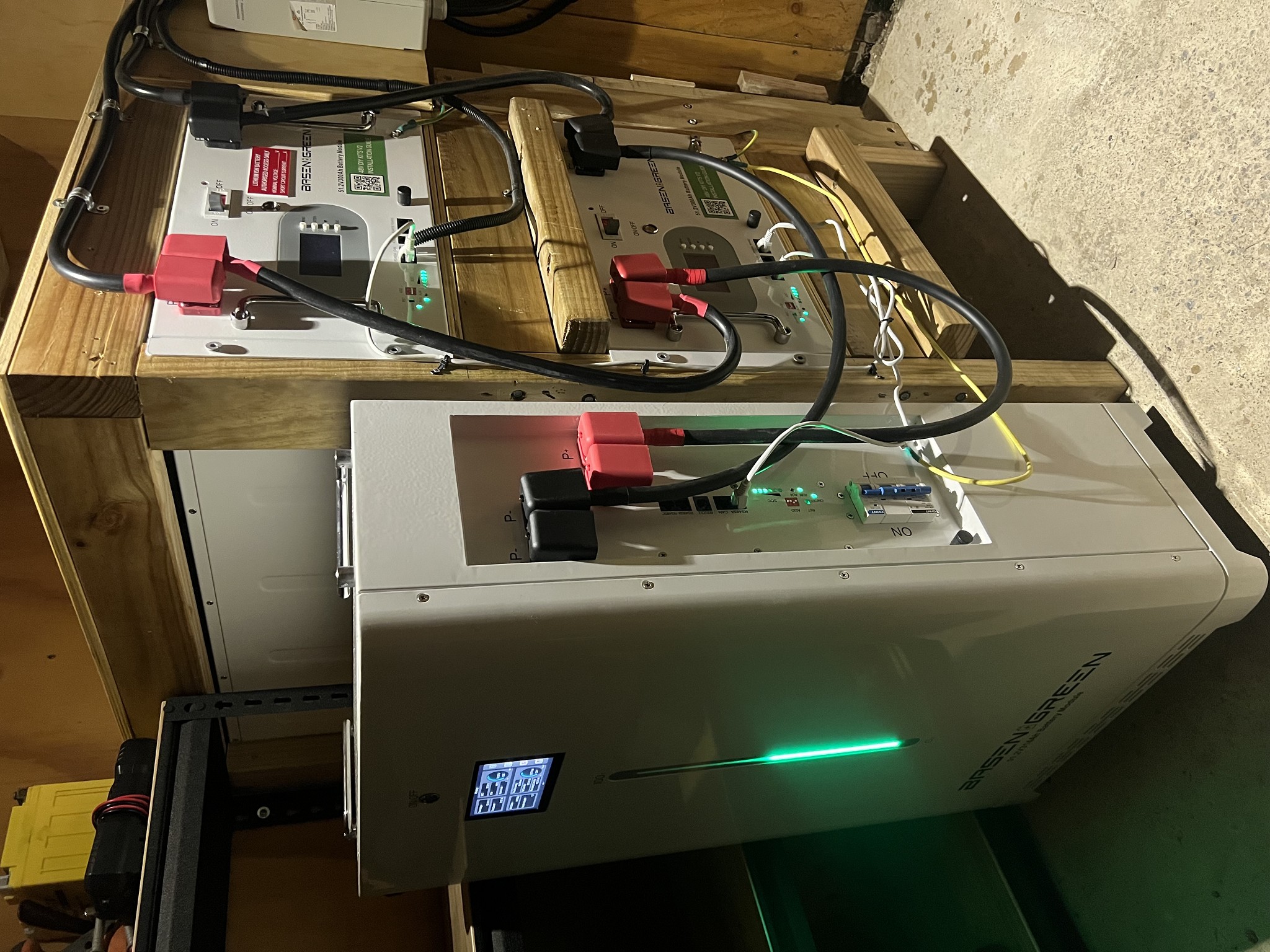
46.3kWh of LiFePO4 battery! 


I Need me some more battery! What were those worth? were they the DIY Kits?


chimera
563 posts

Ultimate Geek
+1 received by user: 199

ID Verified

  #3432084 8-Nov-2025 10:27
Send private message quote this post

acsylaa:


chimera:


46.3kWh of LiFePO4 battery! 


I Need me some more battery! What were those worth? were they the DIY Kits?


The 16kWh wall units are better than the rack mount IMO, much nicer with LCD touchscreen. Just updated the firmware on it screen is really laid out nicely


Basengreen are excellent quality units, they have a much larger presense in USA and Europe so an internationally adopted brand. 


Anyways, see here if interested https://www.geekzone.co.nz/forums.asp?forumid=77&topicid=323193


Ewein
6 posts

Wannabe Geek
+1 received by user: 1


  #3432216 8-Nov-2025 17:50
Send private message quote this post

Regarding solar batteries, not so sure if they are worth it yet for the average grid-tied user.


Scenario:


anytime rate: 29.5C/kwh inc. gst


buy back rate: 17C/kwh


Saving when power used from battery: 12.5C/kwh


Cheapest 15kwh battery I could find online in NZ (quality/warranty aside) $3400 from tradedepot.


Assuming the battery is used between 10% and 90% SOC and fully cycled each day, gives me
12kwh x 12.5C x 365days = $547.50 saving per year,
which means it takes just over 6 years for the battery to pay for itself. And that seems to be the best scenario, our
household wouldn’t even fully cycle the battery every day, especially in summer.


Thoughts?


chimera
563 posts

Ultimate Geek
+1 received by user: 199

ID Verified

  #3432220 8-Nov-2025 17:57
Send private message quote this post

Ewein:


Regarding solar batteries, not so sure if they are worth it yet for the average grid-tied user.


Scenario:


anytime rate: 29.5C/kwh inc. gst


buy back rate: 17C/kwh


Saving when power used from battery: 12.5C/kwh


Cheapest 15kwh battery I could find online in NZ (quality/warranty aside) $3400 from tradedepot.


Assuming the battery is used between 10% and 90% SOC and fully cycled each day, gives me
12kwh x 12.5C x 365days = $547.50 saving per year,
which means it takes just over 6 years for the battery to pay for itself. And that seems to be the best scenario, our
household wouldn’t even fully cycle the battery every day, especially in summer.


Thoughts?


see my ROI post on the previous page here 


Ewein
6 posts

Wannabe Geek
+1 received by user: 1


  #3432232 8-Nov-2025 18:36
Send private message quote this post

chimera:


see my ROI post on the previous page here 


Ah, ok thanks. Sorry, your post somehow escaped me.


Glad my thinking and calculation aren’t too far off.


I was just a bit surprised you can’t get below a 5 year payback.


chimera
563 posts

Ultimate Geek
+1 received by user: 199

ID Verified

  #3432255 8-Nov-2025 23:26
Send private message quote this post

Ewein:


chimera:


see my ROI post on the previous page here 


Ah, ok thanks. Sorry, your post somehow escaped me.


Glad my thinking and calculation aren’t too far off.


I was just a bit surprised you can’t get below a 5 year payback.


You probably can if I cut you a deal on multiple batteries lol 😂 


fastbike
458 posts

Ultimate Geek
+1 received by user: 336


  #3432324 9-Nov-2025 09:12
Send private message quote this post

chimera:


...


               "How many amps does the Inverter support?" (I've seen hybrid inverters supporting a maximum of 30A charge/discharge. This is an absolute waste of time (48V x 30A = 1.4kW not enough to even boil a jug) It will take you forever to charge a battery at amps this low from the grid or even from your PV. Consider what you may add in the future, aim for at least 120A charge/discharge or preferably 200A charge/discharge)


               "How much are the batteries per kWh?" (Often I read about people buying solar systems that they rave about until they go to add in a battery - many top-branded manufacturers tie you in to buying their proprietary battery what is often at a ridiculous cost. Personally, DEYE, GoodWe, SoFar and similar are good brand inverters as they don't tie you into their product)


                "What batteries [and protocols] does the inverter support?" (Similar to the last point, some inverters 'speak' their own language [protocol] so that you can only run comm's to their batteries tying you into their systems)


One thing not mentioned was whether the hybrid inverter supports LV (~52V) or HV (120-600V) batteries.


Generally HV are preferred as they use much smaller cabling so there is more flexibility in where the inverter and batteries are positioned, such as having inverter inside and batteries outside.


To give an example 10kW at 50V requires 200A, the same power at 400V only draws 25A. Power losses are proportional to the square of the current so enormously thick and expensive copper cables are required if you want the inverter and battery to be located apart.
There's a good voltage drop calculator at https://www.jcalc.net/voltage-drop-calculator-as3008


Also remember batteries can be AC  coupled which is a different topic with a different set of considerations.


Otautahi Christchurch


chimera
563 posts

Ultimate Geek
+1 received by user: 199

ID Verified

  #3432470 9-Nov-2025 17:46
Send private message quote this post

fastbike:


chimera:


...


               "How many amps does the Inverter support?" (I've seen hybrid inverters supporting a maximum of 30A charge/discharge. This is an absolute waste of time (48V x 30A = 1.4kW not enough to even boil a jug) It will take you forever to charge a battery at amps this low from the grid or even from your PV. Consider what you may add in the future, aim for at least 120A charge/discharge or preferably 200A charge/discharge)


               "How much are the batteries per kWh?" (Often I read about people buying solar systems that they rave about until they go to add in a battery - many top-branded manufacturers tie you in to buying their proprietary battery what is often at a ridiculous cost. Personally, DEYE, GoodWe, SoFar and similar are good brand inverters as they don't tie you into their product)


                "What batteries [and protocols] does the inverter support?" (Similar to the last point, some inverters 'speak' their own language [protocol] so that you can only run comm's to their batteries tying you into their systems)


One thing not mentioned was whether the hybrid inverter supports LV (~52V) or HV (120-600V) batteries.


Generally HV are preferred as they use much smaller cabling so there is more flexibility in where the inverter and batteries are positioned, such as having inverter inside and batteries outside.


To give an example 10kW at 50V requires 200A, the same power at 400V only draws 25A. Power losses are proportional to the square of the current so enormously thick and expensive copper cables are required if you want the inverter and battery to be located apart.
There's a good voltage drop calculator at https://www.jcalc.net/voltage-drop-calculator-as3008


Also remember batteries can be AC  coupled which is a different topic with a different set of considerations.


Absolutely. But LV are easier to get, generally better priced and less 'regulation' complexity being low voltage


I run 52VDC and use 50mm cable between each unit and back to inverter (not too far away)


Preference is same length cables to a bus bar, but only 3 units so not too OTT :-)


If I were running say, 6+ I'd consider a bus bar but at 46kwh my next purchase will be adding another 2kw PV one our carport is built (I'm outta roof space :-) )


fastbike
458 posts

Ultimate Geek
+1 received by user: 336


  #3432860 10-Nov-2025 16:52
Send private message quote this post

chimera:


Absolutely. But LV are easier to get, generally better priced and less 'regulation' complexity being low voltage


I run 52VDC and use 50mm cable between each unit and back to inverter (not too far away)


Preference is same length cables to a bus bar, but only 3 units so not too OTT :-)


If I were running say, 6+ I'd consider a bus bar but at 46kwh my next purchase will be adding another 2kw PV one our carport is built (I'm outta roof space :-) )


I have my 34kWh battery safely away from my house and use a 10mm^2 cable 17m in length for 10kW :)


Otautahi Christchurch


chimera
563 posts

Ultimate Geek
+1 received by user: 199

ID Verified

  #3432939 10-Nov-2025 18:47
Send private message quote this post

fastbike:


chimera:


Absolutely. But LV are easier to get, generally better priced and less 'regulation' complexity being low voltage


I run 52VDC and use 50mm cable between each unit and back to inverter (not too far away)


Preference is same length cables to a bus bar, but only 3 units so not too OTT :-)


If I were running say, 6+ I'd consider a bus bar but at 46kwh my next purchase will be adding another 2kw PV one our carport is built (I'm outta roof space :-) )


I have my 34kWh battery safely away from my house and use a 10mm^2 cable 17m in length for 10kW :)


Yep nice. 17m of 10mm2 or mine 3 lots of < 0.8m of 50mm2 across 3 units so price probably negligible.


Everyone’s setup different. My inverter and batteries in a room under the house


fastbike
458 posts

Ultimate Geek
+1 received by user: 336


  #3433044 10-Nov-2025 20:00
Send private message quote this post

chimera:


My inverter and batteries in a room under the house


Crikey - I'd rather sleep at night knowing that if there is ever a battery mishap, that the house is not involved. I have a concrete block (filled with steel and concrete) garden wall between the house and the battery.


Do you trust the Chinese certification that came with your batteries ? Mine is certified by Japanese laboratories.


Otautahi Christchurch


chimera
563 posts

Ultimate Geek
+1 received by user: 199

ID Verified

  #3433064 10-Nov-2025 22:27
Send private message quote this post

fastbike:


chimera:


My inverter and batteries in a room under the house


Crikey - I'd rather sleep at night knowing that if there is ever a battery mishap, that the house is not involved. I have a concrete block (filled with steel and concrete) garden wall between the house and the battery.


Do you trust the Chinese certification that came with your batteries ? Mine is certified by Japanese laboratories.


Mine are both certified in Japan and I recently got them certified in NZ for my own peace of mind before selling to consumers… happy to provide CB test report, and Auckland labs were very impressed by the quality of the report, but thanks for your concern. 


(Quality) batteries don’t self explode randomly. Generally it takes severe overcharging for thermal runaway to occur or serious physical damage. 

Statistically, a quality LiFePO4 pack with a working BMS is less likely to ignite than a laptop or phone battery, so keep that in mind tonight while you have your phone charging on your nightstand next to you…


HarmLessSolutions
1237 posts

Uber Geek
+1 received by user: 829

Subscriber

  #3434245 13-Nov-2025 22:34
Send private message quote this post


This article just lifted from Reddit is worth knowing: https://www.solarquotes.com.au/blog/sigenergys-terminal-problem-burnt-plugs-throttled-inverters/


I mistakenly posted this in the EV category. Meant for here.


https://www.harmlesssolutions.co.nz/


dukezoid
74 posts

Master Geek
+1 received by user: 15


  #3435927 19-Nov-2025 11:43
Send private message quote this post

HarmLessSolutions:


This article just lifted from Reddit is worth knowing: https://www.solarquotes.com.au/blog/sigenergys-terminal-problem-burnt-plugs-throttled-inverters/


I mistakenly posted this in the EV category. Meant for here.


Recently spotted this also. Sig posted on FB this morning https://www.facebook.com/share/p/1EynRDa77S/?


Summary


Sigenergy says a small number of their 8/10/12 kW single-phase inverters in Aotearoa and Australia have had damaged AC plugs. Their engineers found the failures were caused by installation not following the official instructions, and they’ve provided evidence of this to regulators.


They’re now working with installers and authorities on a fix. They’ll replace affected inverters with an updated model that has an improved AC plug, free of charge.


A firmware update has already been pushed to all online inverters. If an inverter runs at full output for too long, the update temporarily limits AC output to prevent overheating in case the plug wasn’t installed correctly. This only affects a small number of units and is removed once the inverter is replaced. Offline systems that missed the update will be replaced first.


Once the replacement is done, customers get an extra two-year inverter warranty at no cost.


Installers or Sigenergy’s service partners will contact customers as replacements roll out. They insist current systems remain safe, and they’re working with electrical regulators throughout. Customers can email their support team with questions. sigenservice.au@sigenergy.com


Dairusire
333 posts

Ultimate Geek
+1 received by user: 113


  #3435931 19-Nov-2025 12:00
Send private message quote this post

dukezoid:


HarmLessSolutions:


This article just lifted from Reddit is worth knowing: https://www.solarquotes.com.au/blog/sigenergys-terminal-problem-burnt-plugs-throttled-inverters/


I mistakenly posted this in the EV category. Meant for here.


Recently spotted this also. Sig posted on FB this morning https://www.facebook.com/share/p/1EynRDa77S/?


Summary


Sigenergy says a small number of their 8/10/12 kW single-phase inverters in Aotearoa and Australia have had damaged AC plugs. Their engineers found the failures were caused by installation not following the official instructions, and they’ve provided evidence of this to regulators.


They’re now working with installers and authorities on a fix. They’ll replace affected inverters with an updated model that has an improved AC plug, free of charge.


A firmware update has already been pushed to all online inverters. If an inverter runs at full output for too long, the update temporarily limits AC output to prevent overheating in case the plug wasn’t installed correctly. This only affects a small number of units and is removed once the inverter is replaced. Offline systems that missed the update will be replaced first.


Once the replacement is done, customers get an extra two-year inverter warranty at no cost.


Installers or Sigenergy’s service partners will contact customers as replacements roll out. They insist current systems remain safe, and they’re working with electrical regulators throughout. Customers can email their support team with questions. sigenservice.au@sigenergy.com


An extra two years on their inverter warranty if replaced is pretty good imho. Considering it'll be a free replacement.  


1 | ... | 106 | 107 | 108 | 109 | 110 | 111 | 112 | 113 | 114 | 115 | 116 | ... | 150
Filter this topic showing only the reply marked as answer View this topic in a long page with up to 500 replies per page Create new topic


Geekzone Live »

Try automatic live updates from Geekzone directly in your browser, without refreshing the page, with Geekzone Live now.


Are you subscribed to our RSS feed? You can download the latest headlines and summaries from our stories directly to your computer or smartphone by using a feed reader.