Geekzone: technology news, blogs, forums
Guest
Welcome Guest.
You haven't logged in yet. If you don't have an account you can register now.
Filter this topic showing only the reply marked as answer View this topic in a long page with up to 500 replies per page Create new topic
1 | ... | 140 | 141 | 142 | 143 | 144 | 145 | 146 | 147 | 148 | 149
dantheperson
226 posts

Master Geek
+1 received by user: 63


  #3479080 8-Apr-2026 12:01
Send private message quote this post

Ewein:


Decision to move to 10kw default export limit.

https://www.ea.govt.nz/news/press-release/new-rules-encourage-more-solar-to-networks/


[...]

So, interesting what Vector will do....
They might try to use b) to justify a lower limit (aka 5kw) due to their network conditions and just tell
you if you want 10kw, take the flexible option.


I quite like what Vector are proposing, instead all or nothing situation where first movers get 10K export and then once network capacity is increased, subsequent installs getting 0K export, rather the pain of network capacity is shared equally and dynamically across installs.


The concern someone mentioned earlier is still there, that Vector might then think they don't need to upgrade capacity as they can just curtail generation, but isn't that the same currently  where they can just deny applications to export if they think the network is at capacity?


kangaroo13
87 posts

Master Geek
+1 received by user: 90


  #3479133 8-Apr-2026 12:15
Send private message quote this post

maoriboy:


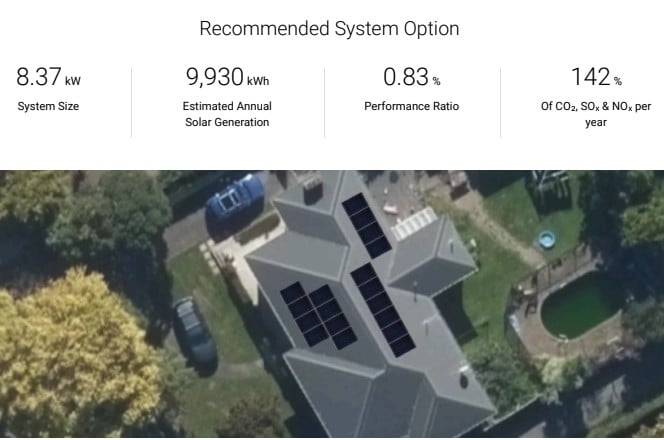
Hey team, I've been quoted the following and was wonder what your thoughts are on it. Good or bad deal? What would you change?


18 Solar Panels
• 18x Canadian Solar Panels 465W each total of 8370w capacity;
• 1x 8kw Sigen single phase hybrid inverter with Wi-Fi Module and phone app;
• Circuit breakers to suit;
• DC Isolating switches;
• Sigen control equipment; and
• All of the wiring and installation.
Note this does not include battery; however, the system is battery ready if needed.
Quoted price $19,398


Sigen batteries is as below. If you choose to fit at the time of installation there
will be no additional charge for fitting.
1x 10kw battery $6,969
1x 5kw battery $6,565


EV charger, we estimate the cost at $2,000


It ticks most of our boxes but they didn't quote on converting the gas HWC to electric, nor the gas ducted heating system (wanting to get rid of gas completely).


$19.4K seems a tad on the high side, but I guess you are using a premium brand of panels and the inverter is battery and 'EV' ready.


Overarching thought would be to throw on more panels.  Panels are relatively cheap these days (incremental cost should be around $400ea fitted), and inverters are a fixed cost, and operate more efficiently near their rated capacity.  Sigen normally allows 200% overspec of panels (check your model to be sure).   You could easily throw an extra few kW of panles onto that inverter and get good utilisation out of them.


In fact - if you stuck with that many panels, you could probably make quite a saving (~$3-4K) using the Sigen 6kW inverter instead.  You'd probably see very little drop in real-world performance, given that your sub-arrays are facing opposite directions, so they will never both be operating at peak, i.e. in practice you will rarely be collecting more than 6kW off your 8.4kW of panels so configured.  (We have 9kWp comprising 20x450W Hyundai panels into the Sigen 6kW hybrid inverter, on a N face and a W face.  Cost about $15-16K, including a Catch hot water relay- though was installed in 2 stages, so hard to be precise and would have been cheaper if done as one).


All those panels facing SW will not generate a lot in winter - move as many of these onto the more northly faces as possible.


The 8kW Sigen hybrid inverter has 3 strings (NB: not the 6kW, hence the big price jump from 6kW to 8kW models).  You could look at utilising that extra string to add panels onto you NW facing roof sections (I assume 'up' is 'North' in the above photo).


So could consider some options:

- to save some money and get more bang for your buck, use a 6kW inverter with your SW facing panels relocated to your NW and NE roof aspects (looks like you could get another 2-3 on your NE face, and possibly 6 onto your NW faces - making 18-19 panels into 6kW inverter, for circa $15K). 


- OR upsize array by adding ~6 panels onto a 3rd string on your NW faces, while possibly also moving a few of your SW panels across to your NE face, making about 24 panels (11.1kWp) into 8kW inverter, for probably around $24K.


Once you're committed to solar, and particularly a relatively large system, it would make sense to move hot water and space heating across.  If going to solar hot water, use a diverter or smart relay to maximise solar utilisation into your hot water system (about $600 + installation).


timmmay
20859 posts

Uber Geek
+1 received by user: 5350

Trusted
Lifetime subscriber

  #3479138 8-Apr-2026 12:35
Send private message quote this post

@maoriboy I agree the price seems high. I'd probably get a cheaper but reputable panel brand, and add more panels. With an 8kw inverter you could have 10kw panels no worries.


I have 9.2kw of panels and 6kw Sigen inverter, it was about $15K installed onto color steel a year ago in Wellington. I sometimes think the next inverter size up would be better as I suspect the limit is the inverter on sunny days - perfect clear days we often get 5.7kw with peaks at 6 - 6.3kw. However, that's probably 1/4 of the year at most, so if the inverter is much more expensive maybe not worth it.


Which way in the photo is north?


fastbike
448 posts

Ultimate Geek
+1 received by user: 321


  #3479141 8-Apr-2026 12:44
Send private message quote this post

kangaroo13:


$19.4K seems a tad on the high side, but I guess you are using a premium brand of panels and the inverter is battery and 'EV' ready.


Overarching thought would be to throw on more panels.  Panels are relatively cheap these days (incremental cost should be around $400ea fitted), and inverters are a fixed cost, and operate more efficiently near their rated capacity.  Sigen normally allows 200% overspec of panels (check your model to be sure).   You could easily throw an extra few kW of panles onto that inverter and get good utilisation out of them.


In fact - if you stuck with that many panels, you could probably make quite a saving (~$3-4K) using the Sigen 6kW inverter instead.  You'd probably see very little drop in real-world performance, given that your sub-arrays are facing opposite directions, so they will never both be operating at peak, i.e. in practice you will rarely be collecting more than 6kW off your 8.4kW of panels so configured.  (We have 9kWp comprising 20x450W Hyundai panels into the Sigen 6kW hybrid inverter, on a N face and a W face.  Cost about $15-16K, including a Catch hot water relay- though was installed in 2 stages, so hard to be precise and would have been cheaper if done as one).


All those panels facing SW will not generate a lot in winter - move as many of these onto the more northly faces as possible.


The 8kW Sigen hybrid inverter has 3 strings (NB: not the 6kW, hence the big price jump from 6kW to 8kW models).  You could look at utilising that extra string to add panels onto you NW facing roof sections (I assume 'up' is 'North' in the above photo).


So could consider some options:

- to save some money and get more bang for your buck, use a 6kW inverter with your SW facing panels relocated to your NW and NE roof aspects (looks like you could get another 2-3 on your NE face, and possibly 6 onto your NW faces - making 18-19 panels into 6kW inverter, for circa $15K). 


- OR upsize array by adding ~6 panels onto a 3rd string on your NW faces, while possibly also moving a few of your SW panels across to your NE face, making about 24 panels (11.1kWp) into 8kW inverter, for probably around $24K.


Once you're committed to solar, and particularly a relatively large system, it would make sense to move hot water and space heating across.  If going to solar hot water, use a diverter or smart relay to maximise solar utilisation into your hot water system (about $600 + installation).


A colleague just had an install for 26x450W panels, plus 10kW string inverter. All up was $16.5k incl GST. In Christchurch, I can get more details if that helps.


Otautahi Christchurch


kangaroo13
87 posts

Master Geek
+1 received by user: 90


  #3479145 8-Apr-2026 12:48
Send private message quote this post

fastbike:


A colleague just had an install for 26x450W panels, plus 10kW string inverter. All up was $16.5k incl GST. In Christchurch, I can get more details if that helps.


I'm also in Christchurch.


That sounds like a very good price - I assume that would be a grid-tied inverter, not a hybrid inverter nor a more 'premium priced' brand such as Sigen, Fronius etc.


dantheperson
226 posts

Master Geek
+1 received by user: 63


  #3479150 8-Apr-2026 12:55
Send private message quote this post

timmmay:


@maoriboy I agree the price seems high. I'd probably get a cheaper but reputable panel brand, and add more panels. 


Is Canadian Solar an expensive panel brand?  That's what tradedepot sell in their packages, e.g. $20K installed for 18 panel canadian solar, 8Kw inverter deye, 14kWh battery DAH solar

https://tradedepot.co.nz/18-panel-home-solar-system-8kw-inverter-14kwh-battery-installation_908719/


I assumed it was the SigEnergy inverter pushing up the price.  If you are not getting batteries i don't know that i'd spend extra on a fancy inverter, there's nothing for it's software smarts to do.

Probably your layout with multiple faces would cost a bit extra though.


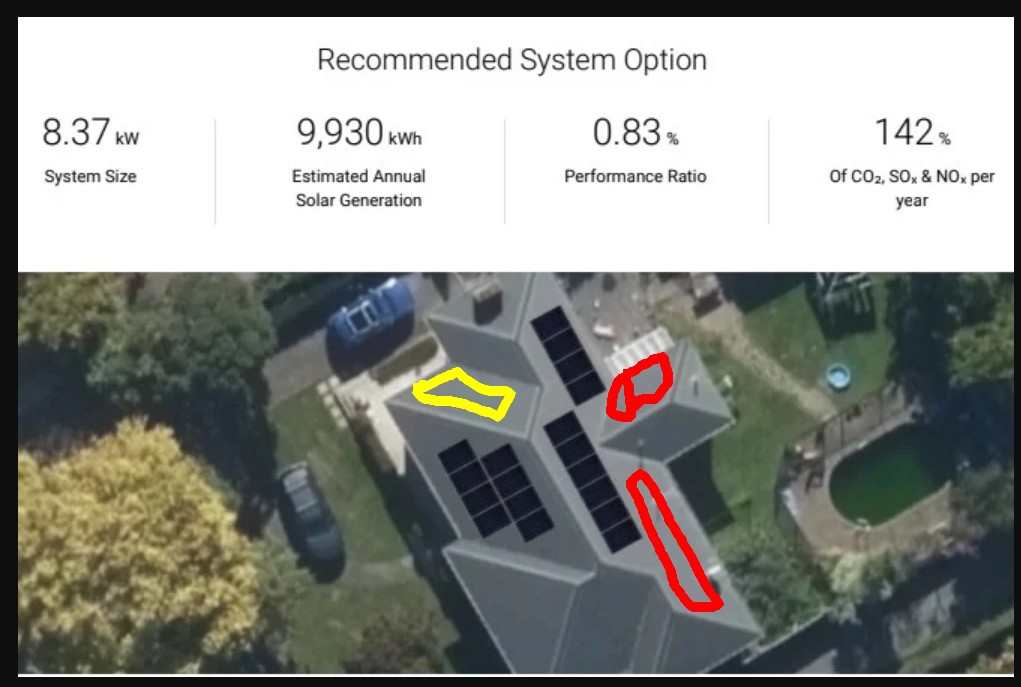
Agree with others, get those panels onto the more north facing roof faces.


e.g. these spots.  you might get a bit of shading, e.g. morning shade on the yellow one, but that's far less shading than you'll get on the large SW face.


PS. the pool needs a clean.


Jase2985
13735 posts

Uber Geek
+1 received by user: 6216

ID Verified
Lifetime subscriber

  #3479154 8-Apr-2026 13:05
Send private message quote this post

Ewein:


So, interesting what Vector will do....
They might try to use b) to justify a lower limit (aka 5kw) due to their network conditions and just tell
you if you want 10kw, take the flexible option.


Regarding timing: The EA expects the changes to be gazetted by mid-May, with the changes coming into effect 28 days later. This roughly aligns with Vectors 1 July for the flexible limits.


Read my post from days ago where I posted vectors press release, but its linked below.


https://www.vector.co.nz/personal/electricity/distributed-generation?fbclid=IwY2xjawRCh25leHRuA2FlbQIxMABicmlkETFRbXFoVlhTVjVjS0lKajJic3J0YwZhcHBfaWQQMjIyMDM5MTc4ODIwMDg5MgABHiyuHzvp_nwK03JYFK9j2FkRG0LF1LD52Dhd-GWtzrnHtjiwmOEA7mq5iqa__aem_Elpnggw3v2ZS-nTJdfA4Cg


You will be on the 5kW limit or you will be on the Flexible Export Connection up to 10kW on single phase. They already justified their position in their November 25 letter to the EA
https://blob-static.vector.co.nz/blob/vector/media/vector-2025/maximising-benefits-from-local-generation_ea.pdf 


While some may not agree with it Auckland is by far the biggest area and likely the hardest to deal with WRT distributed generation


I suspect that most inverters will support CSIP (Protocol used), as even the older Fronius snap inverters support this and they are many years old.


timmmay
20859 posts

Uber Geek
+1 received by user: 5350

Trusted
Lifetime subscriber

  #3479157 8-Apr-2026 13:11
Send private message quote this post

dantheperson:


Is Canadian Solar an expensive panel brand?  That's what tradedepot sell in their packages, e.g. $20K installed for 18 panel canadian solar, 8Kw inverter deye, 14kWh battery DAH solar

https://tradedepot.co.nz/18-panel-home-solar-system-8kw-inverter-14kwh-battery-installation_908719/


I assumed it was the SigEnergy inverter pushing up the price.  If you are not getting batteries i don't know that i'd spend extra on a fancy inverter, there's nothing for it's software smarts to do.


I assumed it was the panels being expensive based on another post I saw, and that they're 465w panels. I got Jinko 440W panels, and declined a more expensive option that was maybe 10% more output for about 30% more money.


Jase2985
13735 posts

Uber Geek
+1 received by user: 6216

ID Verified
Lifetime subscriber

  #3479159 8-Apr-2026 13:13
Send private message quote this post

maoriboy:


Hey team, I've been quoted the following and was wonder what your thoughts are on it. Good or bad deal? What would you change?


It ticks most of our boxes but they didn't quote on converting the gas HWC to electric, nor the gas ducted heating system (wanting to get rid of gas completely).


Those South West panels won't generate much, you would be better off putting more on the smaller North West roofs, along with more on the North East ones.


Example is my system, where i couldn't put the panels anywhere else, your SW ones will be worse as they are more south than my ones are.


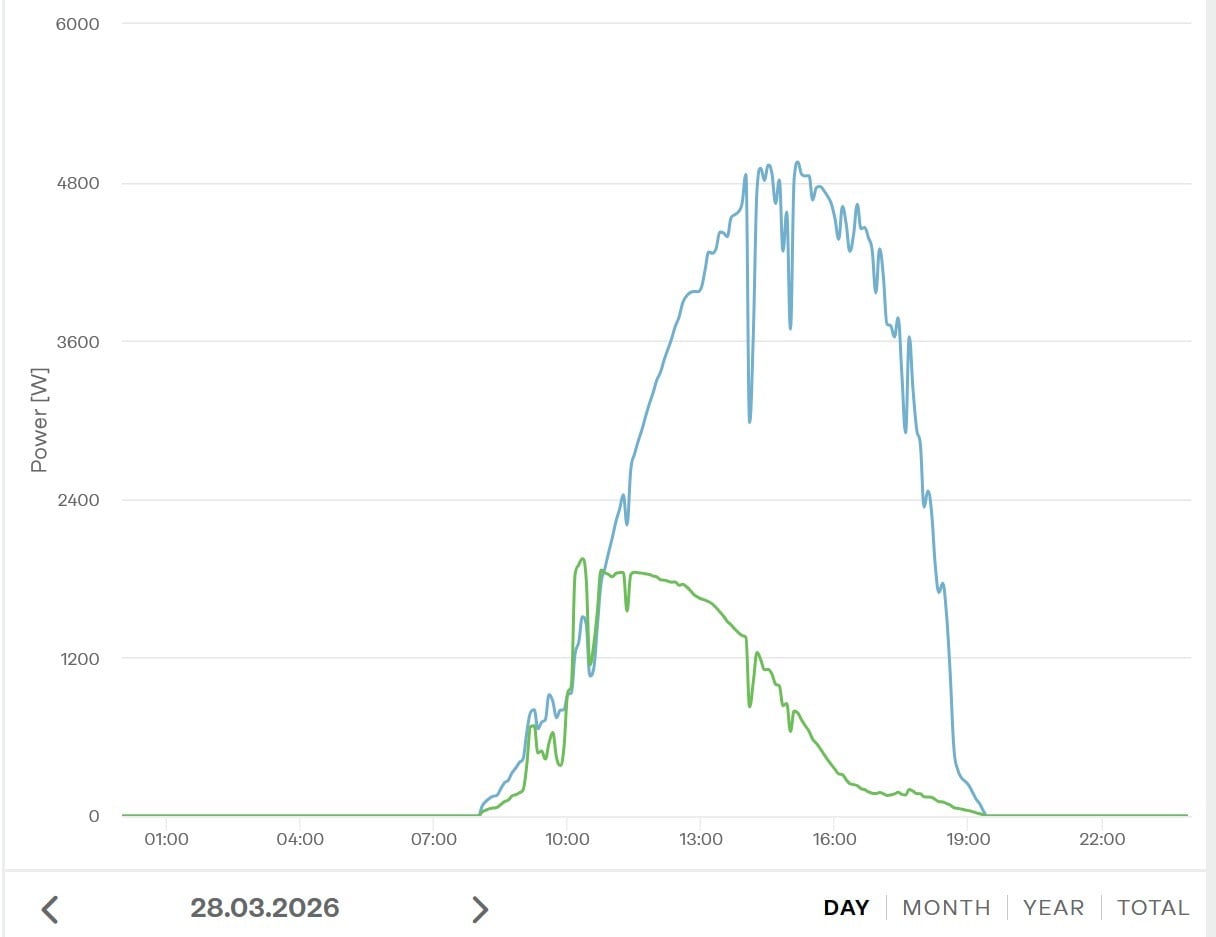
6.6kw facing 297 degrees and 3.3kw facing 117 degrees, you can see the WNW ones generate way more than 50% more power than the ESE ones. In peak summer it gets closer to the 50% more but if there are better options i would go with them.


kangaroo13
87 posts

Master Geek
+1 received by user: 90


  #3479160 8-Apr-2026 13:19
Send private message quote this post

dantheperson:


timmmay:


@maoriboy I agree the price seems high. I'd probably get a cheaper but reputable panel brand, and add more panels. 


Is Canadian Solar an expensive panel brand?  That's what tradedepot sell in their packages, e.g. $20K installed for 18 panel canadian solar, 8Kw inverter deye, 14kWh battery DAH solar

https://tradedepot.co.nz/18-panel-home-solar-system-8kw-inverter-14kwh-battery-installation_908719/


I assumed it was the SigEnergy inverter pushing up the price.  If you are not getting batteries i don't know that i'd spend extra on a fancy inverter, there's nothing for it's software smarts to do.

Probably your layout with multiple faces would cost a bit extra though.


Agree with others, get those panels onto the more north facing roof faces.


e.g. these spots.  you might get a bit of shading, e.g. morning shade on the yellow one, but that's far less shading than you'll get on the large SW face.


PS. the pool needs a clean.


Yes - stand corrected.  I thought Canadian Solar was premium, but it is middle pack.  I was probably mistaken for REC.


So - it is likely the SigEnergy inverter.  I got a price for the 6kW and 8kW, and there was about $4K difference, part of which could be put down to the extra string.


Agree with the suggested locations for panels in the annotated picture from Dan (though the northernmost red section is facing the same as the yellow section - albeit with different morning shading - so if you only have one spare string, then they should be on the same).


timmmay
20859 posts

Uber Geek
+1 received by user: 5350

Trusted
Lifetime subscriber

  #3479165 8-Apr-2026 13:28
Send private message quote this post

The Sigen 6kw inverter does only have two strings, which might make the next size up useful for a split deployment like this.


I also wonder if a hybrid / battery ready inverter is worthwhile if you're not seriously considering adding a battery in the next few years. I've heard that inverters last maybe 10 - 15 years, by then I expect our solar payout rate will drop like Australia and at that point batteries might be worthwhile for more people, maybe.


kangaroo13
87 posts

Master Geek
+1 received by user: 90


  #3479174 8-Apr-2026 13:31
Send private message quote this post

Jase2985:


Example is my system, where i couldn't put the panels anywhere else, ...


6.6kw facing 297 degrees and 3.3kw facing 117 degrees, you can see the WNW ones generate way more than 50% more power than the ESE ones. In peak summer it gets closer to the 50% more but if there are better options i would go with them.


What I find most interesting there is that your WNW string starts earlier than your ESE string, and they track reasonably closely over the morning.  With more panels, the WNW string has potential to exceed the inverter string switch-on voltage earlier, nevertheless, it will get direct sun much later in the day.   Was the light a bit diffuse that day (light clouds?)?  Perhaps it is a low roof pitch also?


maoriboy
1034 posts

Uber Geek
+1 received by user: 562

Trusted

  #3479224 8-Apr-2026 13:59
Send private message quote this post

kangaroo13:


$19.4K seems a tad on the high side, but I guess you are using a premium brand of panels and the inverter is battery and 'EV' ready.


Overarching thought would be to throw on more panels.  Panels are relatively cheap these days (incremental cost should be around $400ea fitted), and inverters are a fixed cost, and operate more efficiently near their rated capacity.  Sigen normally allows 200% overspec of panels (check your model to be sure).   You could easily throw an extra few kW of panles onto that inverter and get good utilisation out of them.


In fact - if you stuck with that many panels, you could probably make quite a saving (~$3-4K) using the Sigen 6kW inverter instead.  You'd probably see very little drop in real-world performance, given that your sub-arrays are facing opposite directions, so they will never both be operating at peak, i.e. in practice you will rarely be collecting more than 6kW off your 8.4kW of panels so configured.  (We have 9kWp comprising 20x450W Hyundai panels into the Sigen 6kW hybrid inverter, on a N face and a W face.  Cost about $15-16K, including a Catch hot water relay- though was installed in 2 stages, so hard to be precise and would have been cheaper if done as one).


All those panels facing SW will not generate a lot in winter - move as many of these onto the more northly faces as possible.


The 8kW Sigen hybrid inverter has 3 strings (NB: not the 6kW, hence the big price jump from 6kW to 8kW models).  You could look at utilising that extra string to add panels onto you NW facing roof sections (I assume 'up' is 'North' in the above photo).


So could consider some options:

- to save some money and get more bang for your buck, use a 6kW inverter with your SW facing panels relocated to your NW and NE roof aspects (looks like you could get another 2-3 on your NE face, and possibly 6 onto your NW faces - making 18-19 panels into 6kW inverter, for circa $15K). 


- OR upsize array by adding ~6 panels onto a 3rd string on your NW faces, while possibly also moving a few of your SW panels across to your NE face, making about 24 panels (11.1kWp) into 8kW inverter, for probably around $24K.


Once you're committed to solar, and particularly a relatively large system, it would make sense to move hot water and space heating across.  If going to solar hot water, use a diverter or smart relay to maximise solar utilisation into your hot water system (about $600 + installation).


@kangaroo13 thanks for the detailed reply! Definitely food for thought. I too was thinking about adding extra panels as I heard that was the way to go. The inverter model they have quoted is the SigenStor EC 8.0SP.


@timmmay, yes the North is 'Up' in the picture


@fastbike, thanks for that but I'm Manawatu based.


Yes, I was wondering about how worthwhile the South-West panels would be and whether it would be better to load more on the NE and NW faces. Lots to consider here. 


timmmay
20859 posts

Uber Geek
+1 received by user: 5350

Trusted
Lifetime subscriber

  #3479225 8-Apr-2026 14:05
Send private message quote this post

Given that price and design with south facing panels I'd probably get another quote - though there may be a good reason they did it that way. My opinion is most panels should be north facing if possible, though some facing more westerly / easterly can be useful. We have something like 13 north / 8 west and the west ones pick up the end of day sun better than the northerly ones, though the northerly ones do better than I'd have thought.


LightbulbNeil
71 posts

Master Geek
+1 received by user: 16


  #3479230 8-Apr-2026 14:35
Send private message quote this post


That looks to be a sizeable house.


I would suggest a 15kw system with a 10kw 3phase inverter. If you have an electric car, that will make a difference in the summer for charging, and the extra pannels will be useful in winter.


I don't have a battery, but if the grid does go out, a battery is handy for sure. The cost of the battery is the biggest issue for us. It would need to be in the region of 22 kw and in winter will need charging every day. To have a battery charge every 3 days, would need around 60kw capacity, and we don't have that kind of money for a nice to have. A 10kw battery would keep the fridge running, allow for gas instant hot water and a few lights. Its still a lot of money. I am hoping that in 4 years time, that battery technology moves along to a much safer format and a cheaper option too.


Having recently saved my house from a small lithium fire, am not at all keen on any lithium battery bank of any capacity larger than a power tool battery of 20cells, in the house. I know the fire risk is very low but the volume of fumes from them is just unreal.


When we looked at getting the system we have, I looked at it from the point of view of spending the equivelent of 9 years of power, providing that the system provides 100% of the power or money over a year , so that we have No electrical bills at all. We went with Meridian and their 5 year solar plan. Initially it was looking at a break even of 6 years 4 months or so. From Oct 2023 to when it will have paid itself off now is even shorter. Currently looking like January 2029. Not everyone can export excess and have cash at the end of the year. But that left over money at the end of October each year, pays for the bottle gas that we used that year. 


We have a 15 deg pitch roof, with 10 panels face east, 10 panels facing north, 10 panels facing west. The panels are 500 watts each. I cant seem to work out the house orientation in the provided pictire. 


Another side note, a 15kw inverter makes only about $400 per year difference in total generation, comapred to having a 10kw inverter feed by 15 kw of panels. The clipping as they call it is not really such a big deal. 


maoriboy:


Hey team, I've been quoted the following and was wonder what your thoughts are on it. Good or bad deal? What would you change?


18 Solar Panels
• 18x Canadian Solar Panels 465W each total of 8370w capacity;
• 1x 8kw Sigen single phase hybrid inverter with Wi-Fi Module and phone app;
• Circuit breakers to suit;
• DC Isolating switches;
• Sigen control equipment; and
• All of the wiring and installation.
Note this does not include battery; however, the system is battery ready if needed.
Quoted price $19,398


Sigen batteries is as below. If you choose to fit at the time of installation there
will be no additional charge for fitting.
1x 10kw battery $6,969
1x 5kw battery $6,565


EV charger, we estimate the cost at $2,000


It ticks most of our boxes but they didn't quote on converting the gas HWC to electric, nor the gas ducted heating system (wanting to get rid of gas completely).


1 | ... | 140 | 141 | 142 | 143 | 144 | 145 | 146 | 147 | 148 | 149
Filter this topic showing only the reply marked as answer View this topic in a long page with up to 500 replies per page Create new topic


Geekzone Live »

Try automatic live updates from Geekzone directly in your browser, without refreshing the page, with Geekzone Live now.


Are you subscribed to our RSS feed? You can download the latest headlines and summaries from our stories directly to your computer or smartphone by using a feed reader.