Geekzone: technology news, blogs, forums
Guest
Welcome Guest.
You haven't logged in yet. If you don't have an account you can register now.
Filter this topic showing only the reply marked as answer View this topic in a long page with up to 500 replies per page Create new topic
1 | ... | 142 | 143 | 144 | 145 | 146 | 147 | 148 | 149
itey
479 posts

Ultimate Geek
+1 received by user: 84


  #3479374 9-Apr-2026 07:47
Send private message quote this post

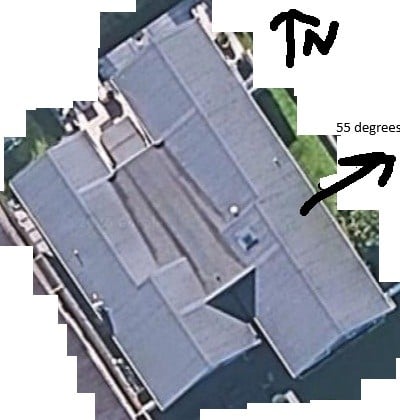
Keen for some advise on whether you think our roof is suitable for solar. Roof faces 55 degrees, and has 45 degree slope. Based in auckland. Huge roof surface area but im not sure the roof characteristics (angle,orientation) are suitable for solar?


kangaroo13
87 posts

Master Geek
+1 received by user: 90


  #3479378 9-Apr-2026 08:04
Send private message quote this post

itey:


Keen for some advise on whether you think our roof is suitable for solar. Roof faces 55 degrees, and has 45 degree slope. Based in auckland. Huge roof surface area but im not sure the roof characteristics (angle,orientation) are suitable for solar?


Do you have another roof face, even just a small one e.g. NW, at 325 degrees?  That would be ideal - as obviously you'd get both morning and afternoon sun by using 2 strings into your inverter.


Otherwise - if you only have the NE face, you'll obviously get good collection in mornings, not so good in afternoon.   You can compensate this to a degree by putting up extra panels, given the large area you have to work with.  A battery is another option get cover the afternoon/evening with relatively little solar.


The high pitch is an advantage in winter, and that is where solar can struggle.  Achieveing adequate solar in winter is a better design criterion than trying to maximise year round collection (i.e. maximising peak across summer).


Try the NIWA Solarview tool to check the profile of solar collection from your roof, i.e. hour-by-hour, for each month of the year.  You enter co-ordinates of your house, and facing and pitch of your roof and it creates some nice tables of data.  Play with 'what-if' scenarios, like adding an extra few panels on your NE face.


https://data.niwa.co.nz/solarview


I created something of a spreadsheet for this - you'll need to cut and paste the niwa data into it.  You can give it a try if you wish:
https://docs.google.com/spreadsheets/d/1zGh3STUEOO_yqriGtf0kd31AbZ-Mxl-L/edit?usp=drive_link&ouid=111583397876606779406&rtpof=true&sd=true


LightbulbNeil
71 posts

Master Geek
+1 received by user: 16


  #3479379 9-Apr-2026 08:05
Send private message quote this post


5 adults live here - one retired so basically home all day. Average summer combined electricity/gas bill is around $400 a month, winter can almost double that. Not sure if adding 3 phase is worth the added expense. We've had an ev for about 4 years now and managed to keep it nicely topped up using the granny charger. Just wanting to add a dedicated charger for future vehicle needs.


Enough about the pool 😂. The pic was obviously captured at a moment in time when we were away for an extended period of time....or something equally plausible 😎


So it seems you use about $7000 of power per year. Summer your daily average is 44kwh and winter will be about double that to 90kwh a day average. With a 15kw system with a 15kw inverter, in summer Dec-Jan, best days we generate over 110kwh per day.  In winter on best days we generate about 38kwh per day, June-July. Worse days in winter are down to 5 to 7 kwh per day. I'm thinking that with the amount that you use, would be better off with a 15kw inverter and 20kw of panels. Maybe look at higher power rated panels or higher density panels, more watts per M2. 


Another something to look at , is where the power consumption is, and what can be done to have more energy efficient options. An example is we have a heatpump clothes dryer. Uses less than 2kwh to dry the load of washing, even though it is now 7 years old. Keep in mind that even heatpump dryers will put moisture into the room that they are occupying. So our laundry has an extractor fan to remove the warm wet air out of the laundry to outside. Keeping the home moisture level under 60% humidity will make winter heating a lot more efficient and cheaper. 


The biggest advantage of 3 phase is being able to export the excess in summer to offset the winter power account. That may well  change  in years to come for sure, but it all helps. In summer our peak export rate is 14.6kw over 3 phases. With 20 kw of panels you will be at the max of 15kw for a longer time. In winter the 20 kw of panels will give alot more power in the early morning and late evening, and more on overcast days, reducing your power from the grid quite significantly. 


All something to think about. Yes it will be more money, but will pay for itself a lot quicker than a smaller system does, as you are what I call a large user of energy. If you can get on a plan that allows for 10kw export amounts, the single phase limit really is not quite so bad as it initially seems. So will save on having a 3phase  power upgrade to the house. Your average power draw per hour is a little over 16amps, and am guessing that your peak power usage will be getting close to the 50 amps when cooking in winter. 


Just my thoughts.


timmmay
20859 posts

Uber Geek
+1 received by user: 5350

Trusted
Lifetime subscriber

  #3479381 9-Apr-2026 08:21
Send private message quote this post

itey:


Keen for some advise on whether you think our roof is suitable for solar. Roof faces 55 degrees, and has 45 degree slope. Based in auckland. Huge roof surface area but im not sure the roof characteristics (angle,orientation) are suitable for solar?


Can you post a photo from above, indicating north? Generally though you will get decent morning generation particularly in winter, though in summer there's so much sun it will be good then too. Summer the sun is higher so the 55 degree angle won't matter as much, winter you may lose afternoon generation. If you have any west facing roof sections that could compensate.


dantheperson
226 posts

Master Geek
+1 received by user: 63


  #3479385 9-Apr-2026 08:37
Send private message quote this post

Jase2985:


On a perfect summers day (Jan 11th) the ESE starts anything meaningful about 0730 and peaks about 1140. The WNW string starts generating more power by about 1045, with its peak being about 1500 before dying off about 2000


And i guess that sort of date is best case, as in mid summer the sun is rising from the south east.  In winter when it rises in the north east that ESE string probably looks much worse?


dantheperson
226 posts

Master Geek
+1 received by user: 63


  #3479403 9-Apr-2026 09:07
Send private message quote this post

LightbulbNeil:


I suggested 3phase as they appear to be looking at electric car charging. 3phase based charging is cuurently used for fast er chargers compared to single phase 15 amp chargers. 


There's also a middle ground, a single phase 7.4kW charger.  Sure 22kW is nice, but 7.4kW you can run off single phase, and i expect it'd typically be much cheaper to put in a single 30A circuit than to move the whole house to 3 phase.  I had a 30A cable put in to the basement during some work just in case we get an EV in the future.


e.g. https://www.evnex.com/nz/products/evnex-e2-core 


itey
479 posts

Ultimate Geek
+1 received by user: 84


  #3479430 9-Apr-2026 11:55
Send private message quote this post

Thanks for your input timmmay and kangaroo. Here is the roof orientation. Lots of 55 degree and 235 degrees (55+180). We do have section of roof that is ideally positioned facing NW but it is a low profile bitumen membrane roof and I'm not keen on any penetrations through this. I'm pleasantly surprised at the solarview calcs - they are pretty impressive, only a 10% reduction in total generation compared to a directly North facing roof (and as you mention, this can be somewhat negated by more panels).


timmmay
20859 posts

Uber Geek
+1 received by user: 5350

Trusted
Lifetime subscriber

  #3479442 9-Apr-2026 12:30
Send private message quote this post

Looks like you've got good NE exposure. I wonder if there's a reliable, secure way to mount panels on the more southerly facing part of the roof that re-orients the panels so they give a bit of NW exposure. Given the storms we're getting these days, I suspect not, but might be worth asking an installer about. Rather than in line with the roof I wonder though if they could be mounted so they're pointing towards the NW.


Maybe just using NE panels is good enough. I doubt SE panels will do you much good outside of the middle of summer. Capturing some later in the day sun particularly in winter may be helpful. Then again it may not be economic, just point all your panels NE and use the grid as a battery.


fastbike
448 posts

Ultimate Geek
+1 received by user: 321


  #3479452 9-Apr-2026 12:50
Send private message quote this post

kangaroo13:


itey:


Keen for some advise on whether you think our roof is suitable for solar. Roof faces 55 degrees, and has 45 degree slope. Based in auckland. Huge roof surface area but im not sure the roof characteristics (angle,orientation) are suitable for solar?


Do you have another roof face, even just a small one e.g. NW, at 325 degrees?  That would be ideal - as obviously you'd get both morning and afternoon sun by using 2 strings into your inverter.


Otherwise - if you only have the NE face, you'll obviously get good collection in mornings, not so good in afternoon.   You can compensate this to a degree by putting up extra panels, given the large area you have to work with.  A battery is another option get cover the afternoon/evening with relatively little solar.


The high pitch is an advantage in winter, and that is where solar can struggle.  Achieveing adequate solar in winter is a better design criterion than trying to maximise year round collection (i.e. maximising peak across summer).


Try the NIWA Solarview tool to check the profile of solar collection from your roof, i.e. hour-by-hour, for each month of the year.  You enter co-ordinates of your house, and facing and pitch of your roof and it creates some nice tables of data.  Play with 'what-if' scenarios, like adding an extra few panels on your NE face.


https://data.niwa.co.nz/solarview


I created something of a spreadsheet for this - you'll need to cut and paste the niwa data into it.  You can give it a try if you wish:
https://docs.google.com/spreadsheets/d/1zGh3STUEOO_yqriGtf0kd31AbZ-Mxl-L/edit?usp=drive_link&ouid=111583397876606779406&rtpof=true&sd=true


I did a similar thing - I had generation values at 15 min resolution for a nearby reference site for the previous 365 days. I also had our own consumption figures. So I made a spreadsheet with about 35k rows.


I used the Niwa SolarView data along with the differences in orientation, tilt and panel capacity to model what the output would have been for our panels based on the reference site. So for each 15 min slot I could work out whether were were importing or exporting and could then plug in the various tariffs (with time of use variations) to select the best plan. Which happened to be Meridian at the time and they offered a 5 year price lockin so that was pretty good.


A few months ago I went back and compared the forecast to actuals for the first 12 months of operation - the thing that I found interesting was the panels on the garage - which faces slightly south of due west (so approx 256 clockwise from North) - performed much better than my model. The house which faces almost due north was about 10% above the model, the garage was 50% higher. So I think the Niwa numbers are conservative or we just got lucky with the weather.


Otautahi Christchurch


Jase2985
13735 posts

Uber Geek
+1 received by user: 6216

ID Verified
Lifetime subscriber

  #3479524 9-Apr-2026 14:37
Send private message quote this post

dantheperson:


Jase2985:


On a perfect summers day (Jan 11th) the ESE starts anything meaningful about 0730 and peaks about 1140. The WNW string starts generating more power by about 1045, with its peak being about 1500 before dying off about 2000


And i guess that sort of date is best case, as in mid summer the sun is rising from the south east.  In winter when it rises in the north east that ESE string probably looks much worse?


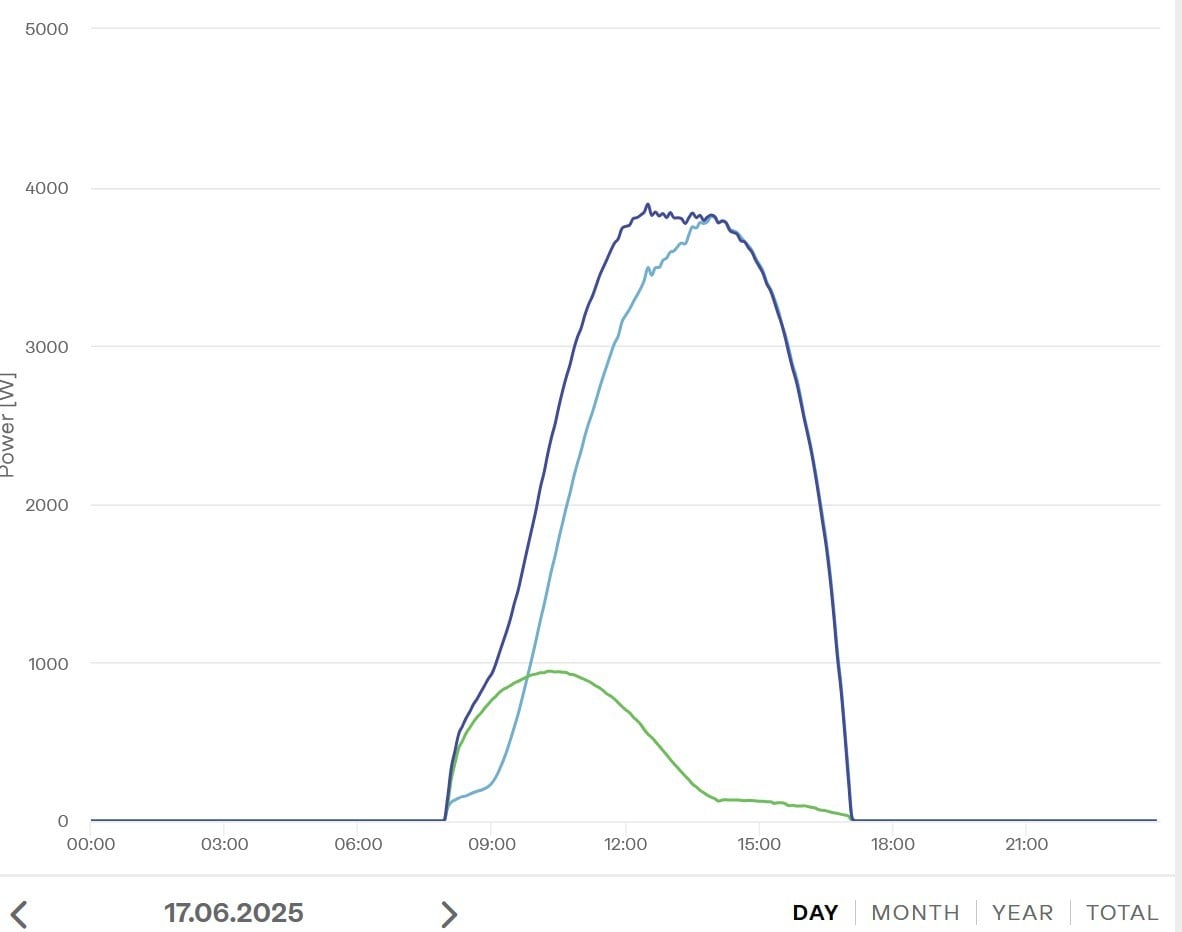
i thought about your comment then went and had a look. perfect day mid June. I would say its generating less than 1/5 of the total power, for 1/3 the total panels.


kangaroo13
87 posts

Master Geek
+1 received by user: 90


  #3479528 9-Apr-2026 14:47
Send private message quote this post

Jase2985:


... had a look. perfect day mid June. I would say its generating less than 1/5 of the total power, for 1/3 the total panels.


It's still quite interesting that your WNW string starts at the same time as your ESE.  Perhaps there is something about the inverter design that kick-starts both strings at the same time (triggered by the sum voltage across them both somehow???).  Or perhaps there is just enough diffuse light on the larger panel array that it has reached sufficient voltage to start up.


dantheperson
226 posts

Master Geek
+1 received by user: 63


  #3479532 9-Apr-2026 14:56
Send private message quote this post

I just updated my tariff information in the fronius, if the earnings figures are to be believed (no reason not to), based on 22 months of ownership, for a 5.4kW system that cost $13557:


Return on Investment (so far)
$3,228.88 ÷ $13,557 × 100 = 23.8%


Annualised ROI
$1,740.86 ÷ $13,557 × 100 = 12.8% per year


Payback period
$13,557 ÷ $1,740.86 = 7.8 years

Pretty happy with that, and it should improve once I move off the gas for space and water heating. 


The ever increasing energy costs should also see those figures improve over time without me having to do anything.


Jase2985
13735 posts

Uber Geek
+1 received by user: 6216

ID Verified
Lifetime subscriber

  #3479534 9-Apr-2026 15:13
Send private message quote this post

kangaroo13:


Jase2985:


... had a look. perfect day mid June. I would say its generating less than 1/5 of the total power, for 1/3 the total panels.


It's still quite interesting that your WNW string starts at the same time as your ESE.  Perhaps there is something about the inverter design that kick-starts both strings at the same time (triggered by the sum voltage across them both somehow???).  Or perhaps there is just enough diffuse light on the larger panel array that it has reached sufficient voltage to start up.


Green vs Light Blue, Dark blue is total production.

It looks like its MPPT related as power doesnt start generating till the MPPT string voltage reaches about 390V, then its actively doing its thing to sit at between about 310-380V. It appears to do this over the first 10 to 15 minutes 


billgates

4706 posts

Uber Geek
+1 received by user: 672

Trusted

  #3480204 12-Apr-2026 12:51
Send private message quote this post

dantheperson:


I just updated my tariff information in the fronius, if the earnings figures are to be believed (no reason not to), based on 22 months of ownership, for a 5.4kW system that cost $13557:


Return on Investment (so far)
$3,228.88 ÷ $13,557 × 100 = 23.8%


Annualised ROI
$1,740.86 ÷ $13,557 × 100 = 12.8% per year


Payback period
$13,557 ÷ $1,740.86 = 7.8 years

Pretty happy with that, and it should improve once I move off the gas for space and water heating. 


The ever increasing energy costs should also see those figures improve over time without me having to do anything.


Nice!


I just calculated my ROI using the SMA Energy App. System was comissioned on 12/12/2022. 14.94kW system evenly split across 2 phases that cost $27,500


ROI so far - 49.39%


Annualised ROI - 18.50%


Investment length so far - 3.4 years


Generation - 62.11MWh


Self-Consumption - 27.94MWh


Grid feed-in - 34.21MWh

I will make a seperate reply below shortly about my next steps which puchasing a battery inverter for each phase and batteries. We still have gas califont for hot water only and thats an average bill of $60/month of which $45/month is just line charges. Gas hot water and 1 x ICE car left are the only things running on fossil fuel in our home now. ICE car has not seen any significant use at all in last 2.5 years since we swapped the 2nd ICE car with an EV that has clocked 52,000km is 2.5 years. Ducted aircon specially during winter nights, induction, dishwasher use at night as well and EV charging at some nights due to not being home during day/afternoon some of the weekdays is the reason for still high grid import. 


Do whatever you want to do man.


snowfly
552 posts

Ultimate Geek
+1 received by user: 115


  #3480340 13-Apr-2026 09:45
Send private message quote this post

Looking for advise on my solar design below.
Have started to engage some companies for quotes (waiting for quote adjustments for larger inverters), but interested to hear others thoughts on the proposed design, if this will or won't work, or any other better suggestions.


Using OpenSolar I've designed a system as shown below (north is up in photo), based on the following:


  • Sigenergy SigenStor EC 20.0 TP - 3 phase inverter (4 MPPT, and up to 7.33kW per phase = 6.66 +10%) - or a Deye SUN-30K-SG01HP3-AU-BM3 (but it only has 3 MPPT)
  • Inverter in main house, with 3 MPPT as follows: (approx 15kW)


    • 9 panels facing east on house
    • 8 panels facing north on house
    • 15 panels facing west on house
  • Future plan to add batteries
  • Future plan to expand solar to shed - to allow more generation to cover future use, spa/induction cooking, etc: (if technically/physically possible)


    • Shed is shown at the top right of photo (90 sqm size)
    • 14 panels facing close to North (approx 6.5kW)
    • DC cable trenched back to Inverter in house (approx 35m from shed to inverter location in house garage) - using the 4th MPPT on inverter

Currently the shed is only on single phase, with a sub board, connected back to the house main board.
Is having solar on the shed in the future possible, with a large enough DC cable running back to inverter in house (any issue with voltage drop?). 


Otherwise if that won't work, other options I have read about is potentially install a slave inverter in shed with its own panels, and feed AC back to the master house inverter. 


Note, we have a 3P MHI ducted heatpump system, which can easily pull over 3.5 - 4kW per phase when running, plus 2 HWC (main HWC with 2 x 3kW, second HWC with 1 x 2kW), plus future plans for induction cooktop (currently ceramic), swim spa, and EV. Daily usage can vary between 25 - 50+ kWh per day, depending on how much heating/cooling we run, ideally would run more if we had solar.
Plus we work from home so can maximise self consumption (battery is low down in priority - maybe in future)


1 | ... | 142 | 143 | 144 | 145 | 146 | 147 | 148 | 149
Filter this topic showing only the reply marked as answer View this topic in a long page with up to 500 replies per page Create new topic


Geekzone Live »

Try automatic live updates from Geekzone directly in your browser, without refreshing the page, with Geekzone Live now.


Are you subscribed to our RSS feed? You can download the latest headlines and summaries from our stories directly to your computer or smartphone by using a feed reader.