Cardboard rolls and paper towels are fine. However, if you or your partner do all your shopping online and have boxes for days, don't try burn it all - the glue and resin in the cardboard can start doing weird things.
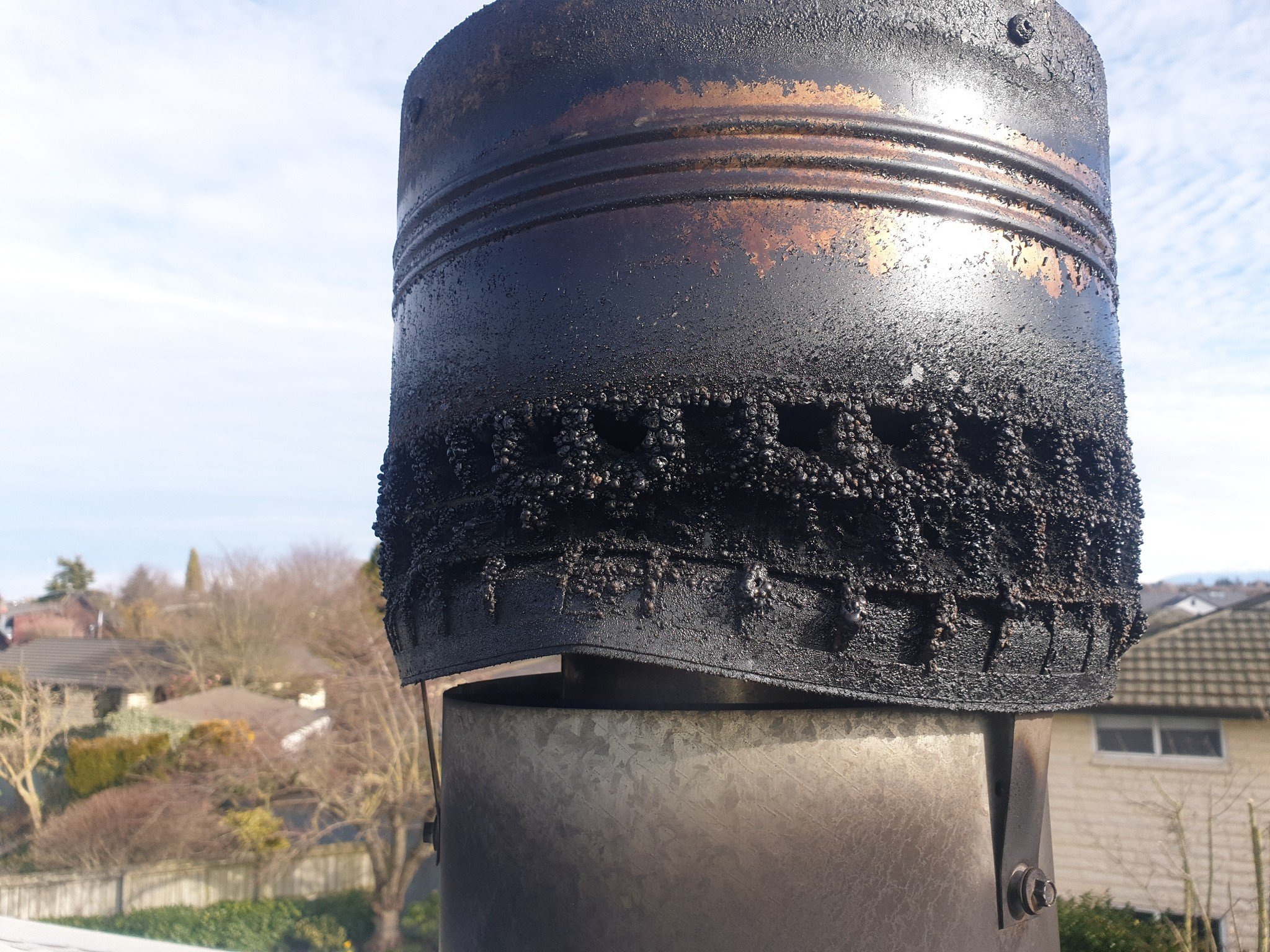
Wet wood creates a crunchy or even worse a treacle like soot that if not removed or burnt off, can become corrosive over time and start wearing out the stainless flue. Other times if there is a large deposit, there will be a chimney fire or extreme heat point on one particular part and damages it - think a section of the flue bulging out randomly.
Here's a cowl that some punisher continued to burnt wet and treated wood through for only 5 months after we installed it - it's worth $400:
Interesting discussion, I’ve got a 25 year old Yunca QWEB Multi Fuel wood burner.
Considered upgrading to a newer wood burner but local fire place supplier said newer models might not produce the same heat output and are harder to dampen.. so have persisted with the yunca. Been going well for 3 years, have replaced all broken firebricks, replaced door seal and replaced the ash drawer seal, and cleaned the chimney. Using very well seasoned Douglas Fir.
Started going thru a log every 30 mins.. so knew there was an issue, contacted yunca in Dunedin and they were fantastic, asked for pics and vid’s, eventually discovered that the glass seal had gone, didn’t know about this seal, , $25 for new 20mm seal and wood burner is now going great.
Big shout out to the yunca people, fantastic service.
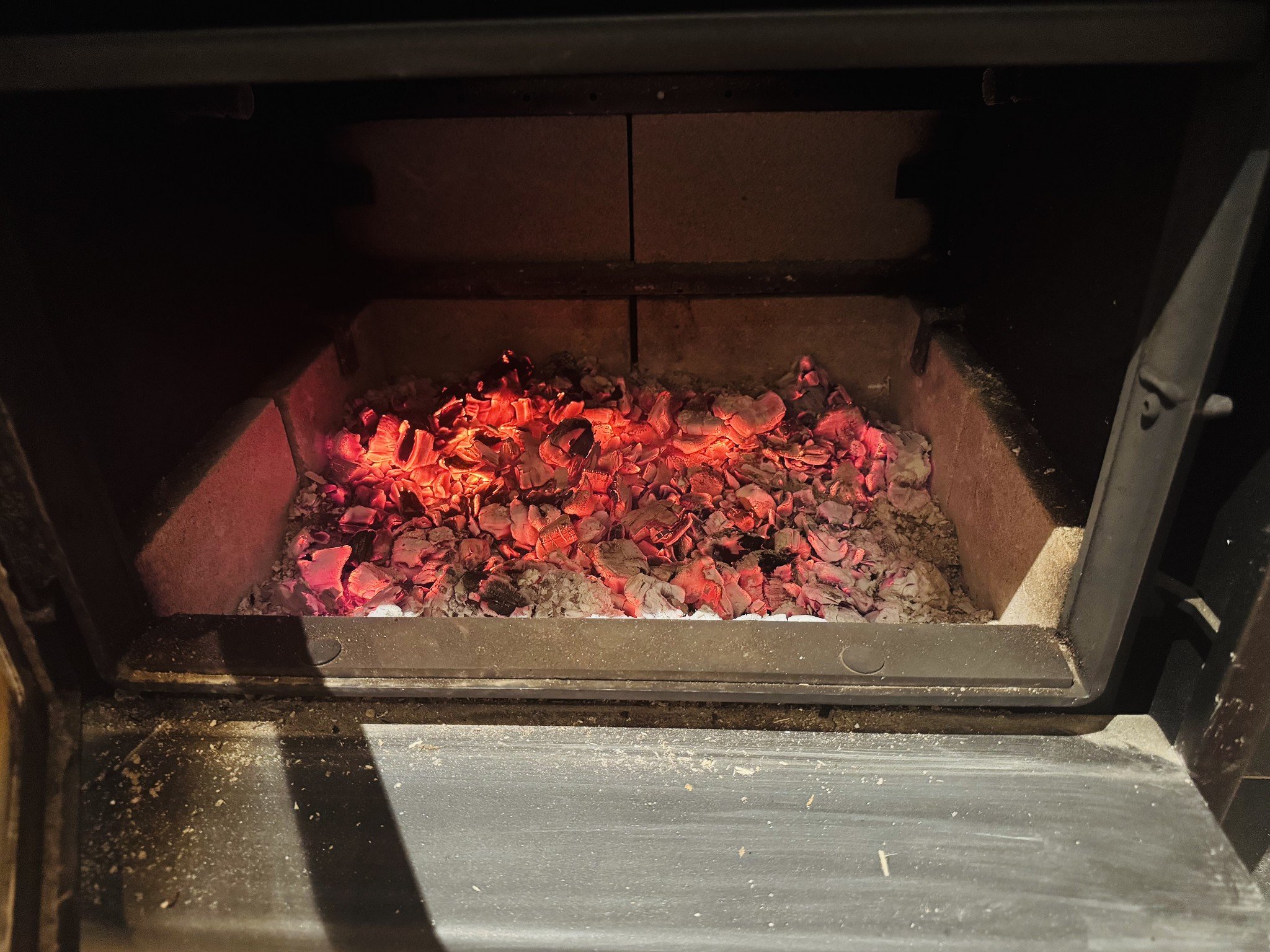
>Anyone know if it’ll burn slower if I gather the embers together or spread them out?
As this topic has explored, Air-Tight Stoves (as we called them in Canada) were developed as a refinement of earlier pot-belly stoves - because they could slow a fire down more completely.
Modern concerns about air-quality - led, in NZ's case, by the propensity for temperature-inversion smogs over Christchurch - have largely reversed these improvements and forced users and makers to dial back the 'air-tight' capability in our Urban wood-burners.
Before we moved to wood-burners, we had open fireplaces and words to describe the evening process of starving the fire of oxygen - damping it or smooring it - so that embers remained in the morning to simplify re-establishing it. The alternatives - of (a) feeding it wood all night - consumed considerable extra firewood, when the bedclothes were expected to keep you warm, or (b) letting it go out - which cost you kindling and effort with a flint & steel in the cold cold morning.
So - going back to fireplace techniques, you could rake all the embers in your woodburner to one side and then cover them with a layer of ash from the other side. Old tech - but it should still work. Your photo - leaving the embers exposed to the now-mandated oxygen-rich environment in the fire chamber - will allow them to burn out fastest (the opposite of what you want).
Anybody else in this thread old enough to remember the Arthur Ransome (Swallows & Amazons) stories with charcoal burners in the Lake District turning hardwood into charcoal using large ultra-slow-burning fires, with sods on top to keep the oxygen intake down to the merest trickle ?
Modern concerns about air-quality - led, in NZ's case, by the propensity for temperature-inversion smogs over Christchurch - have largely reversed these improvements and forced users and makers to dial back the 'air-tight' capability in our Urban wood-burners.
That's an unfortunate phrase. I think you'll agree the market has not moved fast enough to new designs and new technologies that solves those problems.
Mostly the market contains the old tech simply kludged to comply.
Our Zeitgeist is that heatpumps are the only ethical form of heating.
This has depressed the popularity of woodburners to the point that I don't think there's enough market energy to fund new brochures - much less a re-engineering of what has always been a very simple device.
Yes I know that there are multi-chamber clever modern designs - but look at their cost & complexity. Surely better to use a small flat-screen TV and a radiant heater to just simulate the whole thing. That also saves you all the grief of the considerable red-tape.
Or just add a nice big brazier to your back yard...
Are you subscribed to our RSS feed? You can download the latest headlines and summaries from our stories directly
to your computer or smartphone by using a feed reader.





 Trusted