


HarmLessSolutions:
Jase2985:
I get "The grid frequency has exceeded a limit value when reconnecting" but it's usually first thing in the morning when the inverter is switching on.
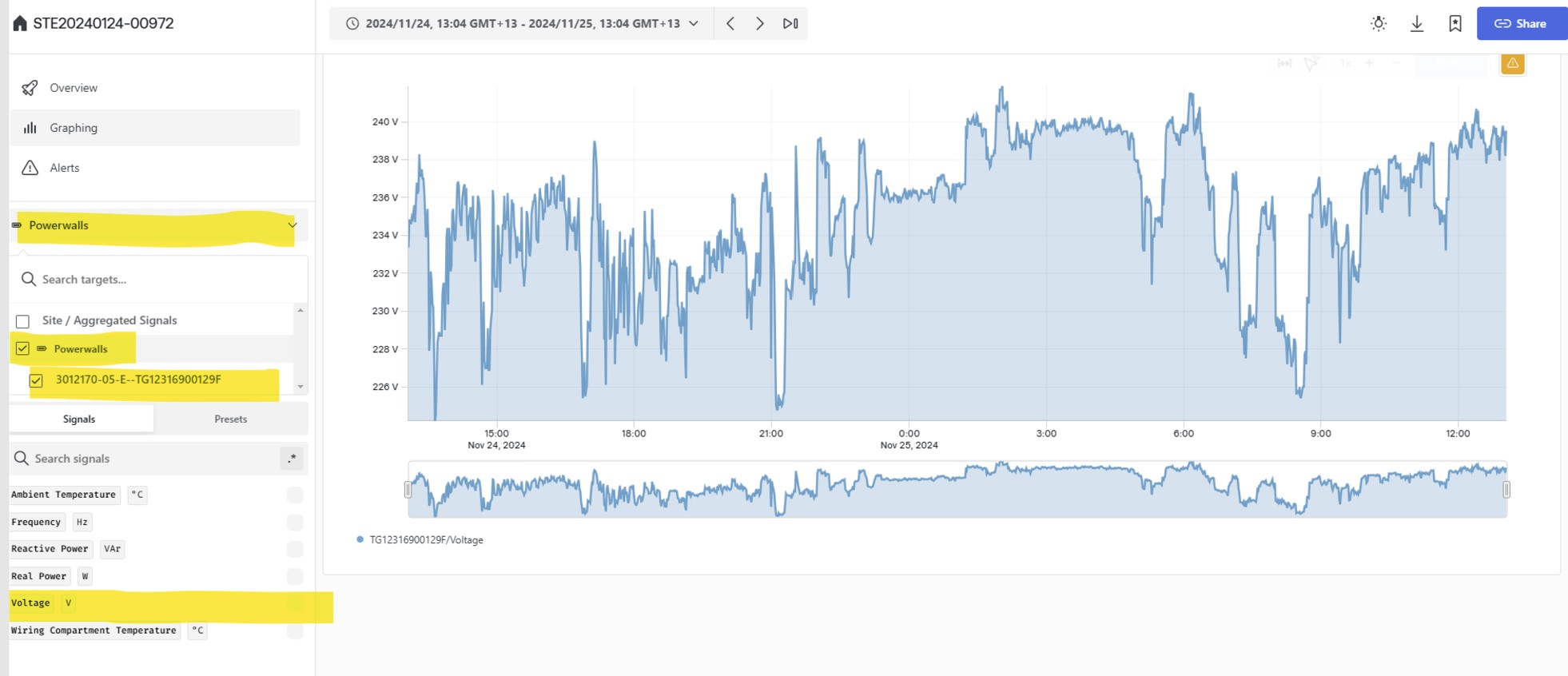
From what I'm seeing in the Fronius data log the voltage doesn't become problematic until later in the morning. I'm no gridologist but it seems to be that the transformers/voltage regulators may be overcompensating as the demand increases. If the Powerco guy ever calls back I've got a few things to discuss with him along those lines.
Following a chat I had with our solar installer it seems my assumptions weren't too far off the mark. He's a very knowledgeable chap having worked in the solar industry in Europe and Australia for more than the last decade. With that much experience he's seen it all before so has a great understanding of what's going on behind the scenes so far as the lines companies are concerned.
We're also lucky enough to have someone in our neighbourhood who works at Powerco and has advised me to contact their distributed generation department. From the email I have now sent them:
"Our PV installation was upgraded to its present 8.2kW ability in August 2023. We have our installation operating on just one phase so have export monitoring in place with the inverter limiting its output to ensure the 5kW/phase cap isn't breached.
At that time our installation was upgraded our installer reconfigured the inverter's settings to prevent it shutting down intermittently as a result of grid voltage variations, which solved the issues we had been experiencing up until that time.
Powerco has recently installed a new transformer and associated devices serving our area with numerous power outages required to do so. Prior to these works being untaken our grid voltage occasionally reached ~244V but was within the range of acceptability of our inverter, however following the last of the upgrade work by Powerco that took place on 24th October our grid voltage (as monitored and logged by our inverter's data feed) has reach 246V or more at times on virtually every day since that work was carried out.
In line with AS/NZS 4777.2:2020 the inverter's setting parametrs are limited to grid voltages of +/-5% of nominal which up until the recent upgrade was sufficient to deal with the grid voltages we were experiencing but with grid voltages reaching >246V this is no longer the case with the inverter displaying an error state relating to 'grid frequency' for most of the day. This causes the inverter to decrease its output both in terms of reduced export cap which struggles to go beyond 4kW rather than the 5kW cap we have to comply with and also in terms of total output at those times when we are self consuming sufficient of our generation to be well short of the export cap.
I am advised by our installer that the incoming AS/NZS 4777.2:2024 will allow us a wider parameter of grid voltage (i.e. +/-10%) which will solve the problem we are currently experiencing but this standard is not expected to come into force until summer's end which means that we will have our peak production compromised in the interim."
We've yet to receive a reply from Powerco. Our installer has previously pursued similar issues in regard to other installations they have put in but in their experience Powerco usually flicked them off with no solution being forthcoming. At the least I'm chasing this up with Powerco in order to at least register with them that their infrastructure is failing to perform as it should do in our area. Also interesting to note that our installer claims that such issues aren't restricted to rural areas with similar issues being seen in urban areas. Essentially in his opinion Powerco's infrastructure is unable to cope with distributed generation input to it and this is resulting in voltage regulation falling short of doing its job.
This doesn't bode well in regard to the news of lines charges being in for an increase next year, and particularly so for those areas whose lines infrastructure is falling short of expectations. The issues we are seeing now are probably prime evidence to support a hefty lines charge increase.
Irrespective of that though it is well worth maintaining a close eye on how your solar is performing in regards to grid conditions in your area and if you are suffering compromise in this let your lines company know. 'Squeaky wheel' and all that.



 ID Verified


