





Oblivian:
Fred99:
I'm not sure - I'd have thought some publicity would be a good thing when politicians make decisions on public funding for research.
I find this a bit frustrating as a layperson, if those involved in the project did an "AMA" on reddit - I'd be interested.
For example, what actually is the purpose? Are they putting the instruments up there in the hope that they've got something there capable of measuring gamma radiation in case there's a supernova locally (in our galaxy it only happens every few hundred years) or is it capable of "imaging" supernovae in distant galaxies, or just looking at background gamma radiation, or all of those.
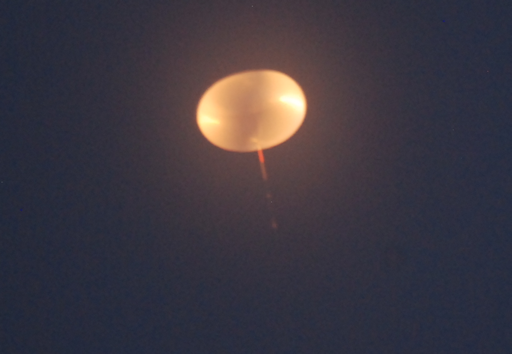
That's some amazing balloon fabric if 22 acres of it is strong enough, radiation resistant enough, impervious enough to hold the helium for 100 days, and light enough. What is it? Would make a hell of a spinnaker.
I was guessing above about why they launch it at mid-latitudes. Why here and not in the Northern hemisphere? Less chance of problems with air-traffic as it ascends or descends, better chance that if it fails in a big way that a few tonnes of payload won't land on someone's head, is there some difference in composition or wind in the upper stratosphere, less electromagnetic interference, or is it just that they want more options?
Some light reading re the payload.
Yes - this is what I mean. I learned something about the imager, little about the expectation for the mission.
If I launched into discussion over dinner with guests about the marvellous cryogenic cooling system on the germanium detector array, my wife would either have me certified or at least give me a decent earbashing. OTOH a simple discussion about the amazing balloon launch and how it might tell us something really cool about the origins of the universe - I might get away with that.
(edit to add - I'd be happy if all they had to say is "we've got the gear, we know it's capabilities, we're going to send it up 'cause it might give us some really interesting information about nucleosynthsis in supernovae, big bang whatever - and for a stab in the dark mission, it's a hell of a lot less expensive than launching a satellite weighing several tonnes")
Meanwhile, it seems to be going well. I was probably wrong about the use of earth.nullschool.net upper stratosphere wind modelling not being much use to plot the expected path.
Snipped screenshot below, I've marked the balloons approx position at the moment with a star, it's about where you'd expect it to be (perhaps a little North of) if wind direction at 110,000 feet is about the same as modelled wind at 87,000ft (10hPa). So I guess it may come back this way after doing a big loop, as I suggested above, perhaps in about 4 days. That anticyclonic pattern in the upper stratosphere stays put over the Tasman for as long as modelling is shown (5 days).



 Trusted


