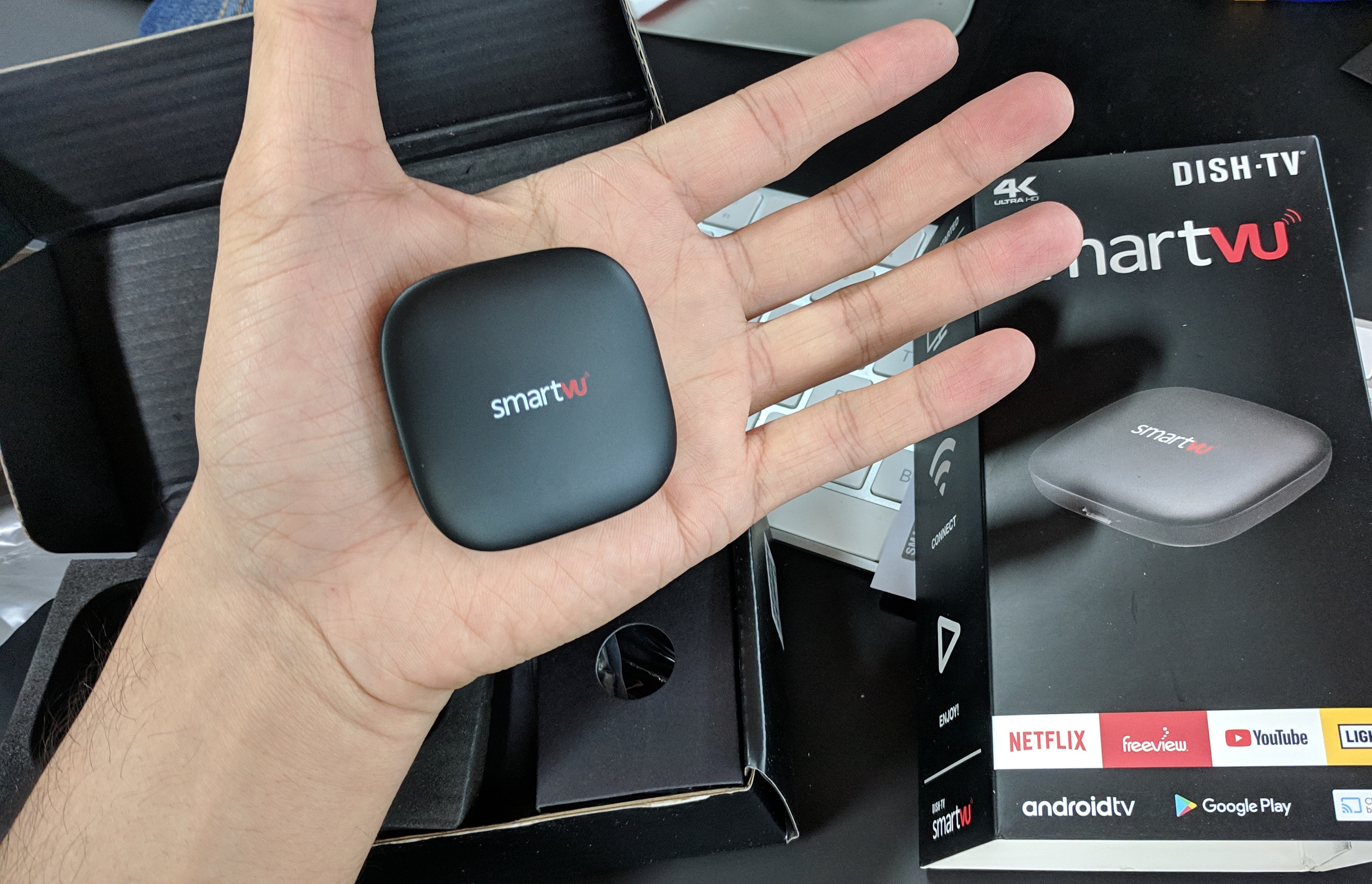
|
|
|
To late
I got a Chromecast 2 v2018 6 weeks ago otherwise I would have considered
Pretty much the same. I have just ripped out a lot of the "Frankenkit" clutter that had grown up around my setup as I purchased different clients on different whims (Minix-X8H, Raspberry Pi, old laptop) and standardised on three wired-in Chromecast Ultras as media clients in all the rooms. They were only about $90 each in the Black Friday sales.
Less clutter and wires. Work pretty reliably with Plex, Emby, Netflix, Lightbox and on-demand TV. Moderate improvement from my perspective. Huge increase in wife acceptance factor however - she is liking having similar setups across rooms, simple and standardised ways of controlling everything, and reduced clutter.
My setup for capturing video and getting it onto the Plex/Emby server is hidden away from the family/living/bed rooms and she doesn't need to worry about that.
sdavisnz: Tv1 is hd
Tv2 is hd
Tv3 is sd
Bravo is sd
Maori is hd
Three life is sd
Duke is hd
The edge is sd
Te reo is hd
Al Jazeera is hd
Red bull TV is hd
Seems like everything tvnz is hd
Seems like media works is sd garbage. Up your game mediaworks.
Since when was redbull on Freeview?
I wonder if Dish TV are restricted from adding non Freeview approved stream urls to their Freeview app?
eracode:vulcannz:
Yup, hopefully this is a first run at testing the waters. Then if it proves popular (sounds like Noels wellington sold out pretty quick) then they start putting some better stuff in place.
I setup one last night, it is better than DVB-S - was very easy to setup, and runs netflix nicely. The freeview channels were noticeable 720 (ie not 1080) the +1 and Prime channels would be nice to haves.
Just to be clear: are all FTA channels in 720?
If that’s the case, it’s a bit off-putting for me.
Sorry bad phrasing on my part, the 1080 quality was not great. So it was significantly better than DVB-S but for example TV1 looked not as good as the Sky HD broadcast. All though the mediaworks are not 1080 they seem to have higher quality encoding so look much better than their DVB-S equivalents.
If DVB-T is an option, right now it's the better choice (over IP). For me we can only get DVB-S so the Smartvu option is better. Less channels but I'm hoping as there is uptake they add them.
There is still significant cost to the broadcasters to have their video on a CDN, and the bandwidth requirements (and cost) for a 1080P HD broadcast are going to be significantly higher than offering 720P.
Maybe it's something we can all hope for is this box sells well - a bit more co-operation between networks to deliver an IP solution that makes their OTA broadcasts.
Sometimes I just sit and think. Other times I just sit.
People complaining the streams are only 720p. I've streaming my FTA channels for about 4 months now since I cut the cord from Sky. The picture quality is perfectly fine, looks great on my set-up (ATV 4K and 4K Panasonic TV). Barely indistinguishable from the 1080i feed I was watching through the SKY box.
Senecio:People complaining the streams are only 720p. I've streaming my FTA channels for about 4 months now since I cut the cord from Sky. The picture quality is perfectly fine, looks great on my set-up (ATV 4K and 4K Panasonic TV). Barely indistinguishable from the 1080i feed I was watching through the SKY box.
Sometimes I just sit and think. Other times I just sit.
my complaint is not against the streams being 720p but the device is advertised as 4K HDR, when in normal NZ conditions (excluding Netflix if you subscribe to 4K) it isn't and wont be for a very long time.
Senecio:
Barely indistinguishable from the 1080i feed
Respectfully disagree.
I have my tvheadend setup to automatically fall back to the online streams if there's a problem with my DVB-T signal or I run out of tuners. Whenever I get one, I think there's something wrong with my TV until I realise what's happened. It's 25fps instead of 50, for starters - that's pretty noticeable. And the bit rate for most channels is 1-2Mbps instead of 8-10Mbps.
It's perfectly serviceable but it's simply not comparable to OTA.
allio:
I have my tvheadend setup to automatically fall back to the online streams if there's a problem with my DVB-T signal or I run out of tuners. Whenever I get one, I think there's something wrong with my TV until I realise what's happened. It's 25fps instead of 50, for starters - that's pretty noticeable.
They're both 25fps. Interlaced video can display poorly on some devices and is best avoided.
When streaming, the limitations of DVB-T don't apply, so there is no need to use 1080i at all. Switch to 1080p instead.
Given Freeview's 'official' boxes can display 1080p-2160p h.265 HDR, then I'd expect to see an improvement once (if) proper infrastructure is put in place.
SirHumphreyAppleby:allio:I have my tvheadend setup to automatically fall back to the online streams if there's a problem with my DVB-T signal or I run out of tuners. Whenever I get one, I think there's something wrong with my TV until I realise what's happened. It's 25fps instead of 50, for starters - that's pretty noticeable.
They're both 25fps. Interlaced video can display poorly on some devices and is best avoided.
When streaming, the limitations of DVB-T don't apply, so there is no need to use 1080i at all. Switch to 1080p instead.
Given Freeview's 'official' boxes can display 1080p-2160p h.265 HDR, then I'd expect to see an improvement once (if) proper infrastructure is put in place.
Sometimes I just sit and think. Other times I just sit.
SirHumphreyAppleby:
They're both 25fps. Interlaced video can display poorly on some devices and is best avoided.
When streaming, the limitations of DVB-T don't apply, so there is no need to use 1080i at all. Switch to 1080p instead.
Given Freeview's 'official' boxes can display 1080p-2160p h.265 HDR, then I'd expect to see an improvement once (if) proper infrastructure is put in place.
It's a lot more complicated than that.
Both 1080i-25 and 1080p-25 are 25fps but they're not 25 fields per second. 1080i has an extra field between every frame. Properly deinterlaced 1080i creates a new frame from the extra field and so has significantly more temporal resolution than a 25fps progressive signal. It's not as good as a proper 50fps signal but it's much better than nothing, and in most broadcast TV situations it is effectively as good as a true 50fps signal.
1080p-50 would be best in every situation but is currently impractical due to bandwidth constraints. The practical choice is between 720p-50, 1080i-25 and 1080p-25. They all have comparable numbers of pixels per second (1080i-25 and 1080p-25 have about 10% more than 720p-50) and bandwidth requirements.
None is "best" in every situation.
1080p-25 is optimal for movies. However 1080i-25 is effectively just as good. You still get the increased (almost double) spatial resolution over 720p-50p and don't lose anything from having every second frame being based on a field, because the source material is a low frame rate anyway. 720p-50 throws away half its bandwidth on an unnecessary duplicate frame.
720p-50 is optimal for sports. It has the most possible motion data, which is more important than the increased spatial resolution. 1080i-25 is next best - it has much higher temporal resolution than 1080p-25 but runs the risk of creating annoying artifacts due to the very fast motion sometimes exceeding the data that the extra field provides, causing the deinterlacer to make a mistake. 1080p-25 is far too chuggy for comfortable sports watching.
1080i-25 is probably best for normal TV. You benefit from both an apparent 50fps (much less risk of artifacts than in sports) and higher spatial resolution than 720p-50. 1080p-25 has even better spatial resolution, but the difference is much less noticeable than the chuggy film-like framerate. 720p-50 will always have flawless motion but it'd be rare to find a show where this outweighs the spatial resolution advantage of 1080i-25.
Basically, a lot of the time 1080i-25 gives you the best of both worlds - high temporal resolution AND high spatial resolution. Sometimes it won't be optimal, but it's never the worst. On the other hand both 720p-50 and 1080p-25 will frequently be the least appropriate stream type for a given content.
All this leaves aside the increased requirements of deinterlacing on the decoding device. Given that we're moving to tiny $10 Chinese boxes, rather than hardware with the grunt to do quality deinterlacing, until we've got the capacity for 1080p-50, the best choice for Freeview streams is probably 720p-50. However last I checked they're all 720p-25, which is absolutely rubbish and worse than all OTA options in every respect.
agree with above.
and its criminal that the mediaworks channels are 480p right now.
|
|
|