|
|
|
k14: Yesterday Contact also announced they will be dropping their feed in tariff down to 8c per kwhr for new customers (current customers will continue at the old rate for the time being). This will be making some of the solar installers a bit nervous. Without the >15c per kwhr feed in tariff any residential install becomes uneconomic.
freemark:k14: Yesterday Contact also announced they will be dropping their feed in tariff down to 8c per kwhr for new customers (current customers will continue at the old rate for the time being). This will be making some of the solar installers a bit nervous. Without the >15c per kwhr feed in tariff any residential install becomes uneconomic.
Disagree. The economics are based around what power usage you are able to replace with your system, and the price you are paying for your electricity (which you don't then have to buy).

***If only I did not know now what I did not know then***
Porboynz:freemark:k14: Yesterday Contact also announced they will be dropping their feed in tariff down to 8c per kwhr for new customers (current customers will continue at the old rate for the time being). This will be making some of the solar installers a bit nervous. Without the >15c per kwhr feed in tariff any residential install becomes uneconomic.
Disagree. The economics are based around what power usage you are able to replace with your system, and the price you are paying for your electricity (which you don't then have to buy).
The problem is exaggerated for existing installations where the PV array is sized well beyond the daytime usage requirements and the ROI depends more on the time shifting commercial model of getting paid for your exported kWh close to what you pay for imported kWh. In my case I very nearly installed a 5kW PV array but when I realised my daytime usage was averaging about 1kW I downsized to 3kW. I would struggle to use all 3kW during summer, but in Autumn Spring and Winter I can use much of my panels energy excess to heat my HWC.
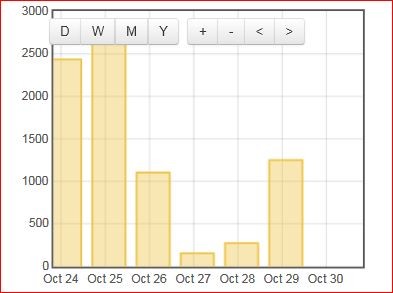
Here is a graph of the kW I have diverted to heat my HWC over the last week.
I can see a bigger market for gadgets like my PV Router that can divert excess power to storage if the retailers cut back to paying wholesale for exported power. It might even encourage me to build a 5kWh battery bank to provide power from midnight to 6am when the load is a fairly static 0.5kW. Interesting times indeed.
Porboynz:
The problem is exaggerated for existing installations where the PV array is sized well beyond the daytime usage requirements and the ROI depends more on the time shifting commercial model of getting paid for your exported kWh close to what you pay for imported kWh. In my case I very nearly installed a 5kW PV array but when I realised my daytime usage was averaging about 1kW I downsized to 3kW. I would struggle to use all 3kW during summer, but in Autumn Spring and Winter I can use much of my panels energy excess to heat my HWC.
Here is a graph of the kW I have diverted to heat my HWC over the last week.
I can see a bigger market for gadgets like my PV Router that can divert excess power to storage if the retailers cut back to paying wholesale for exported power. It might even encourage me to build a 5kWh battery bank to provide power from midnight to 6am when the load is a fairly static 0.5kW. Interesting times indeed.
***If only I did not know now what I did not know then***
Porboynz:
I agree PV is more expensive that solar water, but you cannot run your beer fridge on your solar hot water collectors.
k14: Yesterday Contact also announced they will be dropping their feed in tariff down to 8c per kwhr for new customers (current customers will continue at the old rate for the time being). This will be making some of the solar installers a bit nervous. Without the >15c per kwhr feed in tariff any residential install becomes uneconomic.
freemark:k14: Yesterday Contact also announced they will be dropping their feed in tariff down to 8c per kwhr for new customers (current customers will continue at the old rate for the time being). This will be making some of the solar installers a bit nervous. Without the >15c per kwhr feed in tariff any residential install becomes uneconomic.
I can't find any record of that anywhere..can you source that? Ta.
k14:freemark:k14: Yesterday Contact also announced they will be dropping their feed in tariff down to 8c per kwhr for new customers (current customers will continue at the old rate for the time being). This will be making some of the solar installers a bit nervous. Without the >15c per kwhr feed in tariff any residential install becomes uneconomic.
I can't find any record of that anywhere..can you source that? Ta.
The letters were sent out to current customers on Monday. I can't link to the info because I am not sure if it has made it to the contact site yet though.
|
|
|