|
|
|
Paul1977: Did do it at the bottom though?
I meant DIDN'T do it at the bottom?
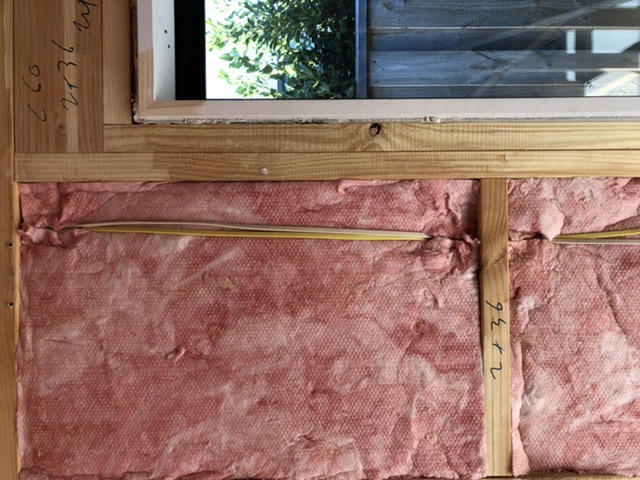
I don't recall what the end result was to be honest. I went around the whole place tidying it up, so that may have got tucked in. Some things I didn't finish off until I had photos of all the services. There is a condensate drain below that photo which wasn't cut into the batts till all photos were done. As I needed to document where it went for example. I went a little overboard and put batts in many internal walls, between media room and rest of house, between bathrooms and bedrooms, between laundry and bedrooms. Double gib between laundry and bedrooms, double gib between bathrooms and bedrooms etc. Fully insulated the whole garage as was sick of a 40 degree garage in previous house.
Basically i'd cut the batts so that they are uncompressed and giving full benefit. So the depth of the services will vary, but I will have tried to have the batts flush with the frame at the end.
Most of the posters in this thread are just like chimpanzees on MDMA, full of feelings of bonhomie, joy, and optimism. Fred99 8/4/21
elpenguino: It's standard procedure for wooden framed houses. Cables have a theoretical maximum current capacity but are derated for length, insulation and safety margin.
Sparkles will be well used to this.
From the Pink Batts installation guide.
"Ensure there are no gaps, folds or compression of the product to achieve optimal performance.
Fit Pink Batts insulation tight and close around electrical cables and pipes.
It’s important to minimise compression, gaps and folds in the insulation.
For electrical cables and small diameter pipes, partially cut insulation and place around the cables and pipes."
Most of the posters in this thread are just like chimpanzees on MDMA, full of feelings of bonhomie, joy, and optimism. Fred99 8/4/21
Paul1977: So better to just do a shallow slice along the whole length and tuck all the electrical cable in, rather that just at the dwangs and studs?
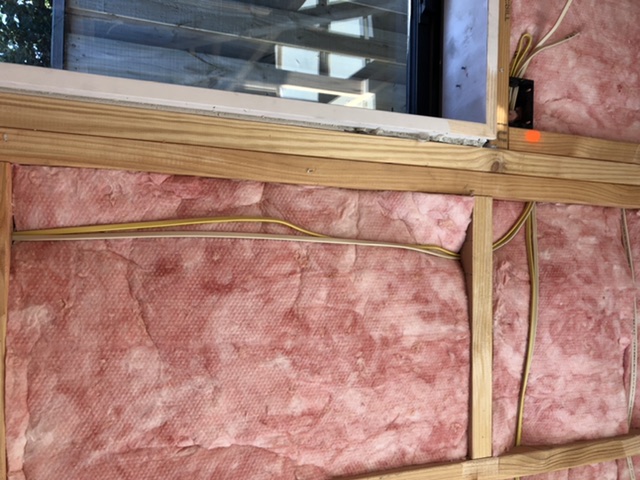
No, What you have done is fine. The cable should run along the surface of the Bat exactly like that, the rule about being too close to the surface is only when the cable is constrained. if you hang a picture and the screw/nail hits the wire the wire will move out of the way unless you constrain it.
Putting the wire through the edge of the batt is overkill as far as insulation is concerned because the pocket of air you have created is so small convection currents will not transfer the heat anyway, but fine if you want to do it. The rules around thermal insulation only apply of the wire is within it for more than 300mm (the heat can escape along its length if short)
you are basically fighting two competing NZ standards. 3604 and 3000. Every electrician I know does it the way you did it in the first picture. If you really want to get picky the placement of the holes through the 3 studs at the edge of the window is not actually allowed.. but everyone does it
Matthew
mdooher:
Paul1977: So better to just do a shallow slice along the whole length and tuck all the electrical cable in, rather that just at the dwangs and studs?
No, What you have done is fine. The cable should run along the surface of the Bat exactly like that, the rule about being too close to the surface is only when the cable is constrained. if you hang a picture and the screw/nail hits the wire the wire will move out of the way unless you constrain it.
Putting the wire through the edge of the batt is overkill as far as insulation is concerned because the pocket of air you have created is so small convection currents will not transfer the heat anyway, but fine if you want to do it. The rules around thermal insulation only apply of the wire is within it for more than 300mm (the heat can escape along its length if short)
you are basically fighting two competing NZ standards. 3604 and 3000. Every electrician I know does it the way you did it in the first picture. If you really want to get picky the placement of the holes through the 3 studs at the edge of the window is not actually allowed.. but everyone does it
Thanks @mdooher so the first picture where there are no cuts in the batts (even at the ends) so they get a bit compressed near the dwangs and studs is pretty much standard practice? So going around and doing them like the second picture would be a bit of a waste of time in your opinion?
EDIT: I know every electrician does it this way, but does every batt installer do it this way? I.e. Just tucking the batts behind the wire and not bothering with any cuts at all to reduce compression of the batt at the dwangs and studs??
Yep
Matthew
mdooher:
Yep
Sorry @mdoorher, added an edit to my previous post. Are you able to comment on that?
Paul1977:
mdooher:
Yep
Sorry @mdoorher, added an edit to my previous post. Are you able to comment on that?
Ha ha... a batt installer will do the barest minimum to get past inspection. Understandable I suppose, they don't get paid a fortune and a pass is a pass as they say
Matthew
I'd be surprised if an electrician was sizing the the cables to not have allowance for them to be fully insulated in a new build. What you have done with those small slits looks good to me. I'd only be concerned if there were large areas of batt compressed. I think the real world difference in insulation value from a small compressed area would be minimal. But if you want it as good as it can be, then do that for all the services and job done.
|
|
|