Geekzone: technology news, blogs, forums
Guest
Welcome Guest.
You haven't logged in yet. If you don't have an account you can register now.


View this topic in a long page with up to 500 replies per page Create new topic
1 | 2 | 3 
timbosan

2199 posts

Uber Geek
+1 received by user: 294

Subscriber

  #3435567 18-Nov-2025 14:55
Send private message

jjnz1:


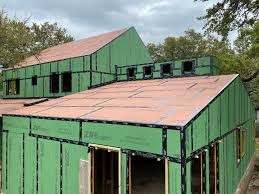
Wow, this is weird timing.. I too am going through the process of creating an airtight home, as part of my reclad and reroof. I am trying to replicate a build concept called 'monopoly framing', traditionally done using Zip Sheathing in the States.

Very interesting! That picture (your first one) looks similar to the projects that Matt Matt Risinger does in the US.  Are you ripping off the existing cladding on the interior AND exterior?  Your diagram is also interesting, especially the Extasana on the roof - I am surprised its not Mento - their roofing specific underlay.  Or is the dotted line on the top of the purlins?

Re my project, as I am doing a retrofit on a kitset cabin, its not going to be passive, but its going be to be a huge increase in air tightness, noise, and temperature regulation on what it current is.  Its great to see Passive House projects in NZ - if I ever sold my current house Passive would be top of my list.

The ERV is a given - as you will get no air movement into the house and hence lots of sale and humid air.  BTW are you working with a Passive certified builder?  Or have you contacted Pro Clima directly? They are amazingly helpful.


jjnz1
1371 posts

Uber Geek
+1 received by user: 195

Lifetime subscriber

  #3435590 18-Nov-2025 15:54
Send private message

timbosan:

Very interesting! That picture (your first one) looks similar to the projects that Matt Matt Risinger does in the US.  Are you ripping off the existing cladding on the interior AND exterior?  Your diagram is also interesting, especially the Extasana on the roof - I am surprised its not Mento - their roofing specific underlay.  Or is the dotted line on the top of the purlins?

Re my project, as I am doing a retrofit on a kitset cabin, its not going to be passive, but its going be to be a huge increase in air tightness, noise, and temperature regulation on what it current is.  Its great to see Passive House projects in NZ - if I ever sold my current house Passive would be top of my list.

The ERV is a given - as you will get no air movement into the house and hence lots of sale and humid air.  BTW are you working with a Passive certified builder?  Or have you contacted Pro Clima directly? They are amazingly helpful.


I believe that is one of Matt's builds in the image. He does some amazing videos about creating high performing homes, and makes some very logical statements. I constantly think what he talks about makes full sense here in NZ too. His video on steel frames in AU was eye opening.. I have seen a few steel stud frames go up locally, without continuous exterior insulation, and I'm sure it wouldn't have been an air tight build.. Would be a condensation nightmare surely given our climate.


Not removing the interior yet. Just exterior. Keep costs down for now. 


Extasana Adhero on the roof (adhesive) - Mento is not adhesive from what I can see, and it needs to be adhesive to go on top of the ply. Currently Thermakraft Covertek 215 is spec'd on top of the purlins. Mento looks to be almost twice the price.


Goal is to create a waterproof airbarrier cavity system on the roof. If water gets under the ColourSteel, or under the flashings between the second story walls and the first story roof, then I have another line of defense where water can escape without damage. Plus I am trying to shift that condensation point out from the building as far as I can.


I am not doing a passive build - just high performance I guess. Although I am wanting to do a blower door test for my own selfish reasons, to see what I can get. <2 ACH would be great. But the goal is to get significantly better than what I have..


tweake
2641 posts

Uber Geek
+1 received by user: 1137


  #3435781 18-Nov-2025 19:35
Send private message

jjnz1:


Wow, this is weird timing.. I too am going through the process of creating an airtight home, as part of my reclad and reroof. I am trying to replicate a build concept called 'monopoly framing', traditionally done using Zip Sheathing in the States.


I am implementing a cavity system on both my walls and roof using EcoPly, then applying solitex extasana adhero from ground up to the ridge line, with NO airgaps. Walls are on 20mm batterns, then timber weatherboards. Roof on <35mm batterns and Covertek 215 underlay with a coloursteel roof. Joinery is uPVC recessed, fully sealed to the rigid airbarrier to prevent air flow.


Due to no passive ventilation in the roof spaces, I am also installing a zehnder ERV, continous fresh air ventilation, which along with my ducted heatpump, will allow me to have conditioned (temp and humidity controlled) roof spaces, as well as fresh air in all my rooms. This has the added benefit that my AC duct work will also be in a conditioned air space, to reduce losses and maximise efficiency.


The only piece of the puzzle I am missing (and purposely not spec'd in the council consent docs) is the rigid air barrier on the roof.. Normal spec's require a minimum of 15 or 17mm ply from memory, but because I am using colour steel roofing, I am hoping to see if EcoPly will endorse using the 7mm EcoPly Barrier product. The purpose of this layer is not structural, as it only serves as an air barrier.


your doing what i would love to do to my place.


i suspect the 7mm is probably fine but keep in mind how the purlins are going to be fastened. don't forget the vapor port (as shown on matts build). also don't forget thats matts was external insulation (aka joe's "perfect wall").


also watch the permeability specs. i'm not a fan of zip as its a lot more moisture tight. i like the higher permeability, especially when your also using plywood.


zehnder ERV are nice but expensive. there is cheaper brands out there and i would try to stick to more universal gear. eg zehnders often have there own special filters. speaking of which don't for get about the main filter, even matt had to go add pre filters to his. the built in filters are really meant to protect the core, not to filter the air down to spec. also if you watched matt's they detuned it a bit because their dehumidifiers where not sized quite right. erv should really be paired with dehumidifiers or at least fit gauges to tell if you need to. remember that erv's keep moisture in as well as out.


high performance is good. rather have it set to your performance not someone else's.


jjnz1
1371 posts

Uber Geek
+1 received by user: 195

Lifetime subscriber

  #3437074 24-Nov-2025 09:42
Send private message

tweake:


your doing what i would love to do to my place.


i suspect the 7mm is probably fine but keep in mind how the purlins are going to be fastened. don't forget the vapor port (as shown on matts build). also don't forget thats matts was external insulation (aka joe's "perfect wall").


also watch the permeability specs. i'm not a fan of zip as its a lot more moisture tight. i like the higher permeability, especially when your also using plywood.


I think you are referring to section 806.5 of the International Residential Code (IRC) which mandates a VDP or vapour diffusion port in climate zones 1-3.


The NZBC doesn't have such specific VDP provisions, but instead only requires natural or mechanical ventilation, preferring traditional roof space ventilation ie passive eaves and ridge ventilation.


I'll have a chat to the building inspector as VDPs seem an option, but noting that NZ (Wellington) is climate zone 4c I think, and not specially required even in conditioned air tight roof spaces.


tweake
2641 posts

Uber Geek
+1 received by user: 1137


  #3437217 24-Nov-2025 17:02
Send private message

jjnz1:


I think you are referring to section 806.5 of the International Residential Code (IRC) which mandates a VDP or vapour diffusion port in climate zones 1-3.


The NZBC doesn't have such specific VDP provisions, but instead only requires natural or mechanical ventilation, preferring traditional roof space ventilation ie passive eaves and ridge ventilation.


I'll have a chat to the building inspector as VDPs seem an option, but noting that NZ (Wellington) is climate zone 4c I think, and not specially required even in conditioned air tight roof spaces.


i don't work down to codes so i don't care if its code requirement or not.


its simply a known issue with vapor collecting at the ridge when using sheathed roofs. its very easy to do the fix in case its ever a problem. minimum code is not how you have to build houses.


jjnz1
1371 posts

Uber Geek
+1 received by user: 195

Lifetime subscriber

  #3437225 24-Nov-2025 17:16
Send private message

tweake:


jjnz1:


I think you are referring to section 806.5 of the International Residential Code (IRC) which mandates a VDP or vapour diffusion port in climate zones 1-3.


The NZBC doesn't have such specific VDP provisions, but instead only requires natural or mechanical ventilation, preferring traditional roof space ventilation ie passive eaves and ridge ventilation.


I'll have a chat to the building inspector as VDPs seem an option, but noting that NZ (Wellington) is climate zone 4c I think, and not specially required even in conditioned air tight roof spaces.


i don't work down to codes so i don't care if its code requirement or not.


its simply a known issue with vapor collecting at the ridge when using sheathed roofs. its very easy to do the fix in case its ever a problem. minimum code is not how you have to build houses.


I don't disagree with you that it might be a great thing to do, but I can't do it unless the council are happy, and the manufacturers are happy to support the warranty on the materials, the way they have been installed.


Think of it like this - I cut 36x 60mm holes 200mm down from the ridge line (18 each side)(or a slot), and then put a vapour permeable membrane over the holes to get the required VDP area as specified in the US, if the council have never seen this before, and the NZ materials manufacturer doesn't support it, if anything goes wrong in the future I am screwed.


The council have to sign off on this - and they work down to codes. So I am working with the architect and council to ensure this meets NZBC.


Stream your favourite shows now on Apple TV (affiliate link).
tweake
2641 posts

Uber Geek
+1 received by user: 1137


  #3437235 24-Nov-2025 17:47
Send private message

jjnz1:


I don't disagree with you that it might be a great thing to do, but I can't do it unless the council are happy, and the manufacturers are happy to support the warranty on the materials, the way they have been installed.


Think of it like this - I cut 36x 60mm holes 200mm down from the ridge line (18 each side)(or a slot), and then put a vapour permeable membrane over the holes to get the required VDP area as specified in the US, if the council have never seen this before, and the NZ materials manufacturer doesn't support it, if anything goes wrong in the future I am screwed.


The council have to sign off on this - and they work down to codes. So I am working with the architect and council to ensure this meets NZBC.


unfortunate this is where acceptable solutions has ruined nz building. anything non standard is punished even tho its good building practice. 


usual thing is to get a specialist to sign off on it $$$$. or just do it and hide it if you have a friendly builder.


the method i've seen is to leave the top sheets a bit short and put the membrane over the ridge rather than drilling holes. it really wants to be right at the top so its under the ridge cap. in the pictures of affected houses, thats where they rot.


1 | 2 | 3 
View this topic in a long page with up to 500 replies per page Create new topic


Geekzone Live »

Try automatic live updates from Geekzone directly in your browser, without refreshing the page, with Geekzone Live now.


Are you subscribed to our RSS feed? You can download the latest headlines and summaries from our stories directly to your computer or smartphone by using a feed reader.