Geekzone: technology news, blogs, forums
Guest
Welcome Guest.
You haven't logged in yet. If you don't have an account you can register now.


Paul1977

5171 posts

Uber Geek
+1 received by user: 2192


#272138 11-Jun-2020 09:35
Send private message

For our new build our heat pump installer is saying they will run surface piping to the nearest downpipe, gully trap, or garden for the condensate drains.


Is this how it is normally down on a new build?


Running to a garden isn't a possibility as there won't be any near where the heat pumps are, and it seems like we have a an opportunity to have something more discreet than surface pipes on a new build since the concrete paths haven't been poured yet.


How is condensate drainage from outdoor heat pump units usually done when they are on concrete paths for new builds?


Thanks


 Home:                                                           Work:
Home Work


View this topic in a long page with up to 500 replies per page Create new topic
 1 | 2
timmmay
20859 posts

Uber Geek
+1 received by user: 5350

Trusted
Lifetime subscriber

  #2502763 11-Jun-2020 09:48
Send private message

Usually done? Probably ignored ;)


We asked our builder to plumb the heat pump output into the drain under the concrete that was being poured, but he forgot :( So we just get wet patches on concrete. Not a problem in summer, in winter it gets a bit wet at times and doesn't dry, still not a big problem but if you can solve it, great.


Paul1977

5171 posts

Uber Geek
+1 received by user: 2192


  #2502776 11-Jun-2020 09:58
Send private message

timmmay:


We asked our builder to plumb the heat pump output into the drain under the concrete that was being poured, but he forgot :( 


Sounds about right.


I'm thinking a couple of discrete soak pits right next to the units might be the way to go, but still interested in other feedback, ideas, and experiences.


billgates
4706 posts

Uber Geek
+1 received by user: 672

Trusted

  #2502786 11-Jun-2020 10:32
Send private message

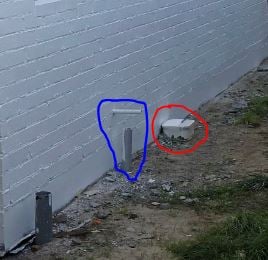
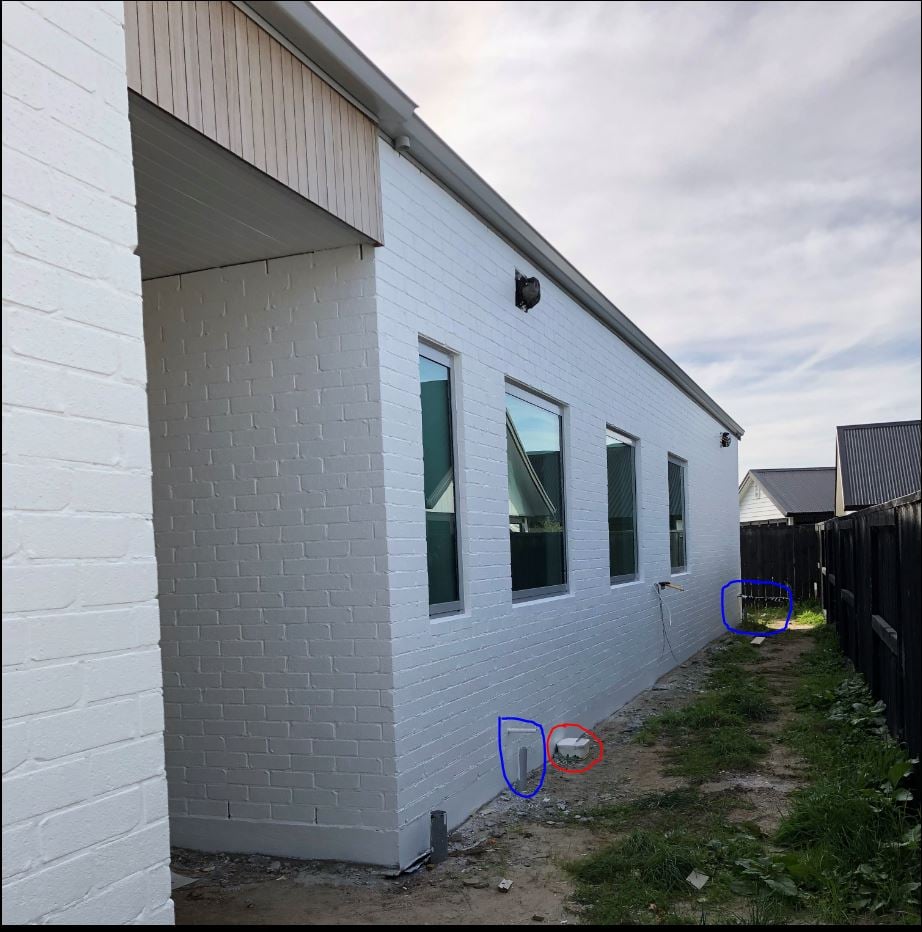
This is something I did not pay attention to and only caught it much later on and when I enquired the HVAC installer what the hell is this pipe sticking out and why it's so far off from the gully drain. I was told that as per council bylaws they cannot disperse the liquid coming out of the condensate pipe into the drain as it will kill the bacteria in there which council does not wants. I did ask why then no one asked us where to terminate this pipe out of rather than randomly selecting wall of their choice. Unfortunately I only noticed this after brick cladding was all complete so it was too late.


I got them to put a pipe on the ground right below it so the water can drain in there but we are getting a 1m wide concrete path laid across that side of the service area of the house so the pipe they have laid on the ground will look ugly. I will just lift and remove this pipe and fill it with dirt and have concrete laid then. The condensate liquid will drip on the concrete but I don't think it will damage the concrete in the long run. Not sure if there is any better alternative than just having the pipe sticking out through your cladding and liquid dripping on concrete in winter.


Do whatever you want to do man.


Dynamic
4016 posts

Uber Geek
+1 received by user: 1852

ID Verified
Trusted
Lifetime subscriber

  #2502791 11-Jun-2020 10:37
Send private message

Perhaps a rock garden below the unit?


“Don't believe anything you read on the net. Except this. Well, including this, I suppose.” Douglas Adams


Fred99
13684 posts

Uber Geek
+1 received by user: 10018


  #2502799 11-Jun-2020 10:53
Send private message

billgates:  I was told that as per council bylaws they cannot disperse the liquid coming out of the condensate pipe into the drain as it will kill the bacteria in there which council does not wants. 


That sounds very odd - as if they were just making something up.  Maybe there's some bylaw about a heat pump installer (or anybody not qualified plumber) running a connection to the sewer system.  Council here (Chch) used to do periodic inspections to make sure that stormwater etc hadn't been illegally connected to sewage gully traps.  They have a problem with this as sewage volumes increase markedly when it rains - which can overwhelm treatment capacity - if everything was connected up properly, then that shouldn't happen.


Paul1977

5171 posts

Uber Geek
+1 received by user: 2192


  #2502805 11-Jun-2020 11:04
Send private message

billgates: This is something I did not pay attention to and only caught it much later on and when I enquired the HVAC installer what the hell is this pipe sticking out and why it's so far off from the gully drain. I was told that as per council bylaws they cannot disperse the liquid coming out of the condensate pipe into the drain as it will kill the bacteria in there which council does not wants. I did ask why then no one asked us where to terminate this pipe out of rather than randomly selecting wall of their choice. Unfortunately I only noticed this after brick cladding was all complete so it was too late. I got them to put a pipe on the ground right below it so the water can drain in there but we are getting a 1m wide concrete path laid across that side of the service area of the house so the pipe they have laid on the ground will look ugly. I will just lift and remove this pipe and fill it with dirt and have concrete laid then. The condensate liquid will drip on the concrete but I don't think it will damage the concrete in the long run. Not sure if there is any better alternative than just having the pipe sticking out through your cladding and liquid dripping on concrete in winter.  


It kind of sounds like I'm lucky my installers have even considered it!


It's a bit hard to tell from your picture, is that a grey PVC pipe stuck vertically into the ground under the condensate drain? If so isn't the drain sticking out the wall too far?


If the grey one is a vertical PCV pipe, you could leave it and then cut it down to concrete level once the slab is poured. Then cut the condensate drain back to the appropriate length.


Or, if white is the final colour of the brickwork, cut the condensate drain back closer to the wall, put an elbow on it then discharge it to the nearly gully trap after you have code compliance - it's high enough that it will easily have enough fall. Since it's a service area, a short run of white PCV on a white wall might be preferable.


I can't remember were you are @billgates, but in Christchurch I'm pretty sure grey water and black water all go into the same waste water pipes once they exit the house, so can a little bit of condensate (i.e. water) going into the drain be a problem compared everything that goes down your sinks, showers, and toilets?


Shop now for Lenovo laptops and other devices (affiliate link).
Paul1977

5171 posts

Uber Geek
+1 received by user: 2192


  #2502806 11-Jun-2020 11:08
Send private message

@billgates and I'm not even talking about the condensate drain from the internal unit. Has any thought been given to were the condensate will drain from your outdoor units?


billgates
4706 posts

Uber Geek
+1 received by user: 672

Trusted

  #2502812 11-Jun-2020 11:14
Send private message

@Paul1977 yeah that's just a simple grey PVC pipe they have inserted into the ground. It is not connected to the drain system. Yep that is my original plan is to cut the white pipe sticking out wall so it will aim for the grey PVC pipe hole below once the concrete pour was going to be done but then I thought that once the grey PVC is cut to the same level as concrete once it's poured, it will also accumulate dirt and rain water inside it so I thought to just pull that grey PVC pipe altogether from ground.


I am in Hamilton and I will check with council about terminating condensate liquid into the gully trap like you have described via an elbow connection and use the leftover external white paint from bricks on it to blend in.


The HVAC experience with this outfit has not been great as it has been with other trades. They have cut 2 wrong holes for 200mm ducts right above out kitchen island where you hang pendant lights from. When we did the walk through, it was to be cut along the same ceiling but in different location above the dining table area. I am getting the builder to cover the hole with Ultraline GIB again, get plasterer in again for their 3 coats meaning 3 separate visits and painter to blend in the patch. Painter was super confident that they can blend in the paint again with rest of ceiling no problem. I am going to obviously adjust this extra $$ I will need to pay plasterer mostly and painter (hopefully they will cover the re-paint in their touchup visit) in HVAC invoice at the end. I told them that extra work will be done and the installer rang back and said "He does not wants to go there or talk about it" when I said if it's going to cost me to repair this ceiling cut hole fiasco I will be invoicing them for it and adjusting it in their final bill.


Do whatever you want to do man.


billgates
4706 posts

Uber Geek
+1 received by user: 672

Trusted

  #2502816 11-Jun-2020 11:22
Send private message

Paul1977:

@billgates and I'm not even talking about the condensate drain from the internal unit. Has any thought been given to were the condensate will drain from your outdoor units?


Nope :)


Did not think that the outdoor compressor units have a condensate drain to worry about? As you can see in the photo, right at the end of the house is where the outdoor compressor unit will be installed as the HVAC piping is poking out of there. Luckily I picked it up because their original location to install outdoor compressor was going to involve a location easy for them to install but was going to show case external PVC conduits by the garage for a new house build. The compressor will be placed at the end of the house and I was then going to run a 300mm concrete pour continuing on other side of the master bedroom wall as mow strip so could leave a little gap between these 2 concrete pour joins and I think we should be able to easily have condensate pipe drain on the ground there without being visible.


Do whatever you want to do man.


nickb800
2735 posts

Uber Geek
+1 received by user: 829

Trusted

  #2502818 11-Jun-2020 11:26
Send private message

On a semi-tangent, my draughtsman specified a 600mm deep 150mm diameter PVC pipe filled with rocks as the mini-soak pit for our hot water cylinder overflow (much higher volume than your heat pump). Perhaps you put something similar in (90mm dia pipe would be fine for a heat pump) before the concrete path is poured?


Dingbatt
6804 posts

Uber Geek
+1 received by user: 3694

Lifetime subscriber

  #2502819 11-Jun-2020 11:30
Send private message

Paul1977:


I can't remember were you are @billgates, but in Christchurch I'm pretty sure grey water and black water all go into the same waste water pipes once they exit the house, so can a little bit of condensate (i.e. water) going into the drain be a problem compared everything that goes down your sinks, showers, and toilets?


Our condensate outflow goes into the same gully trap as the laundry. (Auckland though).


“We’ve arranged a society based on science and technology, in which nobody understands anything about science technology. Carl Sagan 1996


Shop now on Samsung phones, tablets, TVs and more (affiliate link).
nickb800
2735 posts

Uber Geek
+1 received by user: 829

Trusted

  #2502821 11-Jun-2020 11:34
Send private message

Pretty sure grey and black water go into the same wastewater pipes everywhere in NZ, only distinction is some areas have combined stormwater and wastewater networks (e.g old parts of central Auckland). 


My best guess is that the council didn't want the condensate getting into streams (via stormwater network) as it often carries metals like copper which are bad for ecosystems


DarthKermit
5346 posts

Uber Geek
+1 received by user: 3317

Trusted

  #2502824 11-Jun-2020 11:46
Send private message

To the thread author: could you either make it yourself or ask the builders to put a small piece of square boxing next to where the heat pump outdoor unit will go, so that leaves a hole in the concrete to act as an area for the condensate to drip into?


mdooher
Hmm, what to write...
1443 posts

Uber Geek
+1 received by user: 910

ID Verified
Trusted
Lifetime subscriber

  #2502825 11-Jun-2020 11:53
Send private message

I simply ran a spur from my storm-water to under the heat-pump, put in a 40mm slab adapter then a very short piece of 40mm with a cap and drilled a hole for the condensate pipe through the cap. I could probably have just used a 100mm cap but I think my way looks a bit better


you could just run 40mm under the concrete and T it into the stormwater ...but not if the plumbing inspector is going to see it


Matthew


DarthKermit
5346 posts

Uber Geek
+1 received by user: 3317

Trusted

  #2502826 11-Jun-2020 11:53
Send private message

billgates:


Did not think that the outdoor compressor units have a condensate drain to worry about?


Both the indoor and outdoor units produce condensate. If you look underneath the metal box of any heat pump outdoor unit it will have a drain hole to let that moisture drain away from the unit.


 1 | 2
View this topic in a long page with up to 500 replies per page Create new topic


Geekzone Live »

Try automatic live updates from Geekzone directly in your browser, without refreshing the page, with Geekzone Live now.


Are you subscribed to our RSS feed? You can download the latest headlines and summaries from our stories directly to your computer or smartphone by using a feed reader.