Geekzone: technology news, blogs, forums
Guest
Welcome Guest.
You haven't logged in yet. If you don't have an account you can register now.


neb

neb

11294 posts

Uber Geek
+1 received by user: 10018

Trusted
Lifetime subscriber

#280278 5-Dec-2020 21:07
Send private message

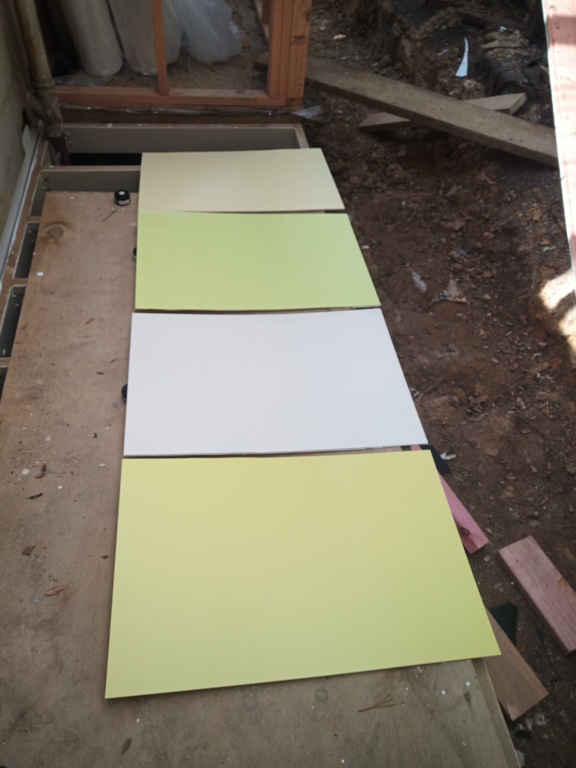
In idea that may be useful for others: Instead of painting patches of colour on the wall in the brief time interval between when the gib fixers leave and the painters turn up and hoping that's representative, get a sheet of corflute, cut it up into segments, pour the contents of a test pot onto each one and roll it out:


That way you can move it around different walls and see it in different lights.


Oh, and you need to use test pots on a large area, those postage-stamp-sized colour swatch samples aren't at all representative of what a larger area will look like.

Create new topic
Jase2985
13732 posts

Uber Geek
+1 received by user: 6207

ID Verified
Lifetime subscriber

  #2616786 5-Dec-2020 21:20
Send private message

does the colour match what it would be like when its on a gib/wood surface?


neb

neb

11294 posts

Uber Geek
+1 received by user: 10018

Trusted
Lifetime subscriber

  #2616789 5-Dec-2020 21:26
Send private message

I would assume so, you're painting onto a matt white surface pretty similar to primed gib.

Eva888
2763 posts

Uber Geek
+1 received by user: 2428

Lifetime subscriber

  #2616828 5-Dec-2020 23:43
Send private message

I paint on to sheets of copy paper and write the name on the paint side when it’s dry. Then stick with sellotape on to the door or wall in your case. File all in a clip folder for future reference. It’s been brilliant a year later when needing some more paint to touch up and having it on hand.


neb

neb

11294 posts

Uber Geek
+1 received by user: 10018

Trusted
Lifetime subscriber

  #2616829 5-Dec-2020 23:47
Send private message

I decided against paper/cardboard because it's not self-supporting, and indeed for paper I was expecting problems with it turning to pulp, and because I was concerned that its absorbent nature would soak up too much of the paint and cause problems with colour purity. The advantage of corflute is that it's stiff/self-supporting and totally non-absorbent.


I agree with filing a reference to what you've used, absolutely essential when, a few years later, you need to touch up some area and can't remember which of the eight million shades of paint it was you used.

mdf

mdf
3566 posts

Uber Geek
+1 received by user: 1519

Trusted

  #2616964 6-Dec-2020 13:23
Send private message

Resene actually sells large (A2?) cardboard sheets designed just for this. But I find generic cardboard works fine too. Much better than painting on the walls since:


- you can move it around to different walls


- you don't add a layer of paint to the wall that will stay raised under your eventual top coats (for many walls you won't notice, but anything where the light shines along it like hallways, it will stick out like your choice of proverbs)


- you can keep the card and use it again the next time your painting another room. Different colour? Repaint your colour swatch.


As a protip, leave a blank/neutral border of 20-30mm around the edge. When you have two colours (old wall and new testpot) right next to each other, your mind will see the contrast between the two colours, rather than the colour itself. Resene has a booklet promotional thing demonstrating this - front cover with two holes, one surrounded by grey and the other by orange (?). The colour behind looks quite different, but open it up and it is a single swatch.


Also when doing this, bear in mind that the colours won't be darker when the whole wall/room is painted that colour, but it will be more intense than a colour swatch.


Eva888
2763 posts

Uber Geek
+1 received by user: 2428

Lifetime subscriber

  #2617014 6-Dec-2020 15:08
Send private message

Surprisingly the paper didn’t turn to pulp and became quite stiff with the paint. You learn a lot about effects when swatching and trying the colour out in different light situations and times of day. Also light bulbs used, warm or cool makes a huge difference to the colours.


Stream your favourite shows now on Apple TV (affiliate link).
allan
2073 posts

Uber Geek
+1 received by user: 899

ID Verified
Lifetime subscriber

  #2617017 6-Dec-2020 15:23
Send private message

I just used cardboard cut from a Weetbix packet. Worked just fine. Easy to paint, didn't disintegrate, easy to move around from wall-to-wall/room-to-room.


Paul1977
5171 posts

Uber Geek
+1 received by user: 2192


  #2617501 7-Dec-2020 13:48
Send private message

You can also get larger sample swatches than the tiny little ones, but probably need to order them. When we were choosing colours we got A4 size samples.


neb

neb

11294 posts

Uber Geek
+1 received by user: 10018

Trusted
Lifetime subscriber

  #2617774 7-Dec-2020 20:16
Send private message

Eva888: Surprisingly the paper didn’t turn to pulp and became quite stiff with the paint. You learn a lot about effects when swatching and trying the colour out in different light situations and times of day. Also light bulbs used, warm or cool makes a huge difference to the colours.


Just tried it with the cheapest cardboard sheets the local stationery place had, they curled up a bit at the edges but apart from that are fine, just a lot flimsier than Corflute. One thing to note, which became obvious with the first painting attempt using Corflute, is that the impression of the colour on small patches is nothing like what it is from larger areas. All of the colours that looked promising on the colour patches were way too intense when spread over a large area, leading to a second lot with much, much lighter colours. These look closer to the intended effect, although I'd never have picked them off the colour patches.

Eva888
2763 posts

Uber Geek
+1 received by user: 2428

Lifetime subscriber

  #2617807 7-Dec-2020 20:43
Send private message

The intensity will be even more obvious with shadows from the opposite wall. It’s good to make two samples of the same colour to see the effect of shadow from the opposite sample to mimic this. Also the time of day makes a huge difference to colour intensity, that surprised me.

Choose three colours that you like then use the half and quarter tones of those colours to allow for shadows or light reflection. Once painted and furniture and pictures are up, the wall colour won’t feature as much as you think.

Create new topic


Geekzone Live »

Try automatic live updates from Geekzone directly in your browser, without refreshing the page, with Geekzone Live now.


Are you subscribed to our RSS feed? You can download the latest headlines and summaries from our stories directly to your computer or smartphone by using a feed reader.
