Geekzone: technology news, blogs, forums
Guest
Welcome Guest.
You haven't logged in yet. If you don't have an account you can register now.


pih

pih

667 posts

Ultimate Geek
+1 received by user: 359

Lifetime subscriber

#295418 27-Mar-2022 21:33
Send private message

A week and a half ago I went to turn on the rangehood light and got a huge fright when I heard and saw heavy arcing, blue light instead of the usual white, followed by a pop and the circuit breaker cutting out.

After cautiously checking everything over and not seeing anything unusual - just one slightly blackened bulb, I turned it all back on and it was all working again, sans said blackened bulb. "Oh," thought I, "must have just been a very loudly blowing bulb". Shrugged and didn't think much more of it. One bulb was still working.

I've just turned it on again and - BZZZ.... POP - same thing again. This time I removed both bulbs and found something I can't explain easily: they are E14 (Small Edison Screw) and the screw thread on both has been completely vaporised in parts:
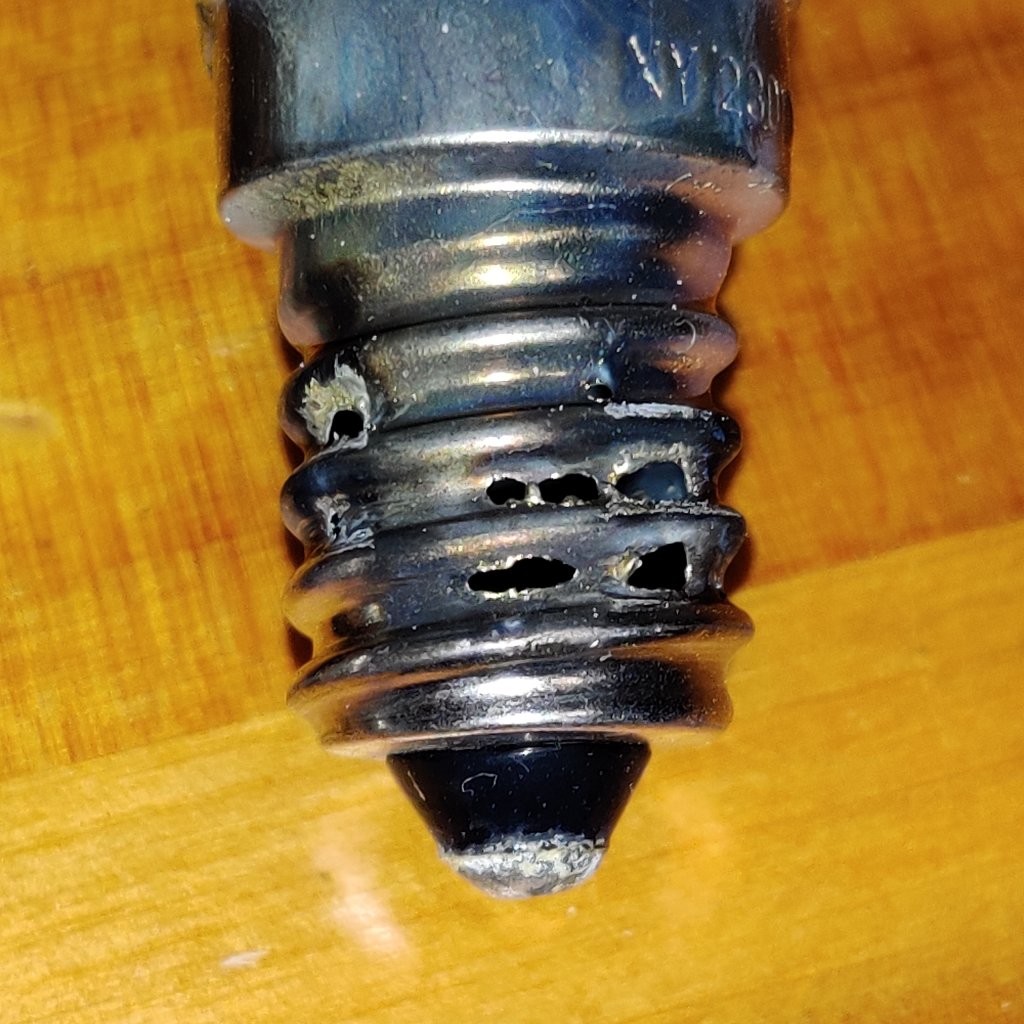
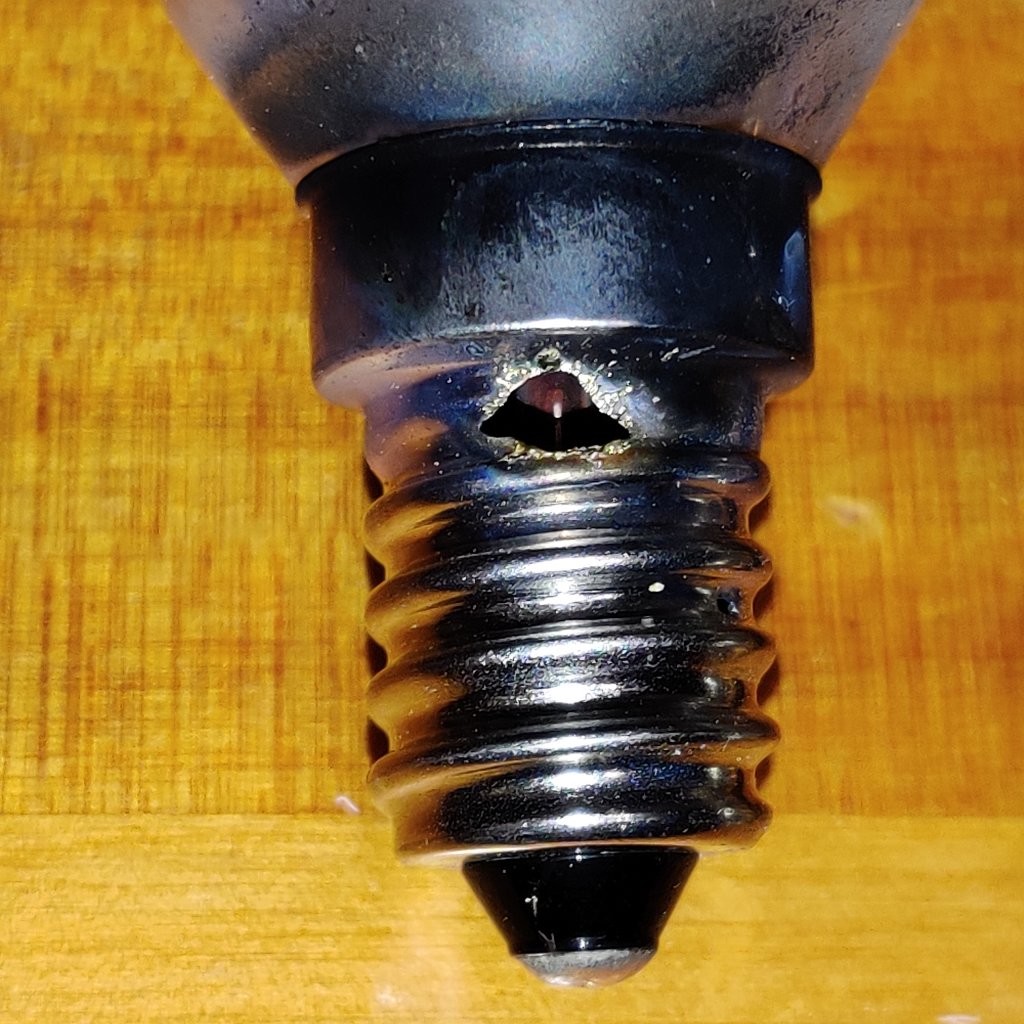


Any ideas what could have caused both bulbs to fail so spectacularly, so close together? Clearly there's an internal short there: bad batch? Poor construction? Oil or moisture ingress? I've seen a lot of blown bulbs and never seen anything like this before.


Filter this topic showing only the reply marked as answer Create new topic
elpenguino
3578 posts

Uber Geek
+1 received by user: 2941


  #2892924 27-Mar-2022 21:42
Send private message

No, ironically an open circuit could be more risky in this case than a short.


An open could lead to arcing which raises the temperature greatly.


Ensure the new bulbs are screwed all the way down. Check the socket for debris, grease etc. Clean if necessary, safely of course.


Most of the posters in this thread are just like chimpanzees on MDMA, full of feelings of bonhomie, joy, and optimism. Fred99 8/4/21


Gordy7
gordy7
2001 posts

Uber Geek
+1 received by user: 505

ID Verified
Lifetime subscriber

  #2892925 27-Mar-2022 21:42
Send private message

The top bulb does show some corrosion around the tip.


What are the sockets like?


Can you see anything unusual behind the sockets?


How old is the rangehood?


Gordy


My first ever AM radio network connection was with a 1MHz AM crystal(OA91) radio receiver.


pih

pih

667 posts

Ultimate Geek
+1 received by user: 359

Lifetime subscriber

  #2892926 27-Mar-2022 22:03
Send private message

Gordy7:

The top bulb does show some corrosion around the tip.


What are the sockets like?


Can you see anything unusual behind the sockets?


How old is the rangehood?


Sockets are in pretty good shape. One has no corrosion or charring on the contacts, the other only has a little, and not on the contact point. Nothing else unusual. Rangehood is probably only 3-5 years old, we've been here for 1.5 years and never had a problem with it.


pih

pih

667 posts

Ultimate Geek
+1 received by user: 359

Lifetime subscriber

  #2892929 27-Mar-2022 22:18
Send private message

elpenguino:

No, ironically an open circuit could be more risky in this case than a short.


An open could lead to arcing which raises the temperature greatly.


Ensure the new bulbs are screwed all the way down. Check the socket for debris, grease etc. Clean if necessary, safely of course.


Interesting, I hadn't thought of that. You're probably right that the bulb filament blew when switched on (open circuit) then the internal wires from the screw to the bulb stem were too close and arced as soon as it became the path of least resistance - so probably a manufacturing fault as well I suppose. I did notice that both bulbs had indeed blown as well.

Certainly makes sense, thanks!

Filter this topic showing only the reply marked as answer Create new topic


Geekzone Live »

Try automatic live updates from Geekzone directly in your browser, without refreshing the page, with Geekzone Live now.


Are you subscribed to our RSS feed? You can download the latest headlines and summaries from our stories directly to your computer or smartphone by using a feed reader.