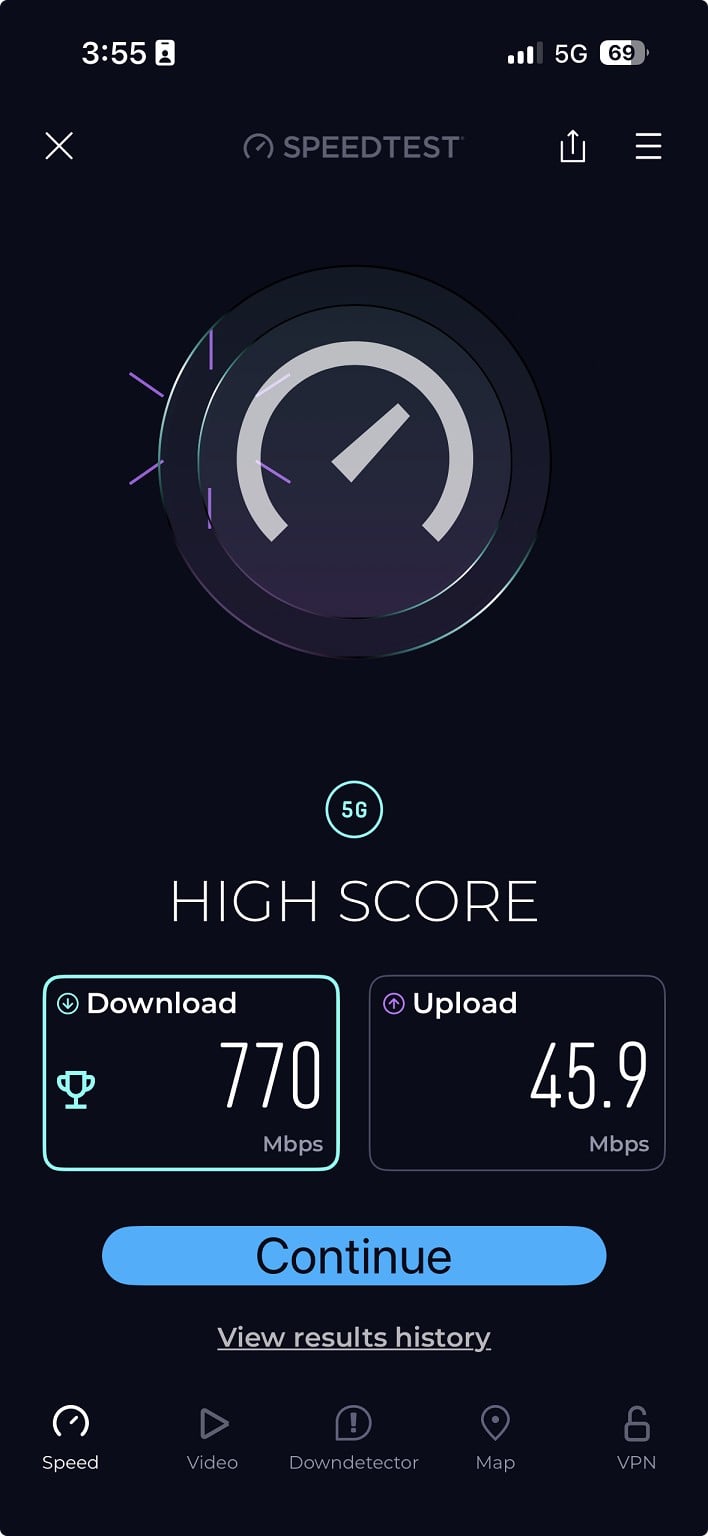
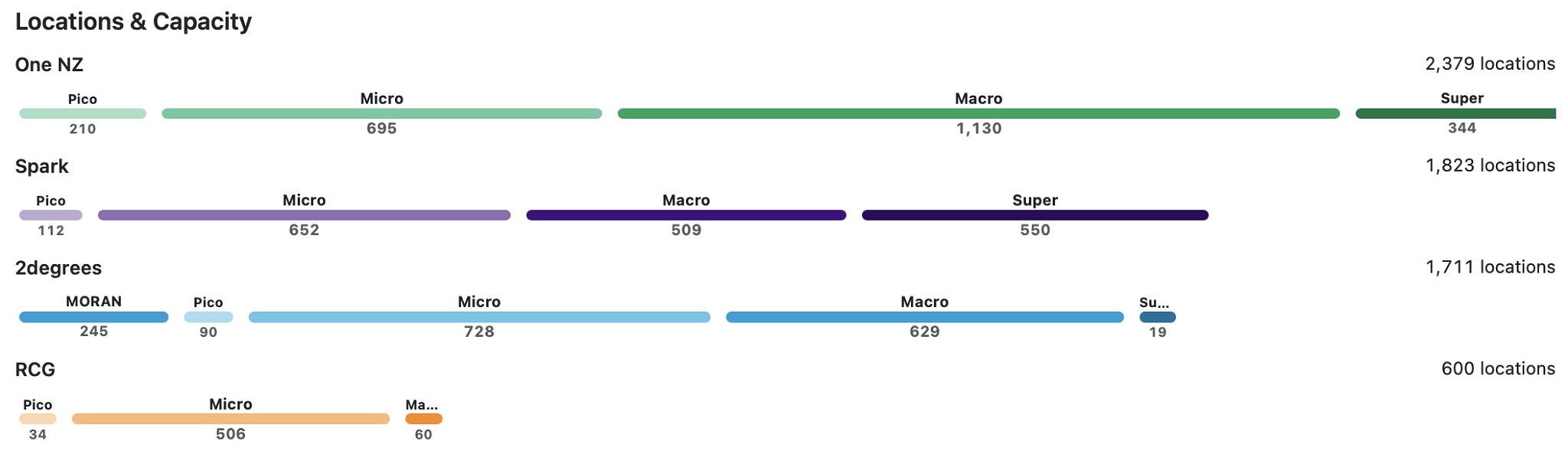
It seemed unusual to me that both Spark and One NZ can simultaneously claim to have NZ’s best coverage. While both are measured independently by different assessors, this is something I built recently - and it clearly demonstrates the gap that exists between providers.
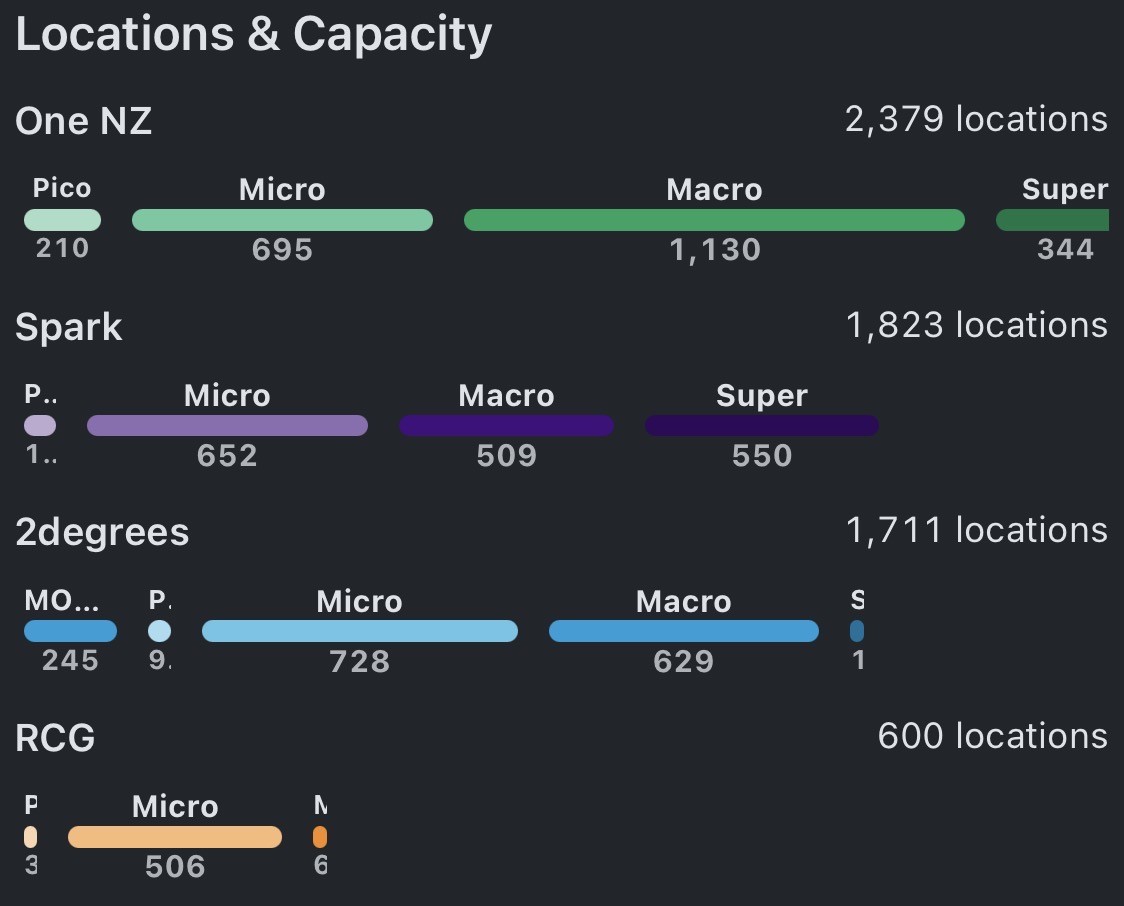
While the exact number of locations for One NZ remains unclear, 2degrees claims to have 2225 locations while Spark claims 2262 officially. Both providers appear to include RCG (rural) locations, which are common to all carriers, which I have broken out separately.
Almost all 2degrees MORAN (hosted by One NZ) locations are licensed for 30 MHz, or less, of capacity. These are all small locations. 2degrees was wise to do this as it has given them a considerable edge in catching up to, and in many cases actually exceeding, Sparks coverage footprint while presumably keeping costs lower. Without MORAN, 2degrees wouldn’t even be close to Spark, let alone One NZ.
It would be fair to say that Spark has focused on building out “super” sites - using as much of their available spectrum as is possible. Even in many cases going so far as to lease even more spectrum from third-parties to extend their 5G capacity even further. On the other hand, One NZ’s sheer number of locations far outstrips Spark’s with the downside that, on a nation wide basis, there appears to be overall a fair amount less capacity on offer, with far fewer super sites.
Summing it up, I’d say One NZ goes for coverage, Spark goes for capacity and, well, 2degrees goes for value for money.
Note that while this data is sourced from RSM and cleansed to the best of my ability, it will almost certainly have some mistakes in it. Some numbers are also truncated due to a formatting issue, ie 2degrees doesn’t have just one super site. I’ve defined my own thresholds for Pico/Micro/Macro/Super based on the total MHz licensed for each location.

 Trusted

 ID Verified