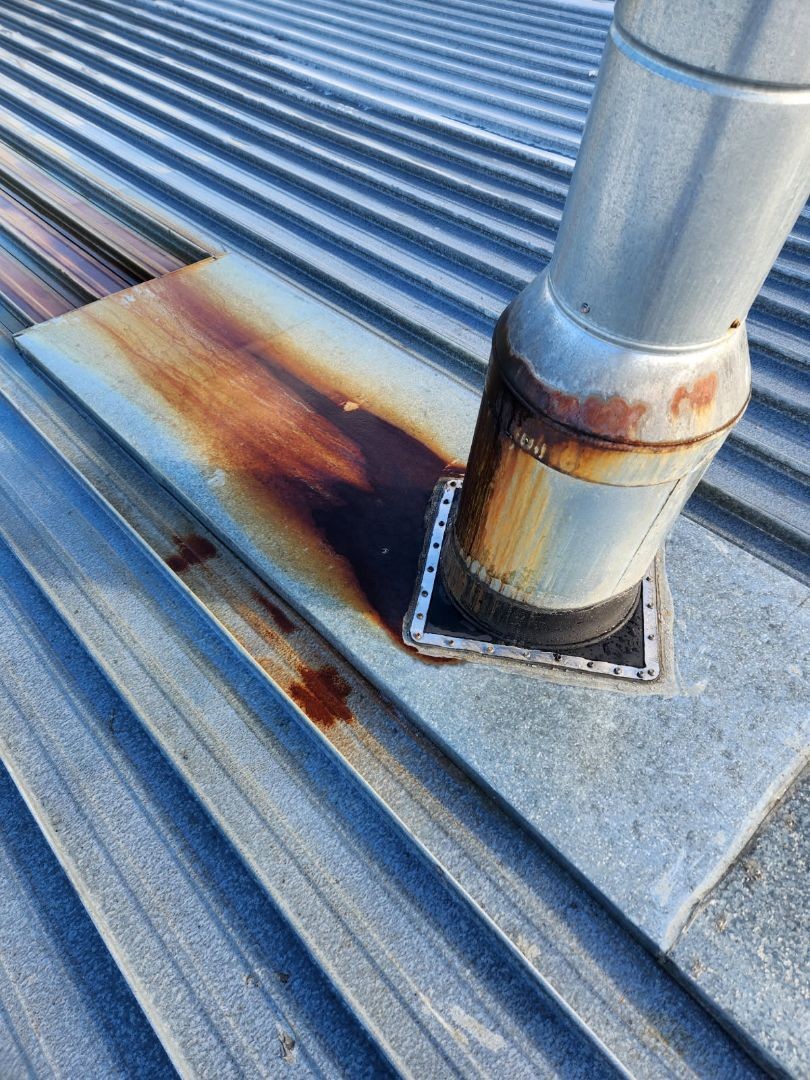
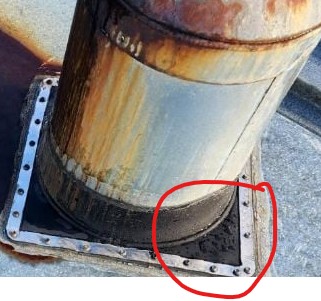
Just asking for a friend if anyone has seen chimney and roof corrosion 3 years after repair.
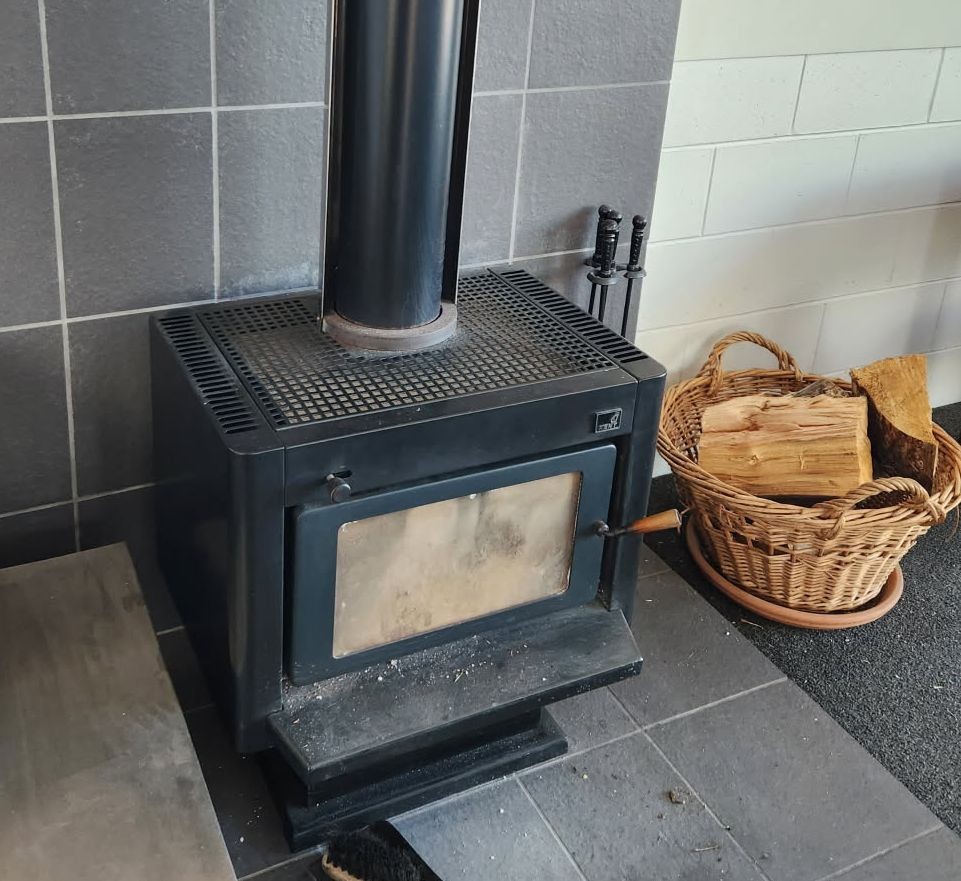
Log fire burning a mix of dry gum, dry pine and macrocarpa.
|
|
|
Are you sure it was all replaced and not just the top bit? Looks like some form of chemical reaction occurring
mattwnz:
Are you sure it was all replaced and not just the top bit? Looks like some form of chemical reaction occurring
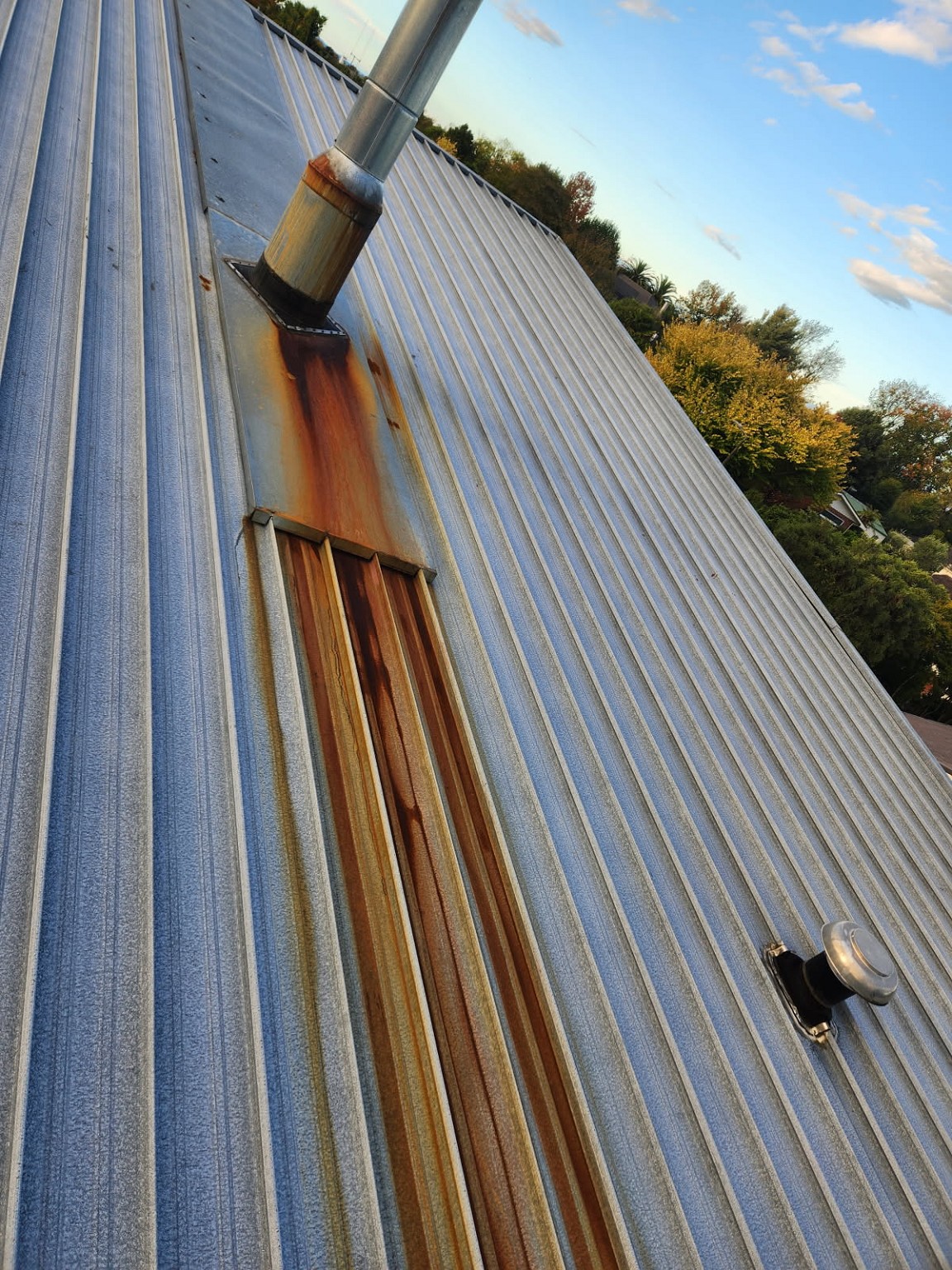
All of the chimney and lower flat flashing was replaced above rectangular longrun roofing iron.
Whatever the problem is, it appears to be attacking the longrun roofing as well.
The previous chimney installation had lasted over 22 years - but this repair only 3 years.
Gordy
My first ever AM radio network connection was with a 1MHz AM crystal(OA91) radio receiver.
mattwnz:
Are you sure it was all replaced and not just the top bit? Looks like some form of chemical reaction occurring
What does the other side of the upper flue section look like, is there anything running down from the top?
Time to light the Bat searchlight. Calling @sweep
Bung:
mattwnz:
Are you sure it was all replaced and not just the top bit? Looks like some form of chemical reaction occurring
What does the other side of the upper flue section look like, is there anything running down from the top?
Time to light the Bat searchlight. Calling @sweep
Looks like something dripping from the top of the chimney.
He must be burning something that is releasing some corrossive stuff.

Gordy
My first ever AM radio network connection was with a 1MHz AM crystal(OA91) radio receiver.
Did they change the interior flu when they replaced the top of the chimney?
It looks awfully like fumes and soot are leaking out though that joint, which is then accelerating corrosion of the metal.... and when it rains the soot is then washing down the roof..
Have you been on the roof when the fire running to see how the chimney is working ...
I'm guessing that the corrosion on the lower part of the Chimney is away from the direction of the prevailing wind?
wellygary:
Did they change the interior flu when they replaced the top of the chimney?
It looks awfully like fumes and soot are leaking out though that joint, which is then accelerating corrosion of the metal.... and when it rains the soot is then washing down the roof..
Have you been on the roof when the fire running to see how the chimney is working ...
I'm guessing that the corrosion on the lower part of the Chimney is away from the direction of the prevailing wind?
He says that the internal flue was not changed. That could explain his problem for sure.
Gordy
My first ever AM radio network connection was with a 1MHz AM crystal(OA91) radio receiver.

i suspect this is your issue, its a galv roof and flue and its being attacked by whats in the exhaust gas as it potentially condenses on the flue.
"Burning of green hardwood, resinous soft woods, low grade coal or oils with a high sulphur content can all result in greater quantities of fallout which contain corrosive substances."
Perhaps the guy that repaired the chimney should have been pro-active with recommending that the internal flue be replaced.
Gordy
My first ever AM radio network connection was with a 1MHz AM crystal(OA91) radio receiver.
I think it is more to do with what they are burning rather than the state of the flue.
It looks to me like they are burning something that is producing an acidic condensation on the top cowl (hat) that is dripping down and attacking the galvanising.
@Swept my have more insight.
Also looking at what appears to be soot siting on the rubber boot, it looks like the flue is due for a clean.
I think there is a chimney sweeper that sometimes comes onto here. But it does appear, as others have said, that there is something wrong with the internal flue.
Gordy7:
He says that the internal flue was not changed. That could explain his problem for sure.
Sorry Swept memory not quite close enough.
If the internal flue was holed I'd expect it to show up above the fire inside.
Hi OP,
A couple of things going on:
1. Excess soot is coming out of your chimney - you need to have that properly cleaned.
2. I would be checking the moisture level of your wood. I know you say it's dry, but if I had a dollar for everytime someone said that and it simply "couldn't be the reason for my logfire problems", I wouldn't have to be a chimney sweep no more and could retire. Dry wood is 20% moisture or less. Yes the Good Wood Programme says 25% is 'dry wood', but I'd go further and say 15% moisture is what you should be aiming for.
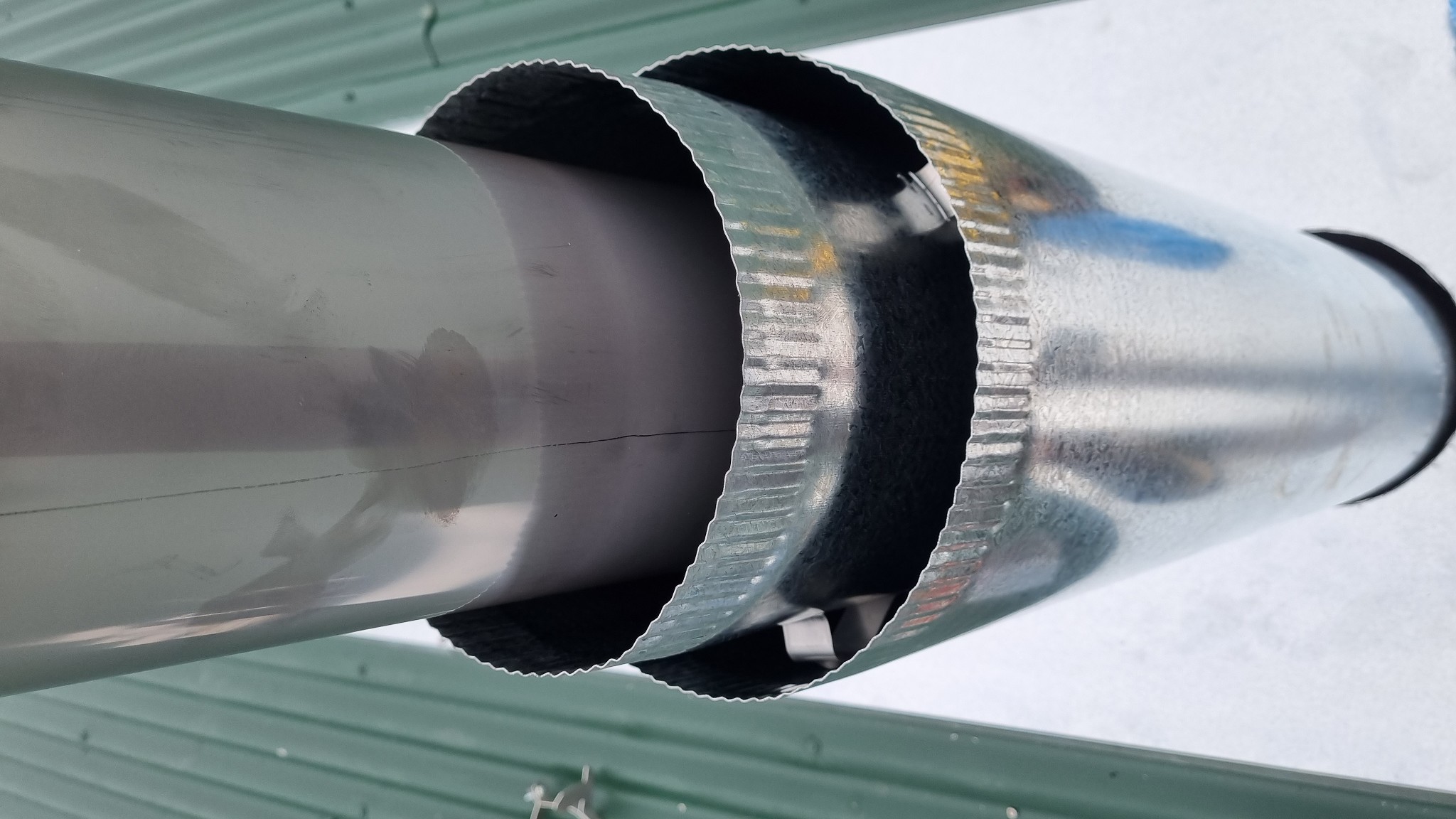
3. You have old enamel steel flue - I wouldn't be surprised if this was worn out at the flue joins and is leaking smoke and hitting the inside of your outer liner, breaking down the galv in it and rusting. The other thing is was the upper section replaced, or was it extended? If it was extended, was the flue also extended with it? Again, smoke and gas should only be coming out of the inner flue - the outer galv liners are for insulation only.
This is what your flue system should like: outer 250/300mm liner, inner 200mm liner, 150mm s/s flue.
I have spoken to my friend... he was pretty impressed with the info above from Swept...
He says he gets the chimney cleaned evey year.
Sounds like he is going to use the fire for another couple of years, rip it out, replace the damaged long run roofing and fit a heat pump.
Gordy
My first ever AM radio network connection was with a 1MHz AM crystal(OA91) radio receiver.
|
|
|