





tweake:
timbosan:
Hey all, restarting this thread. Since I last posted the house has been re-piled (not all, just the places it needed) and I am back to sorting out other problems, including the ground sheet.
But a more pressing need has come up. I have a quote for Insulmax, and keen to proceed, but the front of the house (the low part in the photos) has hardboard on the interior walls. Due to poor drainage in the past the house has sunk a bit in one corner at the front, now that is fixed, but the hardboard is buckling in areas and parts have been patched in the past by previous owners where it split, but they just put more hardboard over the holes they cutout.
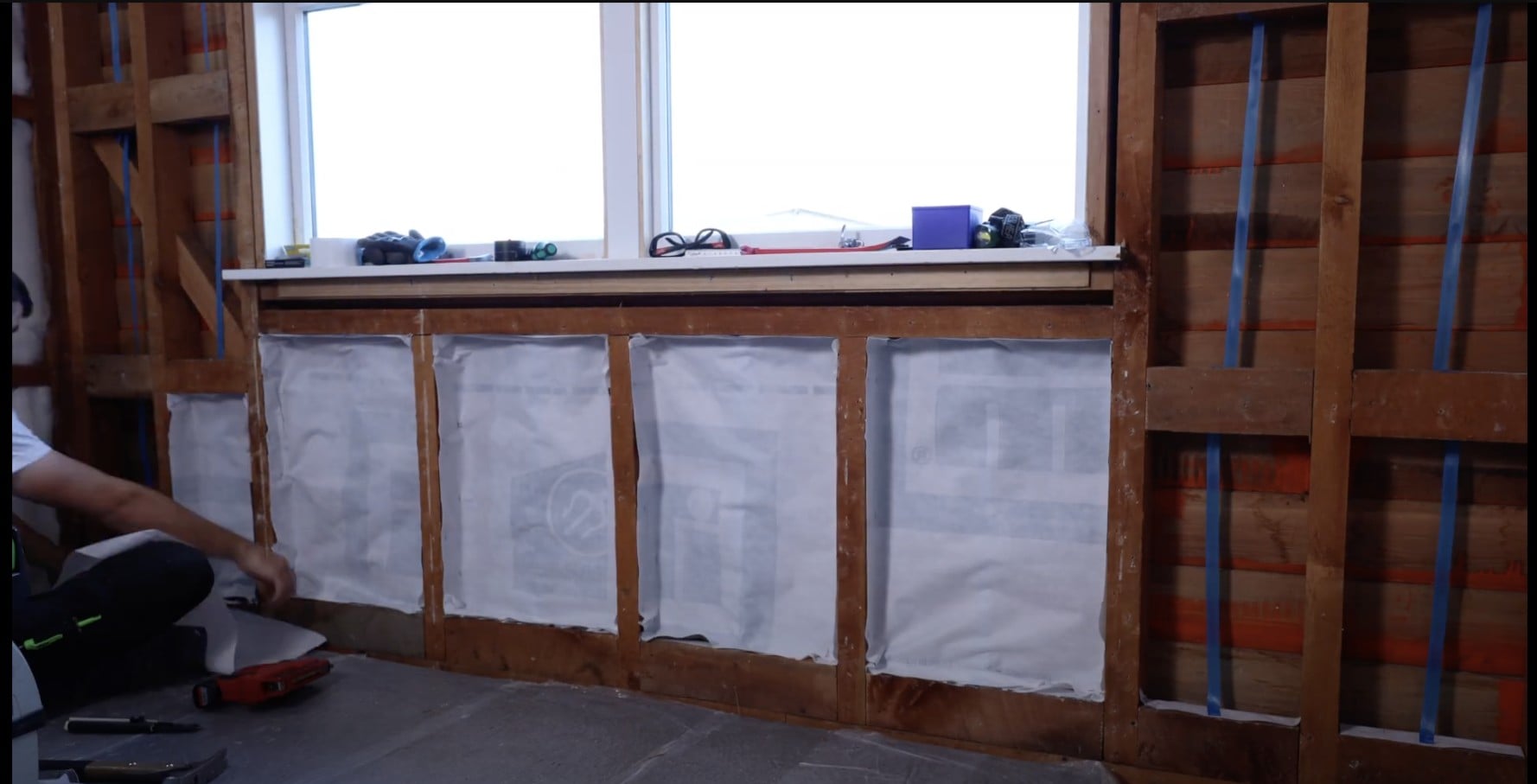
So I want to strip the hardboard and replace with gib before the Insulmax is done. My plan is to remove skirting and architraves but cut around windows (I don't really want to ruin and redo the windows and they have enough depth to them that I can get away with this plan). Also adding a layer of gib over the ceiling covering the existing "softboard" stuff.
However, I am wondering if I need to install a vapour control barrier before I gib, something like this https://5merchants.co.nz/product/majrex-1-5m-x-50m/. There is no building paper between the weatherboards and studs and the room is the coldest (skillion roof and lack of underfloor insulation).
Is this a good idea? I can add Marjex to all the walls and seal the top and bottom edges to the floor / ceiling before adding back skirting etc.
Background - I have a goal to follow EnerPHit principles as possible, without taking the house back to the framing. This is the kind of thing I am looking to do https://www.youtube.com/watch?v=FXXgjvOJcYI
ideally strip back to studs, pocket install house wrap then insulate and gib. pointless gibbing then installing insulmax. i do not recommend drilling holes through the cladding to pump insulation in, especially removing the drainage plane. i think branz has dropped their support for these types of products.
installing a smart vapor barrier is good, it does help reduce in wall condensation (see branz testing). however does the rest of the house follow EnerPHit principles? otherwise its a lot of cost for very little gain. if you want to make it air tight you really need to remove the cladding, fit sheathing/rigid air barrier, so outside air cannot get in around the insulation. don't forget the windows and doors. on house that old typically the flooring is a major source of air leakage.
the smart vapor barrier is not a replacement for the lack of building paper/house wrap under the cladding. two very different jobs.
Hi, I totally agree, however I live in the house and stripping back to studs (and the rework needed to increase wall thickness, etc.) is just way too much. So I am going with the changes I can make, when work is done. The rest of the house doesn't follow EnerPHit, but over time I will do what I can to aim for that as a goal. We already have double glazing (retrofit so keeping the wooden frames).
"on house that old typically the flooring is a major source of air leakage." This is something I have become increasingly aware of. There is underfloor insulation over most of the house but it's only R1.5 (from memory) and parts are now missing from the re-piling. My plan is to replace it all with R3 - which does fit - then a membrane of some sort to stop drafts.
the smart vapor barrier is not a replacement for the lack of building paper/house wrap under the cladding. two very different jobs. - Yup :-) this is specifically the INTERIOR membrane, I am using standard building paper for the downstairs (just storage) and recladding to remove the old vertical slats that let though a huge amount of aid, which along with the wooden floors makes it harder to heat.
do not recommend drilling holes through the cladding to pump insulation in - I thought Insulmax was generally well accepted? All I can find from Branz is https://www.branz.co.nz/shop/catalogue/bk176-good-repair-guide-retrofitting-wall-insulation_671/ but I found this from 2013 https://www.buildmagazine.org.nz/assets/PDF/Build-136-36-Build-Right-Retrofitting-blown-in-wall-insulation.pdf which does raise some good points. But what other options are there?


 ID Verified


 Trusted

