Well.. not exactly NZ UFB but sometimes it's good to hear how things go elsewhere in both good and bad.
OH's parents retired and moved to a small rural (72000 ppl) city some 300+ km east from the capital. Something like moving from Auckland to Palmerston North, I guess. They bought a new house there, about the same size as before, next to a lake. Nothing fancy, nothing special, the price was very similar to the price of average house in New Zealand. Sauna, parquet floor with underfloor heating, two stories, large triple windows, LED lights, all the standard stuff.
They had ordered in advance a standard ADSL2+ connection with the IPTV services and unlimited cloud storage. A week before they were supposed to move, the telco called and said that they cannot deliver anything, please return all the equipment to the nearest shop. "WTF?"
Turned out the construction company had made a deal with another telco and the property was equipped only with cable tv and fiber, no phone copper of any kind. This is a pretty standard procedure today for new builds everywhere around the country. Phone copper is regulated so they prefer to provide fiber instead.
They moved in and the next monday walked to the new city centre to the telco shop. The package they ordered was a 100/10 broadband connection with IPTV services. It includes a HD IPTV set top box with a bunch of free channels, 3000 hours of recording to the cloud, video rentals, streamed documents. 24 month contract, no setup fees, 39.90 euros a month (69 NZD/month).
They promised to have the service delivered in two weeks.
We visit the house and I put everything ready for the installation with instructions -- these folks aren't very comfortable with computers and networking.
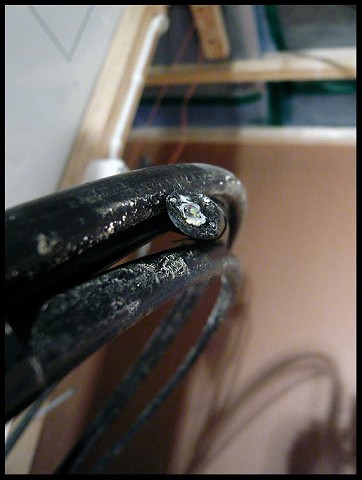
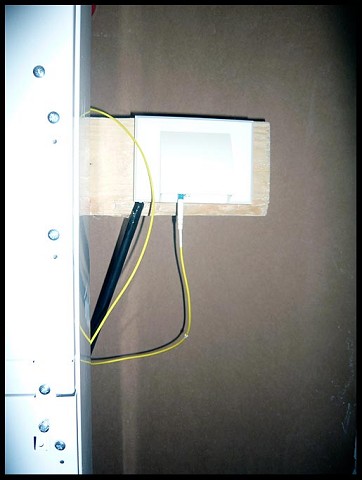
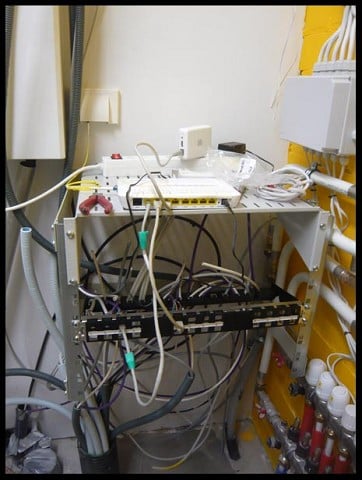
The house had a double cat5e cabling around the rooms, connected to a central patch panel. From the panel there were two cat6's to the nearby cabinet. In the cabinet there were cat6's to other houses, fiber from the telco and two Ericsson ethernet switches. Unfortunately the builders locked the cabinet and I didn't get a photo op - but I think all the ports were GE, at least the upstream was.
Early next week an installer arrived, connected the cat6 in the cabinet to the switch and tested that the ethernet connection in the house was working. However they had not received anything else yet; the IPTV set top box, a "service router", or anything -- during the week they received several packages in the mail and monday next week, the last package with the "service router" arrived. Couple of letters as well for the e-mail mailbox details and the IPTV registration account details. The parents had no idea what all the stuff was.
The ethernet connection they received in about a week was the basic, "naked" broadband. It's available for the same 39.90e/month but why would you buy it when you can get the extra services for free.. 10/10 over the fiber would be 29.90e/month so they are also trying to get people pay a little more for 10x the speed.
A typical DSL costs from 23.90 to 29.90e/month (41-52 NZD/month), ADSL2+ is everywhere. If you want cheaper for random use, you go mobile -- from 4.90e/month (8.5 NZD). All are uncapped and unlimited, you pay for the speed if anything. In the fiber domain the telcos have priced the 10/10 or 25/10 to be similar to the DSL (to keep regulator happy?) but the premium for 100/10 is quite small. 100/100 is a bit more expensive.
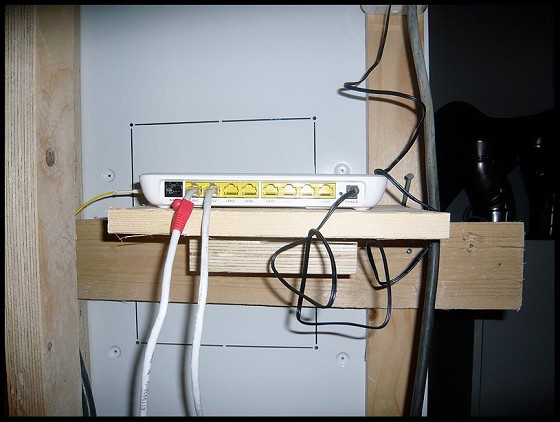
"Support by the phone" begins. I thought the "service router" would be Thomson TG789 but it was a very simple Zyxel NBG-417N. The Zyxel has just one WAN ethernet port and four LAN ports, and a WiFi AP. We didn't plan to use the bundled WiFi but had an Apple Airport Express installed ourselves.
The parents actually went to the local telco shop to ask if the Zyxel was a right device -- they didn't know. After calling around they finally declared that yes, it's the right device. But they didn't know anything about.. They ¨ said that they still need to receive a modem before the broadband can be used. At this point even the parents were smart enough to leave.
Getting everything working was actually pretty simple. Just plugged the incoming cat6 to the NBG-417N WAN and the rest to the LAN ports; the HD IPTV stb, Airport Express and our own GE switch for future expansion. But it takes time over phone when the other end has no idea what they are doing and can't tell HDMI cable from an ethernet cable :)
The IPTV works in it's own VLAN and it will not consume the purchased capacity. For example if they had bought 10/10 connection, the IPTV traffic would be on top of that. Everything is auto configured.
The Thomson TG789 they sometimes/often deliver has also an DSL-port that can do VDSL2 and ADSL2+, for example in some housing areas they use VDSL2 over local phone cables for the last metres from the fiber. If there's no fiber around, they can offer the same package over ADSL2+ copper as well.
Notice something? I haven't said anything about voice or landlines. They simply can't get a traditional landline. The "service router" they received doesn't have any VoIP ports. The Thomson has two but I haven't found any indication that they actually sell the service. The parents haven't even considered having a landline.
This country has turned mobile. Call minutes in the mobile networks are 10x the fixed network. Mobile calls are as long on average as fixed calls. Mobile networks add over 100.000 subscribers a month, tens of thousands fixed subscribers are gone every month (5.5m population, almost 9m mobile subscribers, very soon less than 1m fixed subscribers). Telcos are not investing in fixed voice any longer, my telco will even close their VoIP service next month.
On the IPTV service the STB works pretty much the same way as any digital TV receiver. All the channels are there, EPG, one can click broadcasts on the EPG to be recorded. Watching recordings is streamed from the network. Pay-channels are available. The set top box is from Motorola.
They have also cable-TV which offers similar channels and channel packages using standard DVB-C but for recordings you need an old-fashioned PVR. What actually happened was that when they heard that they will not get the ADSL2-based IPTV service, they went and bought a top-of-the-line DVB-C/T 1T PVR for ~800 NZD. They didn't quite get the idea behind the fiber IPTV.. Interesting to see if they actually get familiar with the IPTV STB or continue to use the built-in tuner in the TV and the PVR.
Speedtest.net gave them 87.28 Mbit/s downstream, 31.35 Mbit/s upstream. I will do some more research the next time we visit them but I wish had such a speed myself.. I've been stuck with my ADSL2+ since 2004. Sucks. I've had similar IPTV service since late 2008 with 5 terabytes of capacity in the cloud. Sold my PVR on local Trademe..
The service was built by a national telco, one of the incumbents. No government support or subsidies, just part of normal business and investing in the infrastructure. Right now the fiber access is not regulated, you have to sell capacity but it's priced out of reach for anything useful to the other telcos in the consumer space. However the regulator is in talks with the telco's so one day also the access to the fiber access will change.
But right now, with every telco is also working with the fiber, the competition is a decent driving force to keep the prices down. Also pretty much every cable TV company is offering up to 200M internet access, which is a good counter balance against the fiber folks. The biggest "loosers" are folks like me, no cable TV, and a bit off the major roads. They were putting fiber some 200 metres away last summer but I can't do anything about the 200 m..
But.. if technically everything was pretty smooth, the service packaging sucked big time. There was no way the parents could have managed to get everything working on their own. They received the equipment in multiple shipments, without any instructions what is still coming or how to actually connect everything together. Perhaps that is an intentional decision -- the telco owns a "Helpson" service that will come and install everything for you for about 140 NZD. Perhaps they want to compensate the lack of installation and equipment charges. But in the process forget that the customer will be pretty pissed with the telco after an evening trying to figure everything out by themselves..
These retired seniors didn't really have any clue what they were buying. They didn't think that fiber was something extraordinary -- more like it was their only option. "Ten times faster" and "that's what I could buy" were reason enough to go for 100/10 instead of 10/10. They do notice that the broadband is fast but that's about it. Nobody talks about triple or double play, they don't think the IPTV set top box is any different from those DVB PVR's. But a few months with the 100/10, I doubt they'll want to go back to DSL.
We just finished configuring Skype on their new Samsung 8-series TV and had a living room to living room video chat. One way to shorten the 300+ km distance..





 ID Verified
 Trusted