Geekzone: technology news, blogs, forums
Guest
Welcome Guest.
You haven't logged in yet. If you don't have an account you can register now.


cshaun

407 posts

Ultimate Geek
+1 received by user: 72

ID Verified

#237611 10-Jun-2018 01:21
Send private message

I have three questions I was hoping for some guidance on.


I'm mounting the aerial mast to my highest roof apex. I've run the cable which terminates in my garage ceiling (a couple of meters from my mains power board). It will run to the various rooms from there.


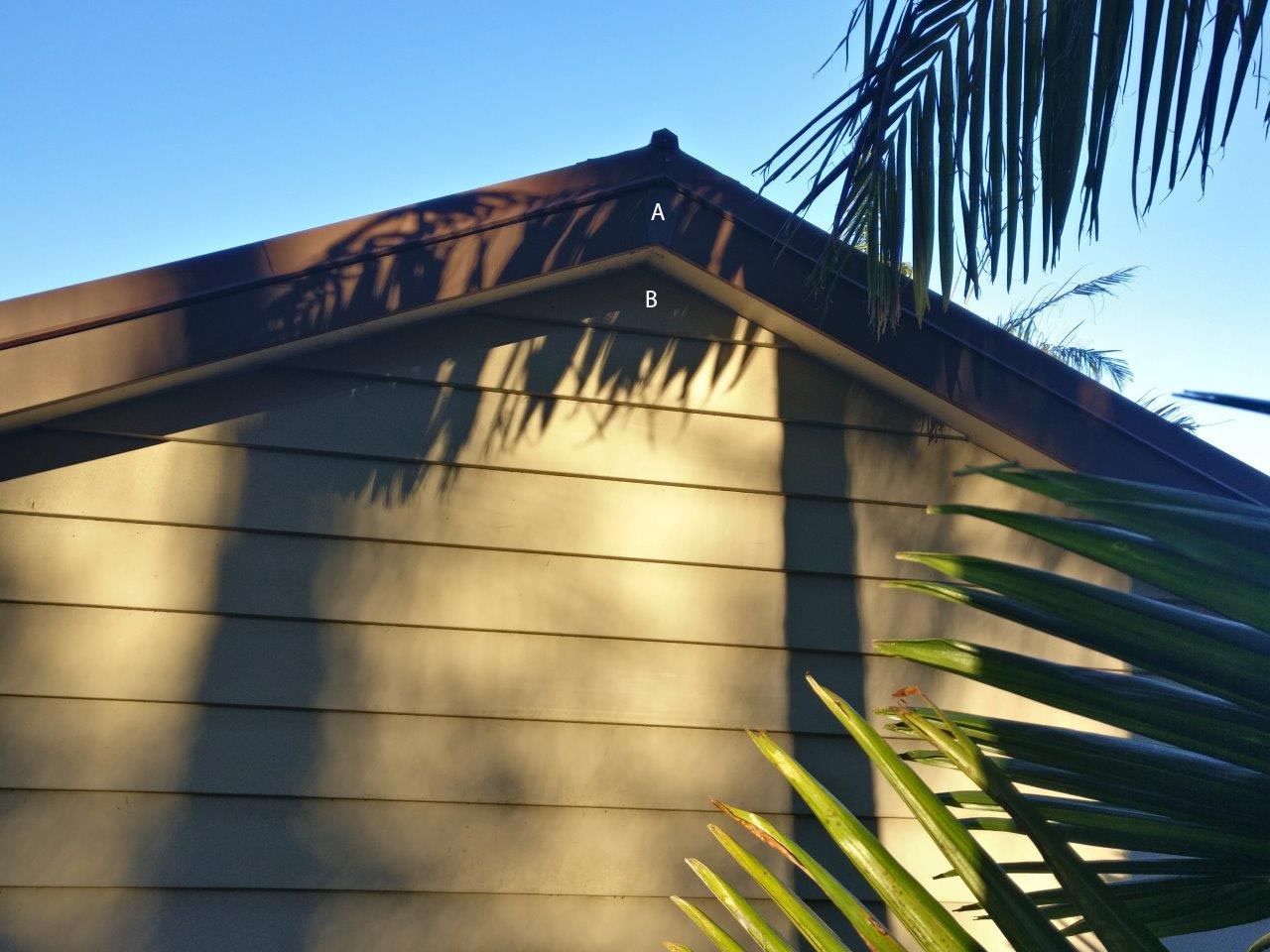
Photos. First - showing where I'd like to mount the mast. Second - what the ceiling in the room looks like. Third - the "L" shaped mast attachment.
 

Click to see full sizeClick to see full sizeClick to see full size


  1. Aerial install - best place to attach? See first pic. A or B?
  2. Grounding the aerial - most I've looked at don't seem to be grounded? It's a mission properly grounding it to an earth spike. Can I ground to the roof? Or perhaps better grounding it in the ceiling (to electrical mains ground)?
  3. Assume I don't need additional support struts for the mast?


Thanks!


Create new topic
toejam316
1516 posts

Uber Geek
+1 received by user: 888

Trusted
Lifetime subscriber

  #2032799 10-Jun-2018 03:19
Send private message

Anything you ground to the mains ground is at risk of livening in a ground fault situation, so simply put, don't do it.


That style of mount I'm not the biggest fan of, as it puts a fair bit of twisting force onto the foot, if you safe from wind I wouldn't worry too much, but if it is a concern I'd look into getting a stay arm to add to the pole. A or B should be fine, I'd suspect there would be a bit more meat to the board at B, but A is going to be a much flatter surface, so probably A would be the goer.


If you do end up getting a support strut, what sort of roof if you have? If it's tin with nails or bolts, I'd suggest just bringing an arm in to one of those and putting a bit of roofers silicon in to ensure it's a weather tight seal, or if you're real shady on that maybe also give it a coat of something to ensure it's weather tight after the fact.


Otherwise, it looks like you've got things fairly in hand.


Join Quic Broadband with my referral - no sign up fee and gives me account credit


Anything I say is the ramblings of an ill informed, opinionated so-and-so, and not representative of any of my past, present or future employers, and is also probably best disregarded.


froob
698 posts

Ultimate Geek
+1 received by user: 233

Lifetime subscriber

  #2032804 10-Jun-2018 08:12
Send private message

In relation to position A or B, A is probably going to be the better attachment point.

Attachment at B would be into the cladding, which look to be weatherboards or steel folded into weatherboard profile. That’s not going to be very strong, unless you screw right through the cladding and into some framing. There may not be framing at exactly the position you want. Also, if you take that approach, it creates a potential path for water entry, although it has slightly more shelter than A.

Position A is the bargeboard, which should be strong enough to hold the mount. It should also be timber, so easier to fill the holes and paint if you later remove the aerial. It will be exposed, so you could run a bead of seal and along the top edge and sides of the attachment point when you screw it down.

I have the same sort of bracket attached to the fascia below the gutter in a very high wind zone, and it has been fine in the various storms we have had over the last 5 years or so. I don’t think you will need additional support struts, unless you have quite a large aerial. But YMMV - my last aerial (an old Sky UHF install) was torn off the roof by a storm in 2013...


B1GGLZ
1961 posts

Uber Geek
+1 received by user: 136


  #2032812 10-Jun-2018 08:53
Send private message

1.  A


2.  Don't


3. Unless it's more than about 1.2m long you won't need additional supports.


I've got a 1.2m mount been bolted to the Barge Board for 10 yrs with a 48el UHF antenna (in Auckland) and it hasn't moved. Mind you if I was in Wellington I'd probably consider a couple of backstays.


Incidentally its called either a Hockey Stick Mount or J-Pole.


sparkz25
750 posts

Ultimate Geek
+1 received by user: 284
Inactive user


  #2032814 10-Jun-2018 08:54
Send private message

mount it on point A and brace it with stays, point B as suggested in the previous post wont work because you have a hockey stick/facia mount and the distance between point A and Point B is too far for the mount.


also hot long/high is the facia mount?


cshaun

407 posts

Ultimate Geek
+1 received by user: 72

ID Verified

  #2032976 10-Jun-2018 12:22
Send private message

The J-Pole is 1.65m long. It will physically work at either A and B (extends out far enough with decent clearance).


I went with a 91 element UHF aerial. Basically the longest/highest mount and biggest aerial the store sold.


OK wasn't sure how strong the barge board is. There's also some flashing in the center that's in the way (you can just make out in the picture), but I guess I could just use a some washers or spacers.


B is standard weatherboard. Yes I'd want/hope to mount it into some framing behind the weather board. Looks like there's often quite a bit of framing in that location. Was thinking of drilling a small pilot hole and see if I hit some framing. The weather board angle is a bit annoying, but again washers/spaces will probably sort it out.


So most people don't ground the aerial?


bales
116 posts

Master Geek
+1 received by user: 12


  #2032993 10-Jun-2018 12:56
Send private message

you dont need to ground the aerial i assume you have good signal at that location i always install two stays with a 91 they have a high wind shear factor.


keithbayly


Shop now for Lenovo laptops and other devices (affiliate link).
Rikkitic
Awrrr
19062 posts

Uber Geek
+1 received by user: 16302

Lifetime subscriber

  #2033008 10-Jun-2018 13:13
Send private message

It is required in some places, not in others. Some people think grounding provides lightning protection, but it won't help against a direct strike. It might even attract one, though that doesn't usually seem to be the case. The main reason for grounding is to protect the TV from static build-up from electrical storms, either nearby or distant. If you don't ground the aerial, you can probably get away with it. If you do ground it, same thing. I think grounding is generally considered better than not grounding, but the consequences either way may not be dire unless you are unlucky. For 50 years we had an ungrounded VHF aerial for our analogue TV and it never blew up even once. Then we put up a UHF aerial on a very high mast for DVB-T. I did make a ground for this to a pipe hammered into the earth. We still haven't had anything blow up. I do tend to unplug the aerial when thunder gets close.


Disclaimer: I am not in any way qualified to give advice on this. I am just reciting my own experience. You should do whatever you feel comfortable with.


Plesse igmore amd axxept applogies in adbance fir anu typos


Create new topic


Geekzone Live »

Try automatic live updates from Geekzone directly in your browser, without refreshing the page, with Geekzone Live now.


Are you subscribed to our RSS feed? You can download the latest headlines and summaries from our stories directly to your computer or smartphone by using a feed reader.