|
|
|
Three-phase or single-phase makes no difference to your appliances.
You can get things that run on Three-Phase, but not domestic appliances. Three-phase would give you more Amps into the house and the electrician would split the phases into seperate circuits.
t0ny:
Three phase is not an option as I intend to use my existing single phase washing machine and appliances have been already bought.
That's not how it works, its only heavy duty items that run across multiple phases, (welders etc),
trig42:
Three-phase or single-phase makes no difference to your appliances.
You can get things that run on Three-Phase, but not domestic appliances. Three-phase would give you more Amps into the house and the electrician would split the phases into seperate circuits.
That is an important point which the electrician did not mention when I told him my appliances are already bought and are single phase. I have reached out to him for clarification.
t0ny:
trig42:
Three-phase or single-phase makes no difference to your appliances.
You can get things that run on Three-Phase, but not domestic appliances. Three-phase would give you more Amps into the house and the electrician would split the phases into seperate circuits.
That is an important point which the electrician did not mention when I told him my appliances are already bought and are single phase. I have reached out to him for clarification.
firstly you can get 2 and 3 phase appliances. quite common to have stoves that are configurable. yes the phases do get split inside the house.
the sparky doesn't have any choice. if your power supply from the street is 3 phase then thats what you get. ditto if its single phase or two phase. getting upgrades from single to 3 phase is up to the lines companies. your stuck with whatever they supply.
t0ny:
Thinking about this bit more.....I currently have the A26 and bathroom is on the other side..takes anywhere between 7-10 seconds before water warms up. Will a bigger unit close that gap? Thinking that if i stick with just one unit, it may be easier in the future to swap the unit and decomission gas vs having to deal with two infinity units
no. its all about how much cold water is sitting in the pipes. the bigger and longer the pipes are the worse it gets. one way is to use very small diameter pipes and high pressure but that has its limits. it makes no difference what the heat source is. the common way around the issue is circulation pump so hot water is always flowing through the pipes.
t0ny:
Hi, I have a new build and the gas plumber recommended that I install two infinity system, one on each end of the house as he figured that a single A26 unit is not sufficient for 4-5 bathroom house with washing machine, taps etc. Houses similar size in the area seem to have only one A26 unit so not sure if plumber is just upselling or actually true. I could consider upgrading to a single bigger unit but he insists that putting two will heat water faster and actually save on the water bill which would offset the initial cost (~3400 extra)
Thoughts?

t0ny:
Did a site measure and heat pump based heating with a large cylinder will be a tough one to squeeze in. Other potential issue the electrician mentioned is that I have single phase power and we would struggle to keep up if everything is turned on hence i should minimize anything else that will draw lots of power. Three phase is not an option as I intend to use my existing single phase washing machine and appliances have been already bought.
.....
If it's a new build, I would seriously consider going for a higher powered option now. What is available depends on your lines company, but for vector, 63A single phase is standard, with 100A single phase and either 63A o 100A three phase available as options.
Check your lines company doesn't charger heaps extra for a larger connection (vector doesn't).
Having access to more power sets you up better for the future. Ultimately at some point your gas appliances will need to be swapped out for electric (perhaps year 2050), and will give you capacity to add any big electrical things you desire in the future (Spa pool? sauna?).
Also, Batteries on EV's continue to get ever bigger. Volvo EX60 just got released. 117 kWh battery. Single phase EV charging in NZ maxes out at 7.2 kW (16+ hour charge time on the EX60 top spec), while three phase charging at 11 kW is common, and 22 kW is offered on some models (like the Zeekr 7X). Granted 7.2 kW will do for most applications, but 11 kW is better if you can do it.
As a counterpoint, be aware that three phase solar is a bit of a headache in NZ. We don't have net metering across phases, so with unbalanced load relative to generation, one can be getting paid wholesale rates to export on one phase, while paying retail rates to import on another. Solar industry is lobbying hard against this, but no dice yet.
My wife and I had a similar dilemma with a recent new build of a relatively long house with strong hot water demand at each end.
First decision was gas vs electric. With gas prices steadily escalating and with solar panels factored in, all-electric was a no-brainer. We quickly made the transition from a gas hob in the old house to an induction hob in the new. Just as fast and with similar fine control, and so much easier to clean too.
Then the decision as to whether we have two sources of hot water or one. After a bit of discussion we decided on one large one in the plant room off the garage, with a ring main feeding the entire house. This ensures each hot tap runs hot in a few seconds. We ensured the ring piping was well lagged to minimise heat loss.
Then the type of HWC. We decided on one large conventional HWC with a 3.5kW base element combined with a detached hot water heat pump. This gives us the best of both worlds - economical hot water from the heat pump, with the base element kicking in when we have free power or if needed for resiliency.
Would make the same decisions again.
t0ny:
Did a site measure and heat pump based heating with a large cylinder will be a tough one to squeeze in. Other potential issue the electrician mentioned is that I have single phase power and we would struggle to keep up if everything is turned on hence i should minimize anything else that will draw lots of power. Three phase is not an option as I intend to use my existing single phase washing machine and appliances have been already bought.
For now, I am just going to stick to two infinity system as it will give a reliable solution though at slightly higher cost.
Totally agree I’m not sold on the reliability of HWC and how long they will last in nz conditions. You can get 15 years at least out of an infinty. I doubt that HWCs will last that long . I regret not getting an additional infinity put in for the extension , we can’t have two showers at the same time and the house is not big. You’ve made the right call enjoy the decent showers and no stress of running out of water
Thanks for the info shared by everyone. This is what i ended up doing:
The one downside of three phase power is issues with solar if I try to sell power to the network but its a problem to be solved for another day.
t0ny:
Thanks for the info shared by everyone. This is what i ended up doing:
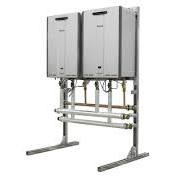
- Upgraded from single A26 to HD56 infinity to create more capacity. I did not do two units as it would have made upgrading to a different system much more expensive in the future.
- Moved the HD56 closer to where majority of the showers are so we can get hot water quicker
- Upgraded to three phase power. I wasn't aware that we could split the three phase into single phases and combine them for more power hungry devices. The long term plan is to replace the HD56 with electric continuous hot water system once technology catches up and Iam ready to get rid of the gas cooktop
The one downside of three phase power is issues with solar if I try to sell power to the network but its a problem to be solved for another day.
On the three phase power thing, I feel this is the right call to do for a new build. One of our neighbors had three phase put in as a retrofit. was quite an exercise with traffic management etc...
Hopefully NZ will start allowing net metering between phases for solar at some point.
There are some positives for 3 phase solar. Many area's will only allow 5 or 10 kW of solar inverters on a single phase connection, but will allow triple that for a three phase connection. Useful if you want a massive system.
On replacing your HD 56 with a continuous electric system, sadly it isn't hopeful for tech to advance's beyond what we have now.
That heater is capable of cranking out 56 kW of heat. Continuous water heater use basic resistance elements so 1 kW in give 1 kW of heat out. Not really any prospect for heat pump continuous water heaters, and one existed it would be massive.
For comparison the residential power connections available in Auckland are:
A single phase 63 A power connection Gives: 14.5 kW
A single phase 100A power connection Gives: 23 kW
A Three phase 63 A power connection Gives: 43.4 kW
A Three phase 100A power connection Gives: 69 kW
You would user close to the biggest available connection just to run your water heater flat out.
I have specified a stiebel eltron water heater (forget if I picked the 19 kW or 28 kW version) for an industrial site before, but that site had a dedicated transformer and a comical amount of power for it's core application. Would need two of the larger version to match with your gas heater. Potentially could be accommodated on a 100A three phase connection, leaving 15 kW for the rest of the house - should be Ok, but your sparky will need to balance loads over the phases carefully. I think they need to be indoor.
Should note that storage units are the normal play, unless there is a pressing need to to go for instant (space can be one - Seem to be a bunch of Australian apartment buildings that had a DHE 27 AU installed for each of the 150+ apartments largely for space reasons.
I have provisioned a 3in1 type tap in the kitchen area which will get the most use. The DHE27 is one power hungry unit, but Iam hopeful we will get space efficient monobloc units or tech like Fischer Aquafficient in the future.
t0ny:
Thanks for the info shared by everyone. This is what i ended up doing:
- Upgraded from single A26 to HD56 infinity to create more capacity.
keep in mind that only flows 37l/min, similar to the a28 model. unless your doing storage, your not going to be using it at 56kw output. one thing to note its a lot louder than the smaller models.
Scott3: If the wait for water is an issue, with any kind of storage heater it is possible to run a insulated ring main, with a recirculating pump. Will keep hot water near your fixtures at all times. A family members workplace has this (require frequent use of hot water for hand washing) - very nice setup. Saves a lot of water, but costs extra energy.
A CO2 heat pump + large tank can solve the problem nicely for 6 people, and may be worth considering. Works out much cheaper than gas over the life of the unit, and especially if you've got solar it's a no brainer. Or just normal resistive tanks + solar is nearly as cheap if you have the room for that excess solar on your roof. p8 here has a good graph:
https://storage.googleapis.com/downloadswebsite/Electric%20Homes%20-%20Rewiring%20Aotearoa%20-%20March%202024.pdf
Heck, I'm about to ditch a working Rinnai 24 for heat pump+ cylinder on an existing house to go this way to save money including $1000p/a gas connection charges so I guess I personally wouldn't put two new ones on a new house. Happens to be better for polar bears n stuff too.
|
|
|