Hi
Want to put a soft starter on my water pump.
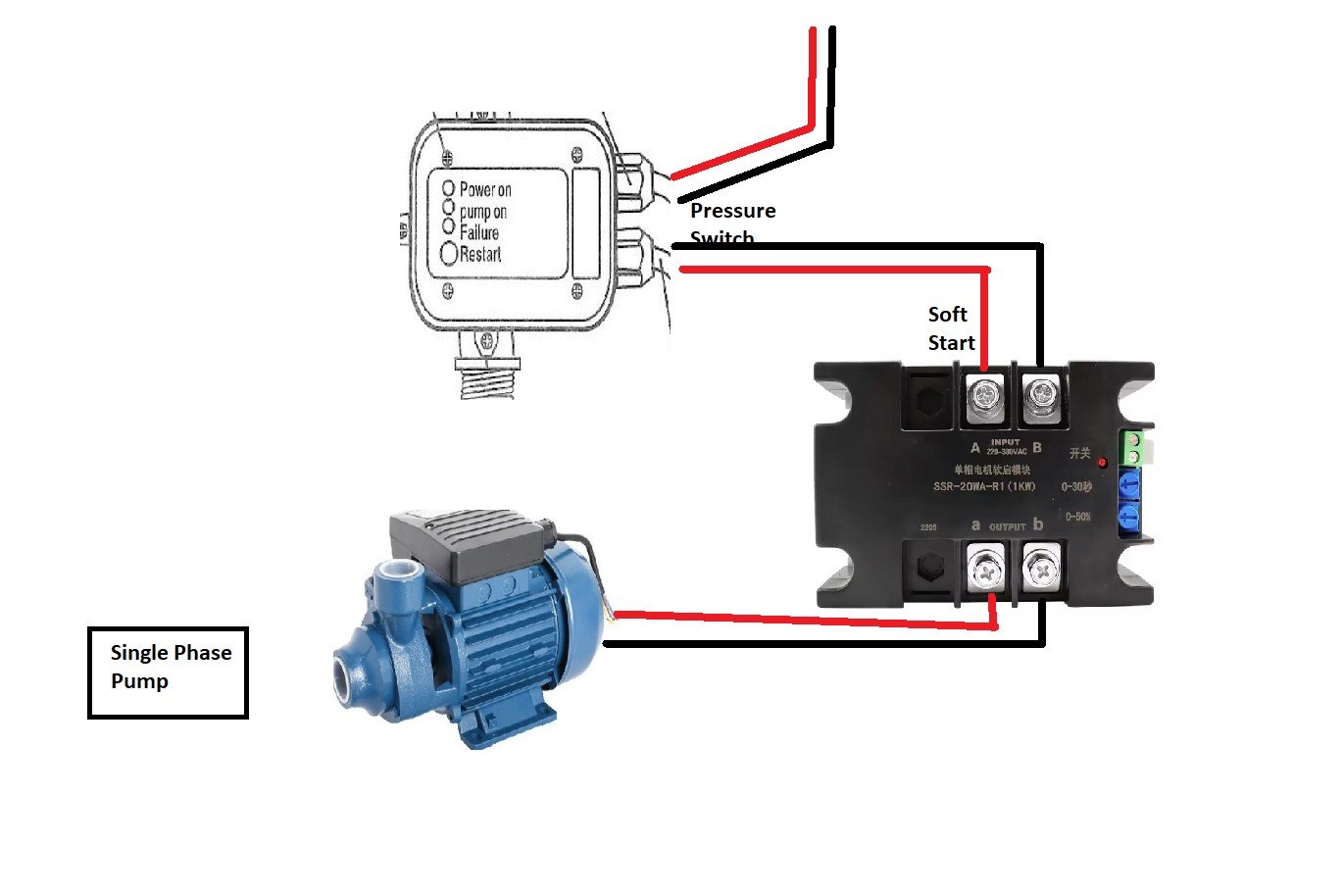
Does this wiring look correct?
Thanks
Richard
|
|
|
Simple answer is no.
I'm assuming you want it to reduce/eliminate water hammer? this is a soft start only and not a soft stop, looks like it also requires a heat sink.
Hi
Looking to use this to reduce starting draw as I am on off grid solar.
Just want the pump to ramp up a slower.
Richard
A soft starter is not designed to use less power to start the motor, it is designed to ramp the speed up slowly over a set time, it most likely will use more power to do this and is not recommended for cap start/run single phase motors.
Just buy a single phase pump with an inverter on it, far more efficient too.
Hi
So what..if anything..is recommended for cap start/run single phase motors ?
Would rather not replace entire pump.
Richard
They will reduce starting current marginally at the expense of reducing starting torque significantly. Unlike a transformer or changing the winding setup, triac-based soft-starts have line current equaling motor current. Starting torque is proportional to the square of starting current (at least in three-phase induction motors; I suspect it's similar or worse for single phase) so you get e.g. 70% starting current, 49% starting torque. 60% current is 36% torque.
You could remove both caps and the start switch, and put a single-phase-output VFD on the pump.
The normal answer to people trying to soft-start and especially speed control single phase induction motors is don't.
>A soft starter is not designed to use less power to start the motor
I should probably wait for an EE to step in here - but this statement goes against what I know about soft-start...
Yes, in the meat-processing industry, we used soft start motors to avoid mechanical shocks - letting long conveyors ramp up to speed gently rather than in a split second (think tonnes of product to get moving).
But an equally valid use is downstairs, in my biggish ground-source heat pump - to avoid the inrush current of starting a big motor on a pump - which otherwise would blow the fuse... By starting slowly, the startup Amps drawn (by my model) is reduced from 83 to 30 A. This is significant even on a mains connection. If you were trying to keep an off-grid inverter happy - it would be extremely significant.
So I would put the OP's use in this second category and say that it's a very correct usage.
You may be correct that the overall power consumed (work in (KWh) on a start is higher for a slow start than a full-speed, but my gut feeling is against it. Getting a vehicle down a 1/4 mile in 3 seconds uses a lot more power than in 20.
pdh:
>A soft starter is not designed to use less power to start the motor
I should probably wait for an EE to step in here - but this statement goes against what I know about soft-start...
Yes, in the meat-processing industry, we used soft start motors to avoid mechanical shocks - letting long conveyors ramp up to speed gently rather than in a split second (think tonnes of product to get moving).
Not an EE, but better, an Electrical Inspector with many years exp. in industrial electrical...
Yes those will be 3 phase in the 10's of KW's quite a different beast required for a single phase 250w cap start motor.....
But an equally valid use is downstairs, in my biggish ground-source heat pump - to avoid the inrush current of starting a big motor on a pump - which otherwise would blow the fuse... By starting slowly, the startup Amps drawn (by my model) is reduced from 83 to 30 A. This is significant even on a mains connection. If you were trying to keep an off-grid inverter happy - it would be extremely significant.
again another very different beast, these are usually inverter style single phase to 3 phase variable speed drives.
What the OP is wanting to do is beyond what homeowners have suitable knowledge of, Some here can give answers that will work, it won't be cheap and most would not dish out the advice as it would be opening them up for liability if the OP tried to follow it and made a mess of it.
My only advice here is the original proposal the OP made will not work, the motor would never run. Even if the problem was fixed it would unlikely solve the issues the OP has and there other issues that need sorting as well.
it will come down to what type of single phase motor OP is using.
i'm used to 3 phase induction motors that often get converted to single phase cap start/run. these days its cost about the same to use a single to three phase inverter and you get all the speed control functions as well.
with something like a centrifugal water pump, it won't have much load at low rpm's so having rpm ramp up works well as a soft start. but again this all comes down to type of motor being used.
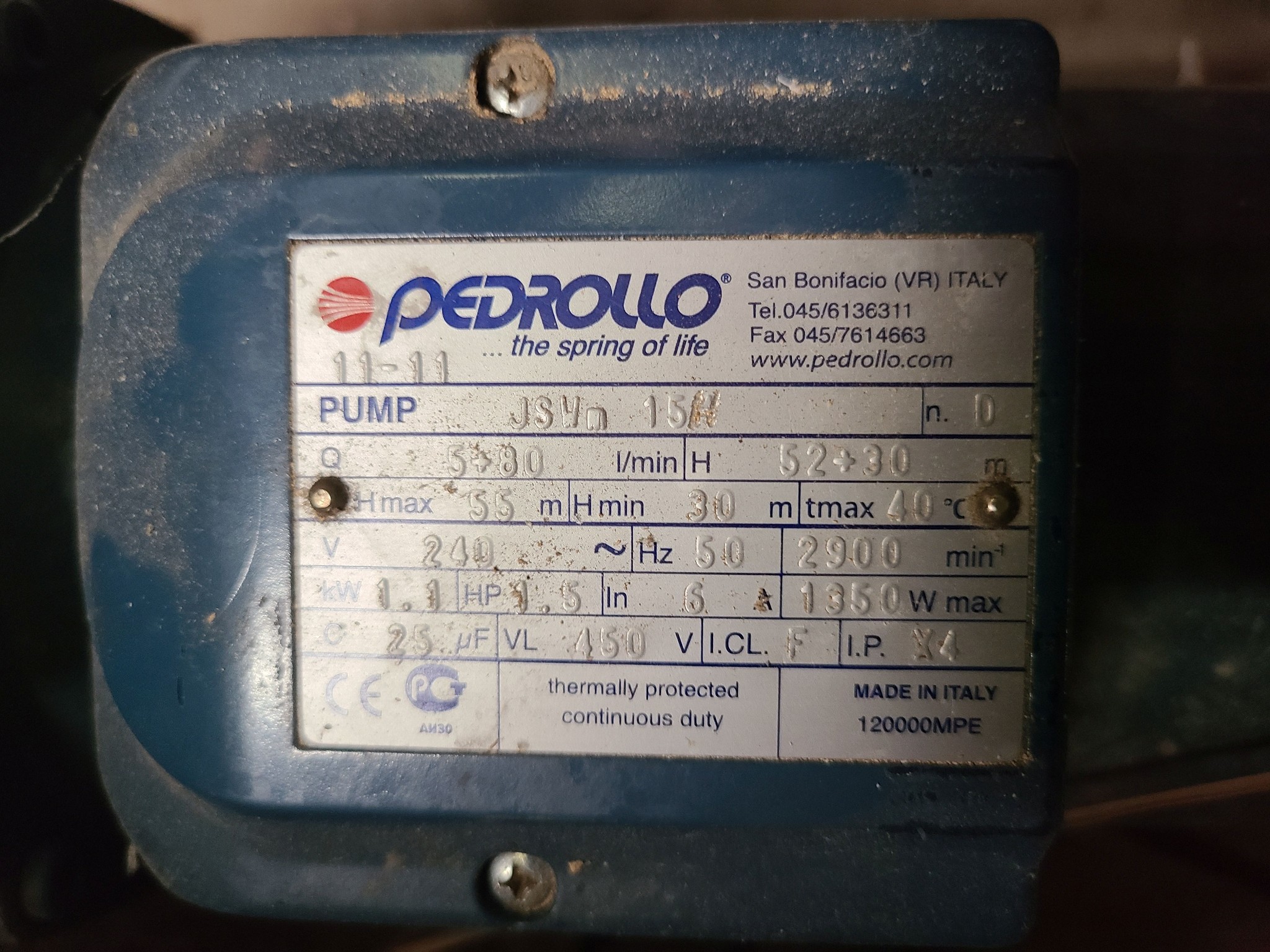
Looking at the motor name plate, even if you got it working it wouldn't last long as the soft starter is too small to safely control the motor. The smoke will eventually come out of it.
Get your electrician to sort this out as doing it yourself is outside of the scope of the home owner exemption for electrical work and the gear you are using will most likely end in a fire or a shock hazard.
>What the OP is wanting to do is beyond what homeowners have suitable knowledge of
Greg - I bow to your expertise - it doesn't sound like the OP's proposed solution has any chance of working.
But it might be possible to give him some constructive advise - without opening up liability...
I for one don't yet understand what problem the OP is trying to overcome.
You suggested water hammer, I conjectured startup current draw.
Perhaps there's a solution that doesn't even involve soft-starting ?
If I give out electrical advice on how do do xyz to a non electrical person and as a result of them not able to understand/comprehend what they are doing and something happens, lets say it burns up and the house catches fire, Worksafe/EWRB come after me, I lose my practicing license and can no longer work.
Looking at what the OP has suggested,
1) they have no idea of how the softstarter works, their diagram shows power in- power out they have missed a crucial part of making it work.
2) No heatshink
3) Motor name plate details show the motor is bigger than the capacity of the softstarter.
4) Electrical homeowner exemption does not extend to modification of electrical appliances.
5) Softstarters are great devices when correctly matched to motors - this is not the case.
My only advice is - Get your electrician involved to correctly sort it out, is it worth the risk of you and your families life?
startup current draw ...correct
SSR-40WA-R2(1.5KW)
Aluminum Profile Radiator For Voltage Regulating Soft Start Module 110*100*80mm
rd400f:
startup current draw ...correct
SSR-40WA-R2(1.5KW)
Aluminum Profile Radiator For Voltage Regulating Soft Start Module 110*100*80mm
Not the same model that was pictured in your 1st post.......
|
|
|