Geekzone: technology news, blogs, forums
Guest
Welcome Guest.
You haven't logged in yet. If you don't have an account you can register now.


View this topic in a long page with up to 500 replies per page Create new topic
1 | ... | 24 | 25 | 26 | 27 | 28 | 29 | 30 | 31 | 32 | 33 | 34

gzt

gzt
18689 posts

Uber Geek
+1 received by user: 7827

Lifetime subscriber

  #2970297 19-Sep-2022 20:19
Send private message

Free event coming up in Auckland. Registration is required. Looks like it is associated with an exhibition opening. There's mention of a screening that could be boilerplate text leftover from something else.

Motat events: MOTAT presents: Electric Air
.
Following the opening of our latest self-curated exhibition Switch Up Sustainable Solutions, this Aviation Conversation focuses on the technology benefits of short-haul electric aircraft.

Join us in the newly refurbished Aviation Hall as we discover the exciting future landscape of electric air travel with Gary Freedman, founder of Electricair. ElectricAir is a Christchurch start-up that operates the first electric plane in Aotearoa.

Gary and his team believe New Zealand is a no brainer for electric planes, with one of the highest rates of short haul flights per person of any country in the world and an electricity grid powered from predominantly renewable sources. Their mission is to see more owners and operators choosing to go electric and their first aircraft, the Pipistrel Alpha Electro, is paving the way.

This will be a fascinating conversation about the world of electric planes and the future of air travel as we know it.


Technofreak

6657 posts

Uber Geek
+1 received by user: 3477

Trusted

  #2970310 19-Sep-2022 21:34
Send private message

Scott3:


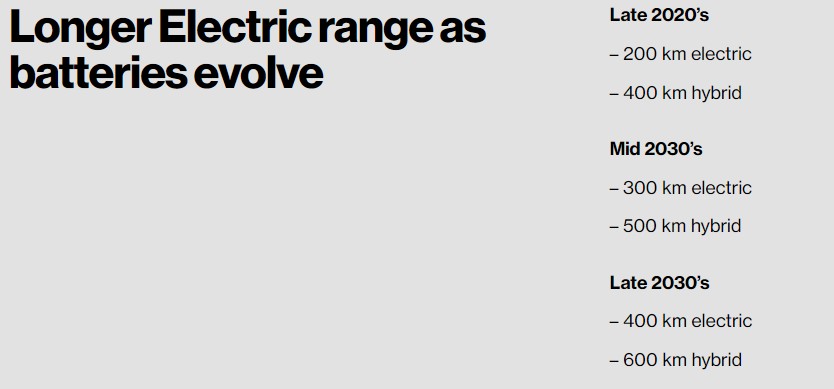
Heart aerospace are projecting a rough doubling in electric range between late 2020 and late 2030.


They were quoting 250 miles (not sure if they meant nautical or statute, but even assuming only statute is 400 km) for the ES19 the prototype of which was slated to fly this year. It hasn't flown and probably never will. They have certainly revised their range aspirations downwards significantly, but even so in my opinion these new figures are unrealistic. 


The ES 30 is slated to enter service 2028.  I'm betting it won't. The specs on their website are pretty scant for an aircraft they hope to have in service in just over 5 years.


They make a point about the electric motors being much quieter but conveniently forget most of the noise comes from the propellers. 


Sony Xperia XA2 running Sailfish OS. https://sailfishos.org The true independent open source mobile OS 
Samsung Galaxy Tab S6
Dell Inspiron 14z i5


Sidestep
1019 posts

Uber Geek
+1 received by user: 567

Lifetime subscriber

  #2970329 20-Sep-2022 01:42
Send private message

Technofreak:


They make a point about the electric motors being much quieter but conveniently forget most of the noise comes from the propellers. 


The nature of electric drive does give room for a reduction in prop noise. 


Here's a B.M.E. thesis - from 2020 - on a (theoretical) low noise prop design for Heart's ES-19.


I found it an interesting read just because it clarifies - to a layman like myself - the differing parameters of electric vs conventionally powered prop design that allow this theoretical noise-reduction - in this case compared to a Beech 1900D (a well known baseline for most of us).


It also show that even if the aircraft itself isn't a commercial success, the research contributes to an ever-growing pool of knowledge that'll help future efforts.


Technofreak

6657 posts

Uber Geek
+1 received by user: 3477

Trusted

  #2970375 20-Sep-2022 09:29
Send private message

Sidestep:


Technofreak:


They make a point about the electric motors being much quieter but conveniently forget most of the noise comes from the propellers. 


The nature of electric drive does give room for a reduction in prop noise. 


Here's a B.M.E. thesis - from 2020 - on a (theoretical) low noise prop design for Heart's ES-19.


I found it an interesting read just because it clarifies - to a layman like myself - the differing parameters of electric vs conventionally powered prop design that allow this theoretical noise-reduction - in this case compared to a Beech 1900D (a well known baseline for most of us).


It also show that even if the aircraft itself isn't a commercial success, the research contributes to an ever-growing pool of knowledge that'll help future efforts.


The only factor in that thesis that provides any noise advantage for an elecrtic aircraft is the use of multiple (4 or more) propellors. Even then I'd say the gain isn't significant enough to be something that is a selling point. Every other aspect of propeller design applies to "conventionally" powered aircraft as well.


Sony Xperia XA2 running Sailfish OS. https://sailfishos.org The true independent open source mobile OS 
Samsung Galaxy Tab S6
Dell Inspiron 14z i5


frankv
5705 posts

Uber Geek
+1 received by user: 3666

Lifetime subscriber

  #2970429 20-Sep-2022 11:03
Send private message

Technofreak:


The only factor in that thesis that provides any noise advantage for an elecrtic aircraft is the use of multiple (4 or more) propellors. Even then I'd say the gain isn't significant enough to be something that is a selling point. Every other aspect of propeller design applies to "conventially" powered aircraft as well.


They do also suggest that slower-rotating propellors make less noise. Given that electric motors can produce lots of torque at low RPMs, I'd say this is a benefit you don't get with "conventional" direct-drive piston-engined aircraft. Mind you, most large passenger aircraft (which are the subject of this discussion) are nowadays turbine-powered, so the propellor is driven via a gearbox, and the propellor can then be set to turn at its optimal RPM (and can have multiple propellor blades). Likewise, many (most?) small aircraft nowadays have Rotax engines which drive their propellors via a gearbox.


Sidestep
1019 posts

Uber Geek
+1 received by user: 567

Lifetime subscriber

  #2970441 20-Sep-2022 11:37
Send private message

Technofreak:


The only factor in that thesis that provides any noise advantage for an elecrtic aircraft is the use of multiple (4 or more) propellors. Even then I'd say the gain isn't significant enough to be something that is a selling point. Every other aspect of propeller design applies to "conventially" powered aircraft as well.


The point of the thesis is that multiple, multi-bladed propellors (4 motors, w/ 6-7 or 8 bladed props seem to be most efficient) with a smaller diameter, reduce noise even at higher rpm's (via reduction in tip speed, increased efficiency)
It particularly points to blade count, blade diameter and rotational speed having noticeable effects, particularly on near-field sound.


They were able to put parameters into 'OptoProp' that wouldn't be possible in a turbine engined aircraft - different blade geometries etc. and quantify the resulting reductions in noise.


And if you think about it, one of the reasons Eagle's BE 1900's were so noisy - inside and out -was the tip speed of those large (almost 3m) Hartzell props spinning either side of the fuselage (I never did like sitting right in the arc of those things).
The positioning and size of the props in turn, was constrained by having to keep (relatively) heavy Pratt & Whitney turbines in as close to centerline as possible, the number of blades and weight by the (relatively) complicated hub design.
Having leant one against a hangar wall, I can say - in spite of their composite construction - they were heavy. A lot of inertia there when spinning at 1800 rpm or so.


This study and others point to small, lightweight, variable-speed props & motors, distributed across the wing, being more efficient, and quieter than a pair of heavy large diameter ones.
It does seem intuitive that High torque, lightweight electric motors on aircraft will allow the common use of lightweight, low inertia variable speed props without the usual constraints.


They also point out that ducted props (something Faradair's actively researching) may be even more efficient and quiet, but they hadn't had time to investigate them.
I still think - whether or not any of these companies succeed - that electric motors will one day become common on aircraft, and this research will be useful.


Shop on-line at New World now for your groceries (affiliate link).
Technofreak

6657 posts

Uber Geek
+1 received by user: 3477

Trusted

  #2970698 20-Sep-2022 22:08
Send private message

Sidestep:


The point of the thesis is that multiple, multi-bladed propellors (4 motors, w/ 6-7 or 8 bladed props seem to be most efficient) with a smaller diameter, reduce noise even at higher rpm's (via reduction in tip speed, increased efficiency)
It particularly points to blade count, blade diameter and rotational speed having noticeable effects, particularly on near-field sound.


They were able to put parameters into 'OptoProp' that wouldn't be possible in a turbine engined aircraft - different blade geometries etc. and quantify the resulting reductions in noise.


And if you think about it, one of the reasons Eagle's BE 1900's were so noisy - inside and out -was the tip speed of those large (almost 3m) Hartzell props spinning either side of the fuselage (I never did like sitting right in the arc of those things).
The positioning and size of the props in turn, was constrained by having to keep (relatively) heavy Pratt & Whitney turbines in as close to centerline as possible, the number of blades and weight by the (relatively) complicated hub design.
Having leant one against a hangar wall, I can say - in spite of their composite construction - they were heavy. A lot of inertia there when spinning at 1800 rpm or so.


This study and others point to small, lightweight, variable-speed props & motors, distributed across the wing, being more efficient, and quieter than a pair of heavy large diameter ones.
It does seem intuitive that High torque, lightweight electric motors on aircraft will allow the common use of lightweight, low inertia variable speed props without the usual constraints.


They also point out that ducted props (something Faradair's actively researching) may be even more efficient and quiet, but they hadn't had time to investigate them.
I still think - whether or not any of these companies succeed - that electric motors will one day become common on aircraft, and this research will be useful.


There was absolutely nothing about the prop designs they looked at that couldn't have been used on a turbine aircraft.


The positioning of the engines and props close to the fuselage has nothing what so ever to do with their weight. The positioning is around keeping the thrust line as close to the middle of the aircraft as possible to improve directional control in a one engine inoperative situation.


Fitting the power plant towards the wing tips is good from a wing/spar loading point of view but there are too many downsides. Directional control as I have mentioned plus the amount of inertia around the longitudinal axis.


I don't see how a low inertia prop becomes important to the discussion. Once spining it pretty well stays spinning at the same speed, RPM doesn't change like it does for a motor vehicle.


What are the usual constraints that you allude to?


Distributed power does have some advantages mainly by providing a "blown wing". I'm not sure there's big weight efficiency and noise advantages. Sure there are probably some gains but right now and for the foreseeable future battery energy density far outweighs all of theses gains added together. 


Ducted fans aren't  new and can be used in non electric applications just as well. 


Sony Xperia XA2 running Sailfish OS. https://sailfishos.org The true independent open source mobile OS 
Samsung Galaxy Tab S6
Dell Inspiron 14z i5


Batman
Mad Scientist
30014 posts

Uber Geek
+1 received by user: 6217

Trusted
Lifetime subscriber

Sidestep
1019 posts

Uber Geek
+1 received by user: 567

Lifetime subscriber

  #2970929 21-Sep-2022 12:32
Send private message

Technofreak:


There was absolutely nothing about the prop designs they looked at that couldn't have been used on a turbine aircraft...


There'd be other good reasons for engines and mass to be towards the center of a fixed-wing aircraft.
Reduction of rotational inertia, improved control of angular momentum, allowing the use of dihedral for stability, structural and construction issues with spars.. 
I'm sure there are others I can't think of right now.


Aircraft have retained roughly the same configuration for 100 years now.
Control surfaces on 3 perpendicular 'lever arms' intersecting at the c of g, and close to the center of mass is a simple solution that scales - and works.


I don't want to get into an argument about the theory of flight on an internet forum. Or get too O/T from the topic on Powering vehicles of the Future 
It's likely you know a lot more about it than me, so I'll bow to your superior knowledge here. I'm just an interested observer.


@gzt mentioned MOTAT's Electric Air presentation. 
If I was in NZ I'd go along, just because talking to people like Gary Freedman can give insight into the future of electric aviation.


There was a similar presentation here last month, a Saturday open house put on by the B.C. Aviation Museum - also a celebration of their 35th anniversary. 
Harbour Air flew their testbed e-Plane 45 miles from their water terminal at YVR to YYJ's water aerodrome, then pulled her up into the Museums's hangar for public viewing.
She's a DHC-2 Beaver - C-FJOS, would've originally had a Wasp Junior radial, but now repowered with batteries and a MagniX electric aircraft motor.


I'm not sure that battery powered aircraft like this will be (generally) commercially viable - but it was an interesting setup, and Harbour Air's CEO Greg McDougall was really hyped.
There were also reps from different suppliers including some talking e-propellor design - the balance of improved performance and reduced noise that can be gained from designs specific to electric motors. 


Harbour Air's next battery protoype - their 'certification validation' aircraft - C-FIFQ is built, and Hartzell's apparently provided them a new, protoype 4-blade 'raptor' lightweight composite propeller. 
They said the FAA's certified their full e-system (under FAA Av. Regs 14 CFR Part 33 - Airworthiness Standards: Aircraft Engines) and the new prop's undergone it's certification program concurrently.
They've got it built - it works - and they're now working out kinks with the governor and throttle control systems, including it's reversing ability for ground operations.


Again - I'm not pretending to be an expert on prop design, but I think I grasped the fundamentals.
It also gave me some insight into the morass of regulations and red-tape that affect every aspect of electric aircraft design and certification.


Transport Canada's working on a 'Special Condition Paper' to allow them a similar pathway to the FAA's certification in Canada.
H55 - their battery supplier - is completing certification with the European Union Aviation Safety Agency, now they have to work through Transport Canada for an equivalent cert.

It was nice though, to see an electric aircraft actually fly. Looking forward to riding in one.


Technofreak

6657 posts

Uber Geek
+1 received by user: 3477

Trusted

  #2970982 21-Sep-2022 14:49
Send private message

the balance of improved performance and reduced noise that can be gained from designs specific to electric motors. 


You keep making statements like this.


I fail to see how the motive force (engine) has any bearing on the performance or noise of a propellor. Perhaps I'm overlooking something obvious?


There are many considerations in converting horsepower to thrust. Aerfoil shape, blade length, blade chord, number of blades. They all have their pluses and minuses and there is always a compromise to be made with propellor design. There is nothing I can see that is affected by what drives the prop.


The size (horsepower) of the engine may dictate/allow the use of certain features or parameters but once again the type of power source isn't a consideration.


Sony Xperia XA2 running Sailfish OS. https://sailfishos.org The true independent open source mobile OS 
Samsung Galaxy Tab S6
Dell Inspiron 14z i5


MikeAqua
8031 posts

Uber Geek
+1 received by user: 3820


  #2970998 21-Sep-2022 15:31
Send private message

I was talking to a mate this week who works for large NZ transport operator.  They are going ahead with a green hydrogen trial for heavy transport.  That includes establishing a refuelling network.  I won't name the firm, because I don't know if its public knowledge yet.  But I'm excited to see how it goes.  I manage fishing boats that burn diesel and electrification offers absolutely nothing in that space, so hydrogen is the potential solution.


Mike


Want to support Geekzone and browse the site without the ads? Subscribe to Geekzone now (monthly, annual and lifetime options).
frankv
5705 posts

Uber Geek
+1 received by user: 3666

Lifetime subscriber

  #2971003 21-Sep-2022 15:45
Send private message

Technofreak:


the balance of improved performance and reduced noise that can be gained from designs specific to electric motors. 


I fail to see how the motive force (engine) has any bearing on the performance or noise of a propellor. Perhaps I'm overlooking something obvious?


There are economies of scale in petrol engines and gas turbines, so a single large petrol engine is lighter and smaller and simpler and much cheaper than 2 engines of half the power, and this has led to (generally speaking) aircraft having as few engines as possible, and consequently strong (and heavy) structures to attach them to aircraft and wings. Electric motors don't have the same economy of scale, so multiple small electric motors may be as good as or better than one large one. That in turn allows for other design options. e.g. Helios with 6-14 motors, with motors at different angles to provide yaw and pitch control, so no (draggy) tail feathers needed, and distributing them along the wing means it can use smaller and lighter wing spars. Helios of course is optimised for high-altitude, solar-powered flight, but a passenger aircraft could very well be optimised for (amongst other things) quieter operations. There are helicopters (e.g. Eurocopter/Airbus) which use a "fenestron" (ducted fan) as the tail rotor, with the (relative) quiet being a selling point.


NzBeagle
971 posts

Ultimate Geek
+1 received by user: 128

Trusted

  #2971006 21-Sep-2022 15:47
Send private message

MikeAqua:

I was talking to a mate this week who works for large NZ transport operator.  They are going ahead with a green hydrogen trial for heavy transport.  That includes establishing a refuelling network.  I won't name the firm, because I don't know if its public knowledge yet.  But I'm excited to see how it goes.  I manage fishing boats that burn diesel and electrification offers absolutely nothing in that space, so hydrogen is the potential solution.


Hwr fit this profile and have publicly announced this plan. Bold and expensive bet, good that people are testing both avenues as there isn't currently a one for all.

Edit: I note Batman linked the news on the previous page

Technofreak

6657 posts

Uber Geek
+1 received by user: 3477

Trusted

  #2971040 21-Sep-2022 16:20
Send private message

frankv:


Technofreak:


the balance of improved performance and reduced noise that can be gained from designs specific to electric motors. 


I fail to see how the motive force (engine) has any bearing on the performance or noise of a propellor. Perhaps I'm overlooking something obvious?


There are economies of scale in petrol engines and gas turbines, so a single large petrol engine is lighter and smaller and simpler and much cheaper than 2 engines of half the power, and this has led to (generally speaking) aircraft having as few engines as possible, and consequently strong (and heavy) structures to attach them to aircraft and wings. Electric motors don't have the same economy of scale, so multiple small electric motors may be as good as or better than one large one. That in turn allows for other design options. e.g. Helios with 6-14 motors, with motors at different angles to provide yaw and pitch control, so no (draggy) tail feathers needed, and distributing them along the wing means it can use smaller and lighter wing spars. Helios of course is optimised for high-altitude, solar-powered flight, but a passenger aircraft could very well be optimised for (amongst other things) quieter operations. There are helicopters (e.g. Eurocopter/Airbus) which use a "fenestron" (ducted fan) as the tail rotor, with the (relative) quiet being a selling point.


No real arguments from with what you've written there, though some of that is yet to be proven as a practical/commercial solution.


My recent posts have been around propellor designs that are specific to electric motors, not the number or location of said propellors. The thesis linked in an earlier post certainly gave the impression there was something special or different about the design of propellors on an electric motor. Only thing that I can see as different is the number and location. If you were fitting a piston or more likely a turbine engine at those locations the propellor would be that same as for an electric engine.


Sony Xperia XA2 running Sailfish OS. https://sailfishos.org The true independent open source mobile OS 
Samsung Galaxy Tab S6
Dell Inspiron 14z i5


Batman
Mad Scientist
30014 posts

Uber Geek
+1 received by user: 6217

Trusted
Lifetime subscriber

1 | ... | 24 | 25 | 26 | 27 | 28 | 29 | 30 | 31 | 32 | 33 | 34
View this topic in a long page with up to 500 replies per page Create new topic


Geekzone Live »

Try automatic live updates from Geekzone directly in your browser, without refreshing the page, with Geekzone Live now.


Are you subscribed to our RSS feed? You can download the latest headlines and summaries from our stories directly to your computer or smartphone by using a feed reader.