|
|
|
If this happens (on top of the the current financial woes in Aotearoa New Zealand) we're screwed:
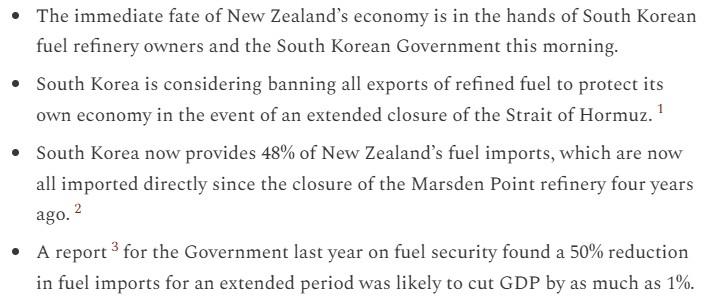
https://thekaka.substack.com/p/dawn-chorus-nzs-fuel-fate-in-south

noroad:
DjShadow:
Seen a few FB comments from people in political positions going on about the bad mistake of shutting down Marsden Point, problem they miss is we still need to import crude oil to be refined.
Seen the odd post too about Taranaki oil, it was never suitable for Marsden Point as its too light
Crude is a lot easier to deal with compared to specific grades of refined products.
Actually the grade of crude and the type of equipment determines the mix of distillates that come out as finished products. It's not as easy as just pouring in crude and tweaking some knobs to get more diesel.
This document gives more idea of what we are facing.
Otautahi Christchurch
gzt:Carless days: Not great policy. Big drama, but only saved 3 - 3.6% of fuel.
These days imo we have a lot more discretionary kms travelled. Families and individuals 5%-20% reduction would be relatively painless. A few words from the government supporting wfh and reduced kms in this period at some point would probably be useful.
The people who are likely to listen to a request to reduce discretionary travel have probably already reduced discretionary travel in the last few years due to concerns around their impact on global heating. That is, the people who are most inclined to comply probably have the least capacity to reduce travel.
I gather refinery or no refinery makes litte difference as we were not storing large amounts of crude.
So not significantly more/different storage than our end fuels storage?
Its been an issue but we can't afford $$$ to have a larger reserve held for us, or our own.
If we had plans/incentives to use less fuel generally, so we have farm and industrial covered?
Buying the 'right type' of crude for your refinery also has its own issues limiting where you buy it from.
Probably there is more choice of refineries you can get the various 'exact mix' of end products from more flexibly?
We also have to note that as we are a teeny-tiny buyer of energy, we are not priority big dog customer.
On the chart we end up in the Cash Cow area.
Probably moreso in crude which would be dominated by even larger bulk buyers ?
China is hit heavily and will be pulling in leverage it has with all the other suppliers Globally.
South Korea, and we cancelled a major project, nothing like leverage.
South Korea also illustrates that crude is not easier to get otherwise their refinery would have plenty of feedstock.
SaltyNZ:
Even panic buying isn't going to change the number of EVs on the road so fast it will cause an issue in the short term. As lots of people have already pointed, EVs are expensive, even the good-quality second hand ones. Absolutely cheaper in the long run, but expensive up front.
I'm certainly hoping enough people will feel a nudge that I'll get a decent price for the ZS I have to sell now that I upgraded it without needing to wait for half a year, but it isn't like we're going to get a million panic purchased EVs on the road next month.
It's already a problem. We are at or beyond our capacity multiple times a year, even a modest increase would be problematic.
networkn:
SaltyNZ:
Even panic buying isn't going to change the number of EVs on the road so fast it will cause an issue in the short term. As lots of people have already pointed, EVs are expensive, even the good-quality second hand ones. Absolutely cheaper in the long run, but expensive up front.
I'm certainly hoping enough people will feel a nudge that I'll get a decent price for the ZS I have to sell now that I upgraded it without needing to wait for half a year, but it isn't like we're going to get a million panic purchased EVs on the road next month.
It's already a problem. We are at or beyond our capacity multiple times a year, even a modest increase would be problematic.
To the extent that it already is, it's a problem we have control over, unlike fossil fuel prices. It can't be an excuse to not electrify. It should be a reason to build out capacity, and the fastest and the overwhelming global evidence says the cheapest and fastest way to do it is to build renewables, not LNG terminals.
iPad Pro 11" + iPhone 15 Pro Max + 2degrees 4tw!
These comments are my own and do not represent the opinions of 2degrees.

I can only find one source online for this statement, and its a "sources say"... so I suspect Mr Hickey is probably playing things up a bit here...
networkn: It's already a problem. We are at or beyond our capacity multiple times a year, even a modest increase would be problematic.
See @SaltyNZ's answer below yours which nails this. Imagine all the solar we could buy and network upgrades we could complete for the cost of a LNG terminal to get true energy independence.
But people don't learn and this is why we have people in charge doing stupid things like pouring billions into a temporary solution with long term effects on future generations that do not provide energy independence.
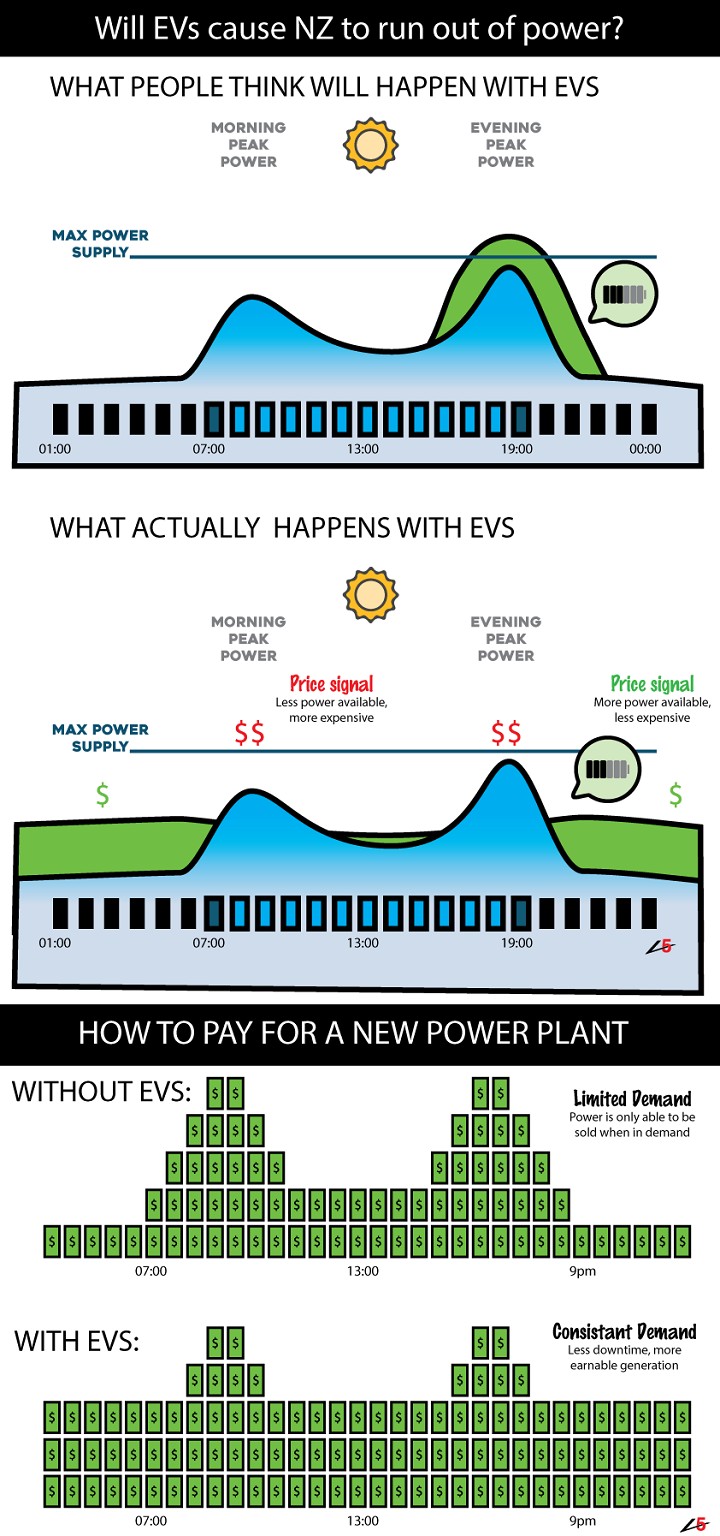
You'll note we're normally at our limit during peak times like so (when EV owners are not normally charging - as we charge overnight, when things are quiet):
But now we're off topic. So, instead of complaining about the fact we have under investment on our grid thanks to the actions that happened around 1998-99 that incentivize the gentailers to keep spot prices high we should proceed to stay on topic and bring this to another topic if you wish to continue to discuss it.
Michael Murphy | https://murfy.nz
Referral Links: Quic Broadband (use R122101E7CV7Q for free setup)
Are you happy with what you get from Geekzone? Please consider supporting us by subscribing.
Opinions are my own and not the views of my employer.
Situation in Austrailia is getting worse.
Some outlets have seen a months worth of demand in a few days.
Terminals are restricting fuel to Independent operators, sometimes as little as 10% of their normal volume. Independent operators often run regional / remote fuel stations, so some of those have run out of fuel (or are holding their last 1000L for emergency services). Some are looking to run out of fuel soon, so have restricted purchases to just AUD 20 (barely enough fuel to make it to the next town). Primary food production is starting to get impacted. Examples of Deep sea fishing boats not being able to get fuel, so staying in port. Concerns about animal feed lots that are dependent on diesel generators for animal welfare, that will have no choice other than killing stock if they run out for more than a couple of days. Super cheap auto is now largely sold out of all their 20L petrol tanks.
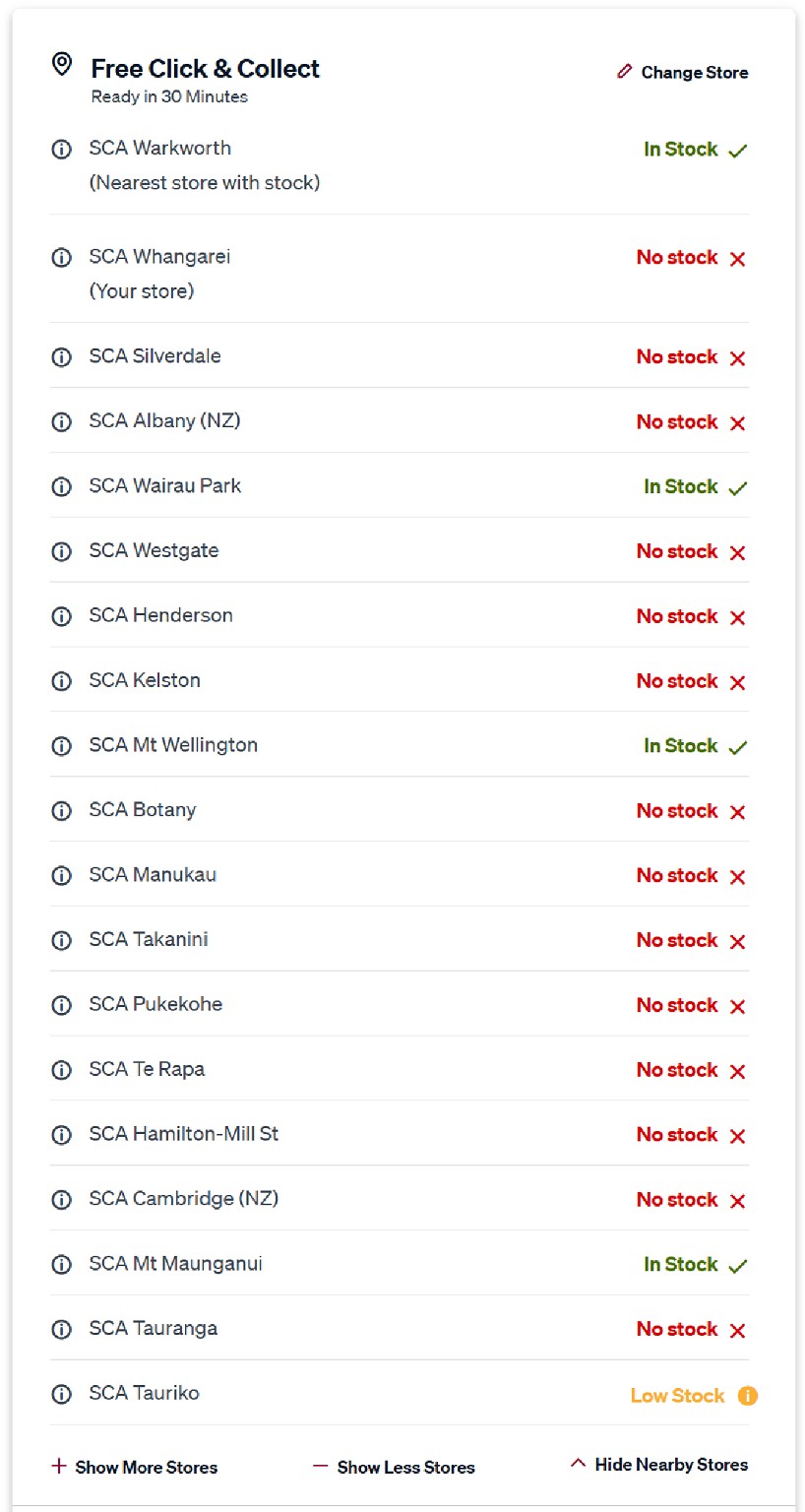
In NZ, super cheap auto seems to be selling out of their house brand of 20L petrol tanks (availability below), but still has good stocks of the more expensive branded ones.
PolicyGuy:
Scott3:
{snip}
The suggested mandatory conservation measure's, don't really go beyond making fuel less convenient to buy (i.e. Maximum purchaser quantity, restrict sales into containers , opening hour restrictions, and critical user priority). Not all bad, but if we are say trying to shave 20% off our demand, fuel will end up being rationed by inconvenience. Those willing to wait for 2 hours to get their 20L allocation will be the people who get fuel. Not really such a fan of this approach. Willingness to wait in long lines is not an efficient way to allocated a scares resource, not to mention, the fuel burned by people sitting in idling cars waiting two hours for their say 30L allocation.
{snip}
This would only exacerbate inequities.
Firstly, less well off folks tend to live in far-flung suburbs and have older less efficient vehicles, so they have to use more fuel to survive.
Secondly, while the low-paid worker can't afford to queue for fuel in work time, their boss will send one of the peons off in the bosses car to get its 30L fill up while the boss is in the office. You know that's what will happen.
What the government needs is a fuel rationing plan.
It would IMO be anathema to large factions within the current government, so won't happen unless / until circumstances get so dire that There Is No Alternative, and when backed into a TINA corner, organisations make rushed and probably poor decisions. Sigh.
Oh, and while "I'm alright, Jack, I've got a BEV, I can drive anywhere I like" might be true, it won't be much help when the supermarket shelves are hugely restricted because the truckies can't get enough diesel to support our current distribution model.
(Sings)
Oh I'm H, A, P, P, Y
Yes I'm H, A, P, P, Y ...
Examples or rationing approaches, and how they can be got around:
Should also note that those at the top of the inequity scale are much more likely to be better placed to stay at home. Greater odds they have a nice place to live, and either don't need to work financially, can work from home, or have a critical role (doctor etc) which will given them priority access to fuel.
Allocating by inconvenience does have it's advantages:
Should note that ease of reducing demand is going to vairy a lot by fuel type, suspect diesel will require by far the harshest restrictions for private (non critical) users.
- A big (voluntary) push for more working from home, restriction on recreational boat fills etc will predominantly save petrol.
- Diesel is going to be much harder, vast majority get's used by heavy vehicles & industry. (utes make up a much smaller share) - Hard to dial back heavy traffic or industry, without taking a big economic hit. But guess we will have to if there is not enough supply... Yes to fueling supermarket delivery trucks & fuel tankers. No to fueling log trucks etc.
- Jet A1 is only really used by aviation. Airlines make the critical user user list. I guess Emergency Services & military aviation gets first dibs, then whatever is left over gets split between the Airlines based on historical use (and they simply have to curtail flights to stay under that allocation).
What if there's not a shortage as such but fuel product is priced so high it makes your wallet hurt?
I have quite a long round trip to work but I can WFH if I want. What about those people for whom driving to work @ $5/l becomes counter productive ?
How many businesses have workers barely making ends meet now ? How are they going to cope when their workers stop turning up?
Most of the posters in this thread are just like chimpanzees on MDMA, full of feelings of bonhomie, joy, and optimism. Fred99 8/4/21
networkn:
Heh, panic buying of EV's to avoid the uncertainty around petrol supply and pricing, will simply cause power shortages, and a spike in energy prices.
Panic buying of EVs would be a rather short-lived phenomenon. If were talking about adding to the total pool of electricity demand attributable to charging EVs .... we're talking about new EVs only and there isn't much supply immediately available.
Mike
wellygary:
I can only find one source online for this statement, and its a "sources say"... so I suspect Mr Hickey is probably playing things up a bit here...
A quick search turned up this, obviously a few days old, and still no export ban:
https://www.argusmedia.com/en/news-and-insights/latest-market-news/2797476-s-korea-considers-spr-release-oil-product-export-ban
If any one of Korea, Singapore or Japan restricts exports, the impact on NZ would be large. But of course I would caution any action based one somebody considering something. Everything should be under constant consideration.
|
|
|