Geekzone: technology news, blogs, forums
Guest
Welcome Guest.
You haven't logged in yet. If you don't have an account you can register now.


RobDickinson

1526 posts

Uber Geek
+1 received by user: 513


#298554 27-Jun-2022 15:09
Send private message

Letts get this out of the BYD thread...

tdgeek:


PolicyGuy:


I think you are mis-understanding the scale of the change in manufacturing going from ICE to BEV.
Basically you have to completely write off your investments in the huge, enormously expensive and high-staffed engine and gearbox plants. No more cast-iron or aluminium blocks; no more pistons, con-rods, crankshafts and camshafts; no more inlet and outlet manifolds, turbochargers, fuel injection systems, DPFs, catalyst converters, tailpipes & mufflers; no more 5 (or 6 or 8) speed gearboxes; no more clutch assemblies. All gone, together with the factories, furnaces and highly paid staff that currently make them.


About the only part of the business that is largely unchanged - in a new year, new model sense - is the panel pressing, painting and final assembly line. That's still an enormous business, but probably (a WAG) only half the existing enterprise


The Old Auto companies are going to have to write off billions and billions of dollars in obsoleted plant over less than ten years.
I hope my KiwiSaver fund doesn't have too much invested in Ford, Toyota, General Motors and so on. Or in service stations, for that matter


We are getting off topic. Car plants are not shutting down ICE manufacturing next year, ICE will be going for many years. It will wind down over time. Just as EV are winding up over time. The profits will continue to be from ICE, and again that will wind down over time


IMO there will not be a steady decline in ICE sales, they will fall off a cliff. Many in the industry are not prepared, many of those that are dont have a sustainable plan yet.


We are a year or two away from production cost parity ( 10-20% production as BEV), what happens then? How do you sell a car that will cost more to maintain, more to run, and have massively lower residuals, along side your BEV vehicle? You can argue a lto of brands are already keeping EV prices artificially high but this only works so long as companies whoa re all in (BYD, Tesla, Polestar etc) cant make enough or are not in your market.


View this topic in a long page with up to 500 replies per page Create new topic
 1 | 2 | 3 | 4 | 5 | 6 | ... | 7
RobDickinson

1526 posts

Uber Geek
+1 received by user: 513


  #2934935 27-Jun-2022 15:26
Send private message

Also note its very difficult for one of these companies to just vanish. They are vast organisations with tens of thousands of direct employees and often many multiple of brands.


We've seen some circling of wagons with groups forming like Stellantis to try and cope with the costs and pace of change, we've seen old CEO's just quit because of the chaos coming up (Daimler and BMW), and some fight tooth and nail against their own organization for change (VW).


We've also seen similar revolutions before (in tech) and in the car market, Detroit, now a ghost town, GM in the 40-50's had a vast majority of the US car market (65-70%) and got destroyed by the Japanese manufacturers in a decade. 

We've seen Uk/Europe shift from petrol to diesel in a decade recently also. 


We've also seen governments bail out large companies like GM because they are too big to fail.


Scott3
4176 posts

Uber Geek
+1 received by user: 2990

Trusted
Lifetime subscriber

  #2934948 27-Jun-2022 16:15
Send private message

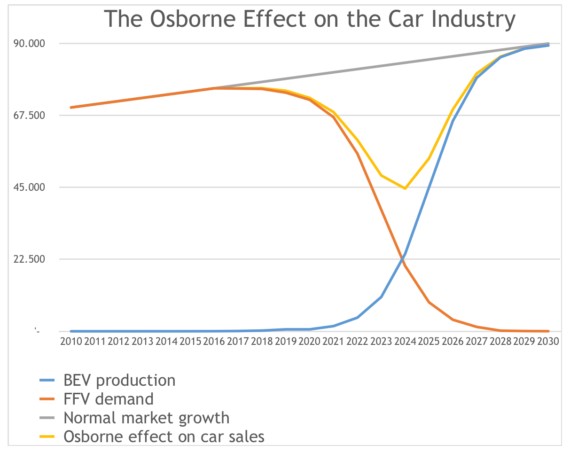
The graph above shows an extremity optimistic phase out of fossil fuel vehicles. (Graph shows near zero by 2028)


One of the more progressive market's that has set dates in that regard is the UK. They have set 2030 as the year to stop the sale of new petrol and diesel vehicles. New hybrid cars and vans that could drive a “significant distance” with no carbon coming out of the tailpipe, however, would be allowed to remain on sale until 2035.


I would pick that around 2030, the UK will see the launch of a bunch of hybrid power-trains that just meet whatever that  “significant distance” criteria means. And a decent chunk of car sales will be these cars.


I would expect NZ to lag the UK by 5 - 10 years. If correct it would put our date for going pure EV new light vehicles at 2040 - 2045.


Poor countries like the poorer regions in South East Asia, Africa, South America, along with less environmentally concerned regions (Arab countries, possibly Australia), will likely lag NZ by potentially decades. If we say one decade, that takes us to 2050 - 2055...

Trucks, boats, stationary engines and aircraft will lag light vehicles by quite a period too.


Obviously I think the world is going to fail dismally at our emission reduction goals. But this does mean plenty of time for the auto industry to re-tool etc. Engine plants aren't going to be obsolete in a decade.


However the combined higher capital cost of EV's and Constraints in the likes of raw materials for batteries, could well mean significantly lower number of EV's get sold than a straight line growth projection would predict. This would result in increasing fleet ages.


Personally I don't think we will see an Osborne effect dip on car sales through this transition. If one wants an EV, and are happy with the currently available body styles (hatchback, soft SUV, Sedan, cargo van), there is not really much reason to wait. Current offerings are pretty decent, and we have hit a point where automakers are hitting up against resource availability issues and needing to hike prices (see EV6 and Polestar 2), quite a break from the trend of the last decade where EV's got massively better and cheaper at the same time.

As locations approach fossil fuel vehicle ban's, Late adopters of EV's are more likely to rush on conventional car's causing a sure in sales. Kinda like people buying up the Land-cruiser 200 before it went out of production, because they had a presence for it's v8 engine over the v6 in the landcriuier 300 (despite the latter being both more efficient and more powerful).


The reasons will be varied, (i.e. concern about charging an EV with no off street parking, desire to be able to do epic long trips while towing, dislike of current EV offerings, performance for manual transmission / ICE noise, simply want a cheaper car than current EV's...


This will mean each location will likely have a spike in sales before a pending ban. And a matching dip overall sales after a locations ban come in.


So overall I am predicting the auto industry to shrink with the move to EV's. There will be a bunch of pain that comes with this, and big winners an looser's.

I don't think we can predict now will be winners and looser, despite the finger pointing at the likes of Toyota, they could easily wait for the tech to be mature in say 2030, and start pumping out extremely competitive models that the legwook for has been done for in secrete. No real reason for Toyota to promote EV's given they have market leading hybrid tech that benefits from slower EV uptake.


Other real risk for the auto industry is that somebody cracks the driverless car problem in the next few decades. This would flip the industry on it's head.


Who-ever controls the first good driverless tech will make a fortune and have the power to dominate the industry.


Likely driverless cars will be very expensive, and we will need only a fraction of the number of them (good because they are likely to be expensive).


Most likely operating model is large fleet's owning car's and consumer's ordering them Uber style, but much much cheaper.


The need for far less vehicles in the fleet would decimate the auto industry.


The eventual fully automated fleet where car crash rates are far lower would further lower demand.


It is going to be an interesting few decades.


Kookoo
869 posts

Ultimate Geek
+1 received by user: 407

Trusted

  #2934952 27-Jun-2022 16:20
Send private message

 Europe, UK, Canada, Australia and NZ can switch to BEV all they want, the rest of the world doesn't have the infrastructure for BEV. Their only driver behind the switch will be the growing price of oil.


That will no longer be a factor do due to the war in Ukraine. China and India will have gained access to extremely cheap Russian oil. This will prop up the ICE market in the two most populous countries for years to come. I'd say the companies at risk are the Chinese manufacturers who invested heavily in BEV, haven't acquired any noticeable overseas market share, and will see their domestic sales plummet as oil gets cheaper and cheaper. They will be probably end up getting propped up by the Chinese government.


Hello, Ground!


RobDickinson

1526 posts

Uber Geek
+1 received by user: 513


  #2934953 27-Jun-2022 16:20
Send private message

Scott3:


One of the more progressive market's that has set dates in that regard is the UK. They have set 2030 as the year to stop the sale of new petrol and diesel vehicles. New hybrid cars and vans that could drive a “significant distance” with no carbon coming out of the tailpipe, however, would be allowed to remain on sale until 2035.


Those governments are comfortable  setting those dates because they know the market will have shifted well before then.


Norway will be 100% (or as good as) EV this year, and the rest of Europe is only a few years behind on the whole.


China has just recoded a 31% market share for EVs which includes 23% BEV.


https://cleantechnica.com/2022/06/24/china-electric-car-market-31-market-share-in-may/


wellygary
8810 posts

Uber Geek
+1 received by user: 5287


  #2934958 27-Jun-2022 16:34
Send private message

RobDickinson:


China has just recoded a 31% market share for EVs which includes 23% BEV.


https://cleantechnica.com/2022/06/24/china-electric-car-market-31-market-share-in-may/


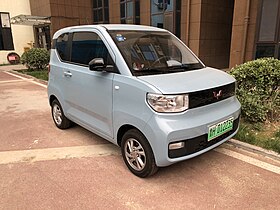
Chinese EV sales are getting very depressing, as they are now heavily focussed on very cheap, small battery city mini (Kei-type)  cars, 


Nearly 10% of all Chinese EV sales in May ( and probably for all of 2022) were this ...


https://en.wikipedia.org/wiki/Wuling_Hongguang_Mini_EV


RobDickinson

1526 posts

Uber Geek
+1 received by user: 513


  #2934959 27-Jun-2022 16:35
Send private message

Which means 21% of all cars were not that? They are the largest car market in the world.


Shop now on AliExpress (affiliate link).
elpenguino
3576 posts

Uber Geek
+1 received by user: 2938


  #2934962 27-Jun-2022 16:38
Send private message

wellygary:


RobDickinson:


China has just recoded a 31% market share for EVs which includes 23% BEV.


https://cleantechnica.com/2022/06/24/china-electric-car-market-31-market-share-in-may/


Chinese EV sales are getting very depressing, as they are now heavily focussed on very cheap, small battery city mini (Kei-type)  cars, 


Nearly 10% of all Chinese EV sales in May ( and probably for all of 2022) were this ...


https://en.wikipedia.org/wiki/Wuling_Hongguang_Mini_EV


Why is that depressing? Car as functional device instead of car as status symbol?


Most of the posters in this thread are just like chimpanzees on MDMA, full of feelings of bonhomie, joy, and optimism. Fred99 8/4/21


Scott3
4176 posts

Uber Geek
+1 received by user: 2990

Trusted
Lifetime subscriber

  #2934965 27-Jun-2022 16:43
Send private message

RobDickinson:


Also note its very difficult for one of these companies to just vanish. They are vast organisations with tens of thousands of direct employees and often many multiple of brands.


We've seen some circling of wagons with groups forming like Stellantis to try and cope with the costs and pace of change, we've seen old CEO's just quit because of the chaos coming up (Daimler and BMW), and some fight tooth and nail against their own organization for change (VW).


We've also seen similar revolutions before (in tech) and in the car market, Detroit, now a ghost town, GM in the 40-50's had a vast majority of the US car market (65-70%) and got destroyed by the Japanese manufacturers in a decade. 

We've seen Uk/Europe shift from petrol to diesel in a decade recently also. 


We've also seen governments bail out large companies like GM because they are too big to fail.


I think it is likely that we see big players fail in a similar style to Kodak / Blackberry / Nokia.


The last recession caused big issues for many auto brands. We could have another one pending now. 


Luxury brands like BMW are partially at risk. Their already competitive market segment is getting squeezed by both new players and non-luxary brands. The models like the higher spec ioniq 5 ($110k+ top spec), high spec polestar 2, various high spec Tesla's etc, are compelling offerings in at a price point that previously the likes of BMW, Audi & Lexus had to themselves...


Also the higher price of EV's may push buyers out of the luxary segment. As en example someone who previously brought a base BMW X5 (cira $127k), may want to go EV, but not make the leap in price to the $164k BMW iX xDrive40. And with stuff like the model Y performance, EV6 top spec, Ioniq 5 top spec coming in around $110k there are plenty of options to chose from.


Could also be behind the scenes companies like ZF transmissions. Likely they have done a lot of planing about changing to the EV world (perhaps building entire EV motor gearbox units, perhaps compelling multi-speed EV gearboxes), but pivots always come with risk, and if automakers reject their offerings, their company may fail.


On diesel we have seen UK/Europe shift to diesel very quickly, and away from diesel very quickly too.


Batman
Mad Scientist
30012 posts

Uber Geek
+1 received by user: 6217

Trusted
Lifetime subscriber

  #2934966 27-Jun-2022 16:46
Send private message

countries still need to burn oil to power their EVs, so oil will remain. price - who knows.


the only way to stop manufacturers selling ICE is if countries ban their sale. the example given in Norway is a result of a ban of ICE in 2025 not natural forces.


so if enough countries ban ICE (is the entire EU ban enough) they won't make them.


but some countries without the ban might still have demand for ICE, only time will tell


car companies want to make money, if selling EV makes money they sell EV, if selling ICE makes money they sell ICE. 


ie if people don't buy ICE (eg ICE ban) they don't make ICE but if people buy ICE (eg no ICE ban) they make ICE until it's no longer profitable, then these people most likely buy old ICEs then at some point there will be no old ICEs to buy then they will buy what ever is cheapest at that point in time.


wellygary
8810 posts

Uber Geek
+1 received by user: 5287


  #2934967 27-Jun-2022 16:48
Send private message

elpenguino:


Why is that depressing? Car as functional device instead of car as status symbol?


Because those sorts of vehicles have very little to offer markets like NZ etc, where transportation is much more generic rather than having a specialised device for commuting,


If these types of vehicles would sell here, why have all mew EVs in NZ progressively gained larger batteries, ( Leaf now 40Kwh min, etc) rather than continuing to produce smaller battery options  (20kw etc) as lower cost points... 


elpenguino
3576 posts

Uber Geek
+1 received by user: 2938


  #2934968 27-Jun-2022 16:49
Send private message

Scott3:


<SNIP>


Poor countries like the poorer regions in South East Asia, Africa, South America, along with less environmentally concerned regions (Arab countries, possibly Australia), will likely lag NZ by potentially decades. If we say one decade, that takes us to 2050 - 2055...

Trucks, boats, stationary engines and aircraft will lag light vehicles by quite a period too.


Obviously I think the world is going to fail dismally at our emission reduction goals. But this does mean plenty of time for the auto industry to re-tool etc. Engine plants aren't going to be obsolete in a decade.


<SNIP>


And with the population of Africa tipped to boom in the next 50 years, there will be steady demand for ICE cars there, and other poorer countries.


Hard to imagine charging cables snaking over the parking areas of a shanty town.


Most of the posters in this thread are just like chimpanzees on MDMA, full of feelings of bonhomie, joy, and optimism. Fred99 8/4/21


Shop now for Dell laptops and other devices (affiliate link).
Batman
Mad Scientist
30012 posts

Uber Geek
+1 received by user: 6217

Trusted
Lifetime subscriber

  #2934969 27-Jun-2022 16:50
Send private message

wellygary:


Chinese EV sales are getting very depressing, as they are now heavily focussed on very cheap, small battery city mini (Kei-type)  cars, 


Nearly 10% of all Chinese EV sales in May ( and probably for all of 2022) were this ...


https://en.wikipedia.org/wiki/Wuling_Hongguang_Mini_EV


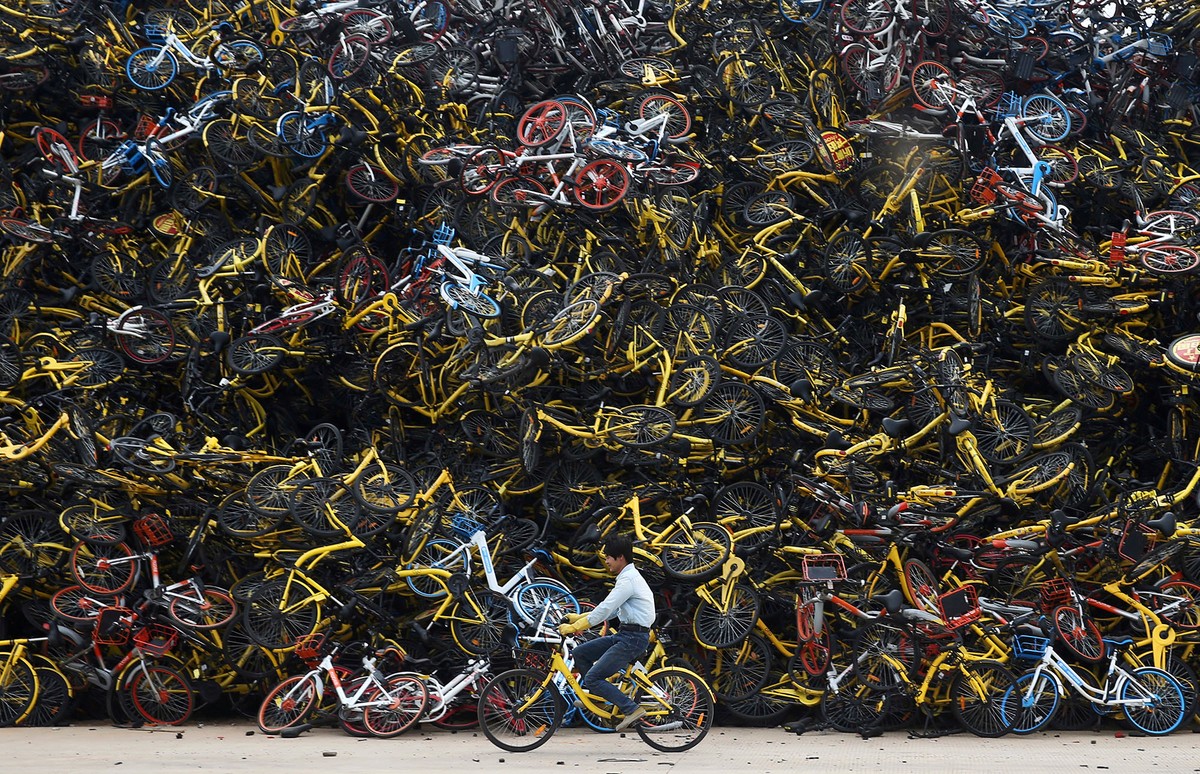
not too long ago it was bikes


https://www.theatlantic.com/photo/2018/03/bike-share-oversupply-in-china-huge-piles-of-abandoned-and-broken-bicycles/556268/


PolicyGuy
1820 posts

Uber Geek
+1 received by user: 1769

ID Verified
Lifetime subscriber

  #2934971 27-Jun-2022 16:57
Send private message

I suspect that the Chinese government has spotted a strategic opportunity in the shift from ICE to BEV for personal / light vehicles. I can't think of another reason why the BEV manufacturing industry is going so gangbusters as it appears to be in China.


From their point of view, by heavily supporting the introduction of decent quality decent performance BEVs, they gain entrance to a win-win-win strategy: first win - help address their own massive urban air pollution issue; second win - allow some (maybe significant) progress towards their CO2 reduction targets whilst still allowing the Chinese middle classes to move along the bicycle - moped - car aspirational progression; third win - tear the heart out of the Japanese / European motor industry by establishing the Chinese BEV industry as the preeminent source of modern personal vehicles.


Yes, it's going to be an interesting decade or so


Scott3
4176 posts

Uber Geek
+1 received by user: 2990

Trusted
Lifetime subscriber

  #2934973 27-Jun-2022 16:59
Send private message

On China, I consider it quite an outlier.


Their government has made big policy moves to be a major player in the EV / clean-tech space.


But still, consider that their fleet size is growing rapidly, and 69% of their car's are not electric 


elpenguino:


wellygary:


Chinese EV sales are getting very depressing, as they are now heavily focussed on very cheap, small battery city mini (Kei-type)  cars, 


Nearly 10% of all Chinese EV sales in May ( and probably for all of 2022) were this ...


https://en.wikipedia.org/wiki/Wuling_Hongguang_Mini_EV


Why is that depressing? Car as functional device instead of car as status symbol?


Personally I quite like what the western world would call neighborhood electric vehicles. Pity they are effectively banned here.


Plenty of use cases for a small, cheap an efficient car to go to the supermarket etc, and doesn't need the range, performance or crash safety of a vehicle that is going to do multi hour trips on the open road.


However in a china example, do consider that the vast majority of people buying these will be upgrading from walking / push bike / ebike / public transport and the likes. Quite unlikely to be people tracing in their Haval H6 etc.


Probably a win for individual quality of life, but a loss in terms of global emissions. (but quite unfair for me in the first world to call out those in developing countries to emit in a still lesser way than we do in NZ).


elpenguino
3576 posts

Uber Geek
+1 received by user: 2938


  #2934975 27-Jun-2022 17:01
Send private message

PolicyGuy:


I suspect that the Chinese government has spotted a strategic opportunity in the shift from ICE to BEV for personal / light vehicles. I can't think of another reason why the BEV manufacturing industry is going so gangbusters as it appears to be in China.


From their point of view, by heavily supporting the introduction of decent quality decent performance BEVs, they gain entrance to a win-win-win strategy: first win - help address their own massive urban air pollution issue; second win - allow some (maybe significant) progress towards their CO2 reduction targets whilst still allowing the Chinese middle classes to move along the bicycle - moped - car aspirational progression; third win - tear the heart out of the Japanese / European motor industry by establishing the Chinese BEV industry as the preeminent source of modern personal vehicles.


Yes, it's going to be an interesting decade or so


You touch on a good point here - having a central government with fingers in the pie means govt policy becomes industry action.


In the capitalist west our freedom (to choose products or protest) is a handbrake on meeting climate goals. There isn't the problem of freedom in China.


Most of the posters in this thread are just like chimpanzees on MDMA, full of feelings of bonhomie, joy, and optimism. Fred99 8/4/21


 1 | 2 | 3 | 4 | 5 | 6 | ... | 7
View this topic in a long page with up to 500 replies per page Create new topic


Geekzone Live »

Try automatic live updates from Geekzone directly in your browser, without refreshing the page, with Geekzone Live now.


Are you subscribed to our RSS feed? You can download the latest headlines and summaries from our stories directly to your computer or smartphone by using a feed reader.