|
|
|


mdf: ๐
Titebond III does need to be used carefully since it can stain the wood black. It's also spendy. But from what I understand, is a superb glue. As I say, I had good luck with aquadhere.
I have searched for this black staining with TB lll but can't find anything - other than a metal clamp possibly being in contact with the glue as it dries. Also the various videos posted here don't refer to this and there's no evidence of black in any of their images. It doesn't seem to be widespread or common. Was this something you experienced yourself? Keen to know your source for this.
Sometimes I just sit and think. Other times I just sit.
neb:eracode:That was one concern when I saw the discussion of gluing, depending on which bits you're thinking of gluing you may want to not glue some parts in order to give the wood room to expand and contract. If it's locked solidly in place with glue then the stress caused by expansion and contraction will have to find some other way out.
The table will be outside in rain then blistering sun and the individual boards will be very tempted to move in various directions.
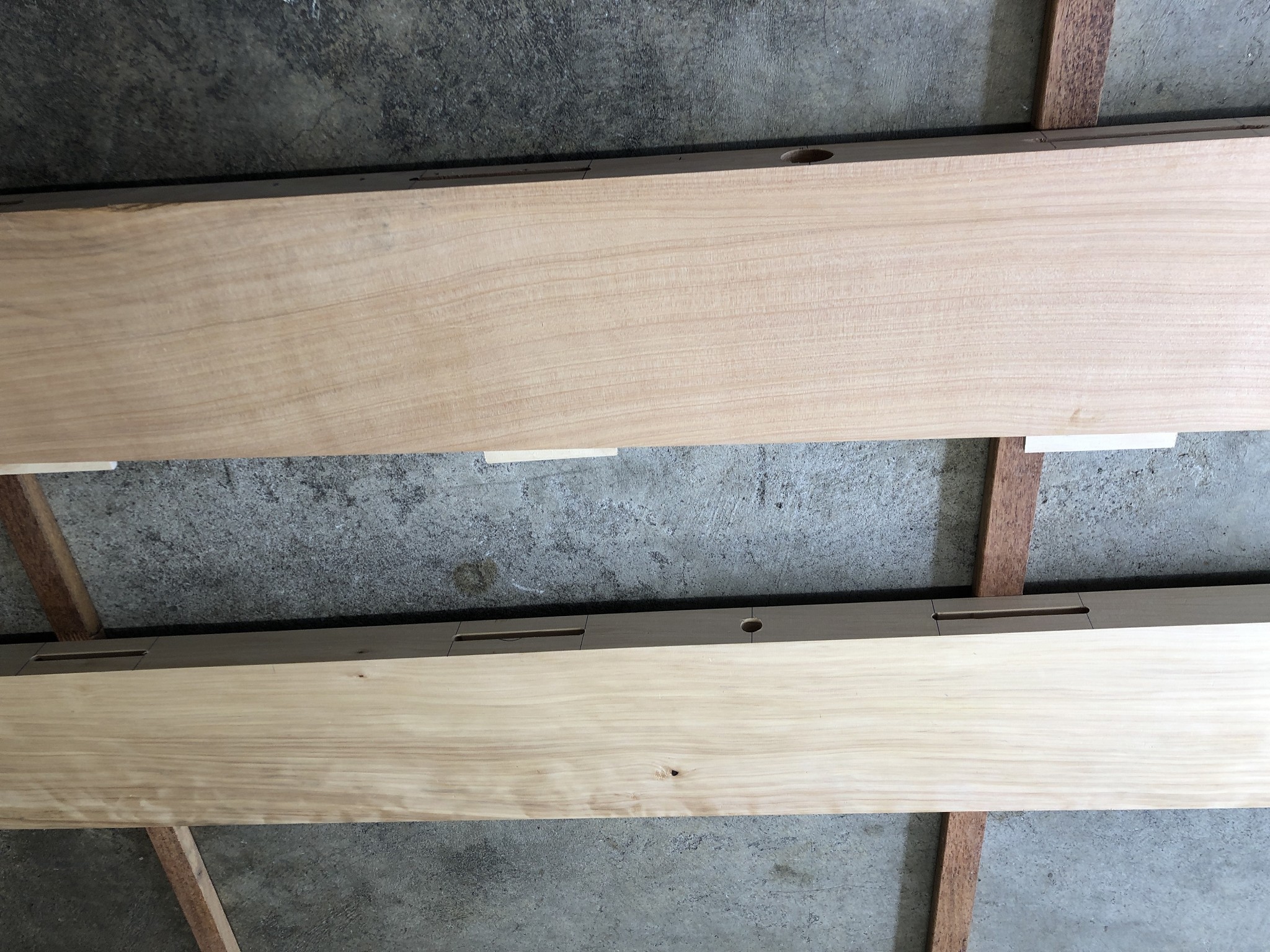
Yep. As I mentioned earlier, not gluing the top at all was our original plan - exactly for the reasons you give. Just like the reason why a cabinetmaker never glues-in or fixes the panel in a framed fielded panel. That plan hasn't been totally abandoned. Now I'm inclined to stay with Plan A and make the top without glue - with the four threaded rods holding it all together and the 10mm-thick biscuits holding the boards in check with each other as much as possible.
If the top needs further tightening or adjusting later, we will be able the access the nuts on the ends of the rods to do that. This also means that if we want to glue the top together at a later date, we can disassemble it and still do that. Not gluing gives us options - but if we glue on Day 1 we don't have other options.
Have just realised we can make pockets in the underside of the top where the nuts terminate the rods - so that we can tighten the nuts from the underside with a ratchet ring spanner. This means we would not need to remove the 45x90 perimeter frame timber to access the nuts from the edges. (Hmm - but then the frame pieces on the short ends might be a problem).
Sometimes I just sit and think. Other times I just sit.
๐คจ
mdf: ...
I think I came across this on Lumberjocks and have been too scared to try it on anything so don't have first hand experience. Consensus seems to be some kind of reaction to either wood tannins or in some cases, iron contamination or reaction to clamps. See e.g. https://www.lumberjocks.com/topics/23100
Steve @ WWMM has had the same experience.
See also https://www.mylespaul.com/threads/whys-titebond-turn-black-when-it-dries.83986/ and https://www.woodworkingtalk.com/threads/black-stains-when-gluing-red-oak.44749/
Doesn't seem to be a universal problem and people have variously diagnosed "it's a dark brown glue", dirty joins, contaminated rags and contaminated sandpaper. It seems that it will stain black anything iron (whether clamps or where clamps contact) and I think you mentioned using threaded rod and screw fastenings.
As mentioned, I've never used it myself, primarily to avoid that issue. And I'm too cheap. Macrocarpa is a light timber though so if you were going with Titebond, it might pay to test on some scraps first.
^^ Thanks. Had thought about gluing a couple of test pieces first.
Sometimes I just sit and think. Other times I just sit.
eracode:
During June and July I worked, weather-permitting, building a DIY 6m x 6m deck and surrounding fences for our adult son and his partner, with their assistance on weekends and as their WFH allowed.
The base is the concrete-slab roof of their street-level double garage - the slab adjoins their first-storey main living area. Originally it was a patio with low brick-wall planters, concrete pavers and ratty trellises with creepers. Built in the 1980’s, it was leaking into the garage below.
With great effort they cleared all of that away and had an industrial-grade torched-on membrane applied, with correct 'falls' incorporated.
After great difficulty sourcing some of the materials, we started the fences and deck. Pretty much standard construction and using self-leveling ‘Nurajack’ piles to support the sub-frame - these allow the deck to ‘float’ and do not penetrate the membrane so as to preserve the watertightness.
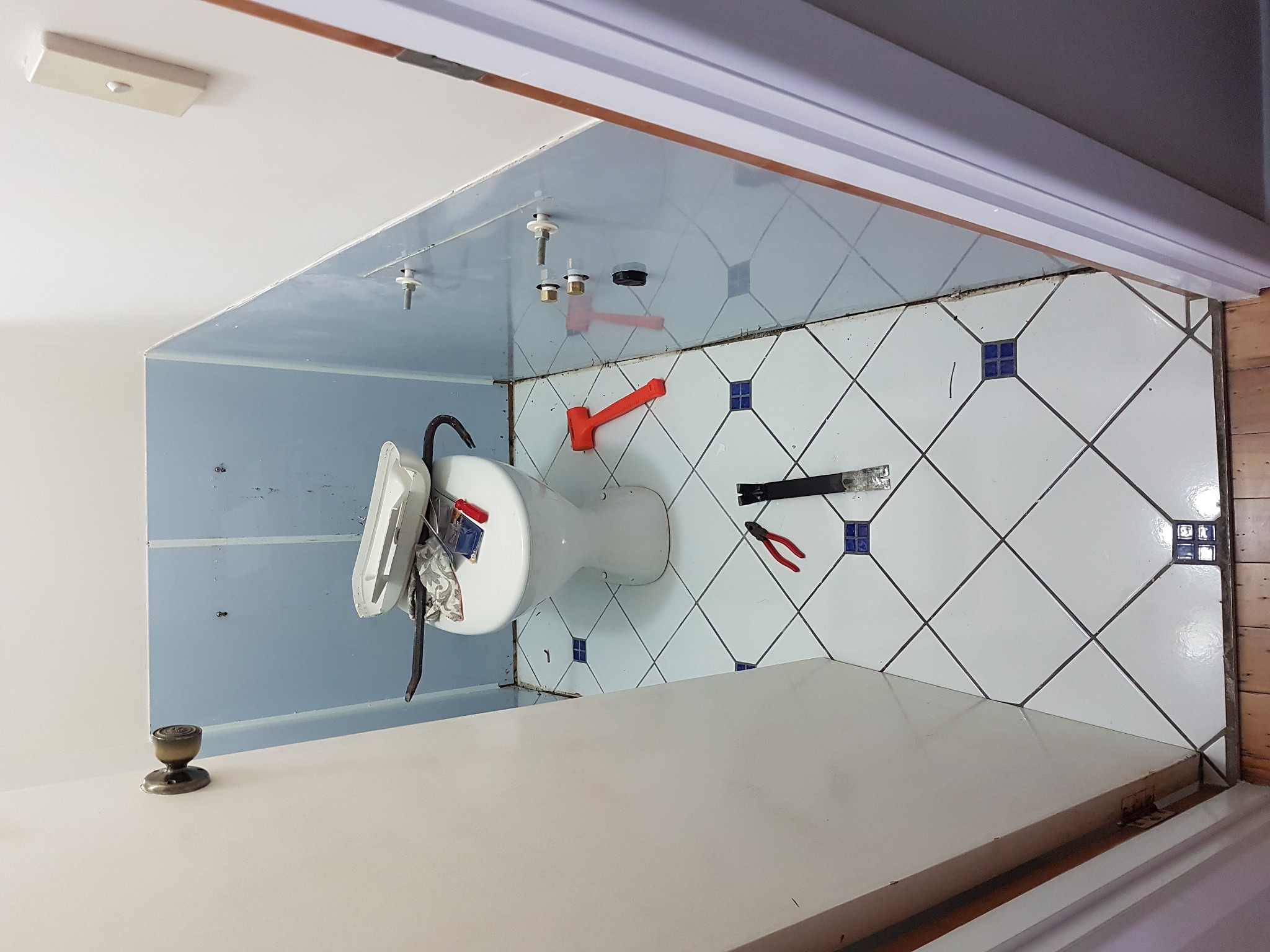
The decking material is finger-jointed 140 x 19 mm Kwila. Son has installed flush LED uplights in the Kwila around the inside perimeter - looks great at night. Now they're busy finding free-standing planter boxes, some sort of shade arrangement and new larger furniture to fill the sizeable area. First photo gives an idea of what it was like before we started.
That looks fantastic, well done. Can i please ask how do the self-leveling ‘Nurajack’ piles self-level?
Pop! OS
DamageInc:
That looks fantastic, well done. Can i please ask how do the self-leveling ‘Nurajack’ piles self-level?
Thanks. The head of the Nurajack can move/rock a little in one dimension - up to about 6° from horizontal. You attach the head of the jack onto your already-installed horizontal joist with screws then turn the base of the jack so that it screws downwards to touch the concrete base below.
If the concrete has a slope, the lower part of the jack will tilt slightly to accommodate the slope - and will put the foot of the jack flat against the concrete. Give the base a further quarter-turn or so down against the concrete, and it will firmly support the joist. You can adjust the jacks to get all of your joists level with each other against a string line running across the joists at 90° to their longitude.
https://www.nurajack.co.nz/uploads/7/8/8/8/7888099/nurajack_brochure_2020.pdf
https://www.nurajack.co.nz/timber-decks.html
Sometimes I just sit and think. Other times I just sit.
eracode:
DamageInc:
That looks fantastic, well done. Can i please ask how do the self-leveling ‘Nurajack’ piles self-level?
Thanks. The head of the Nurajack can move/rock a little in one dimension - up to about 6° from horizontal. You attach the head of the jack onto your already-installed horizontal joist with screws then turn the base of the jack so that it screws downwards to touch the concrete base below.
If the concrete has a slope, the lower part of the jack will tilt slightly to accommodate the slope - and will put the foot of the jack flat against the concrete. Give the base a further quarter-turn or so down against the concrete, and it will firmly support the joist. You can adjust the jacks to get all of your joists level with each other against a string line running across the joists at 90° to their longitude.
https://www.nurajack.co.nz/uploads/7/8/8/8/7888099/nurajack_brochure_2020.pdf
https://www.nurajack.co.nz/timber-decks.html
Much appreciated, thank you.
Pop! OS

Most of the posters in this thread are just like chimpanzees on MDMA, full of feelings of bonhomie, joy, and optimism. Fred99 8/4/21
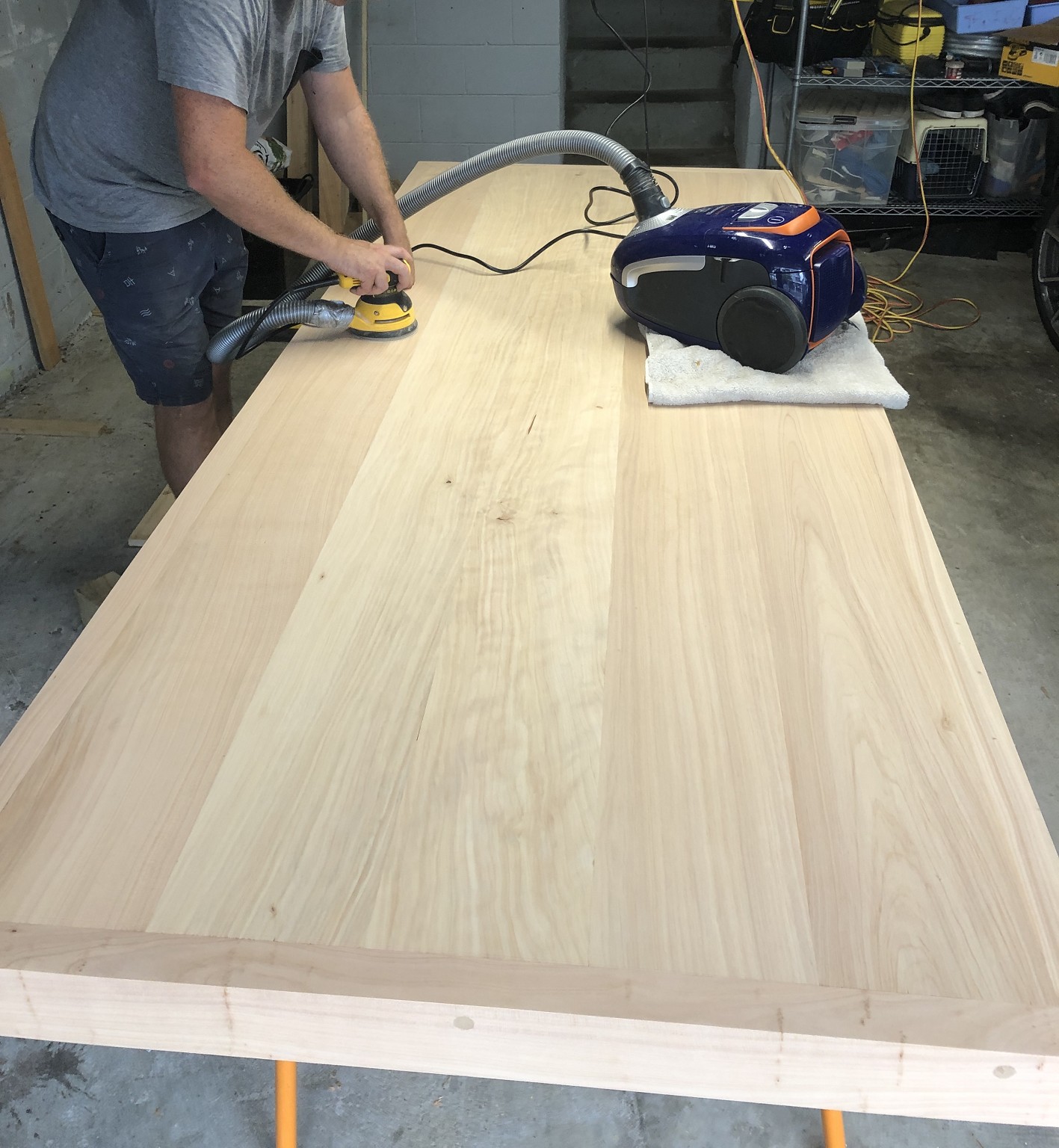
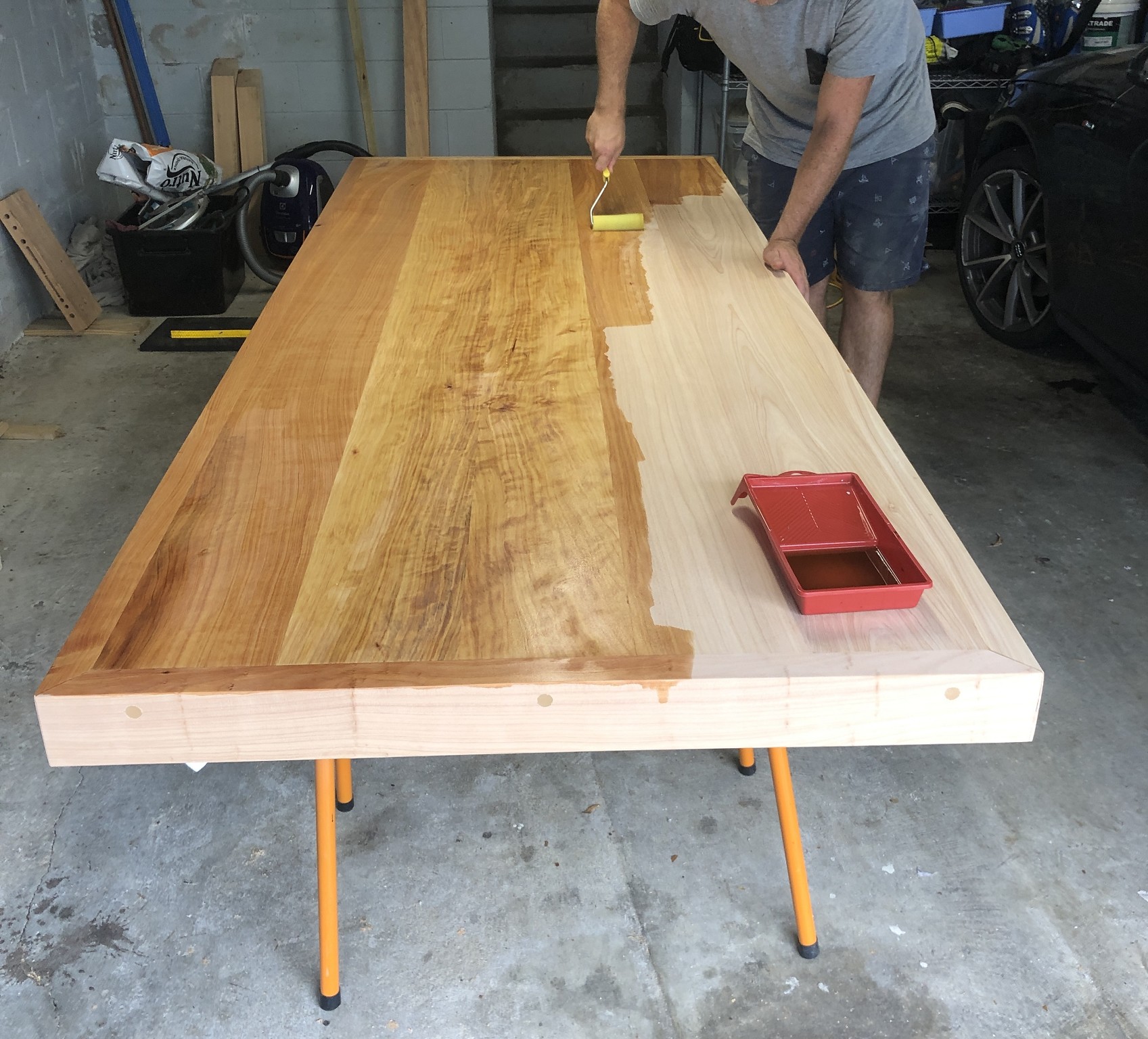
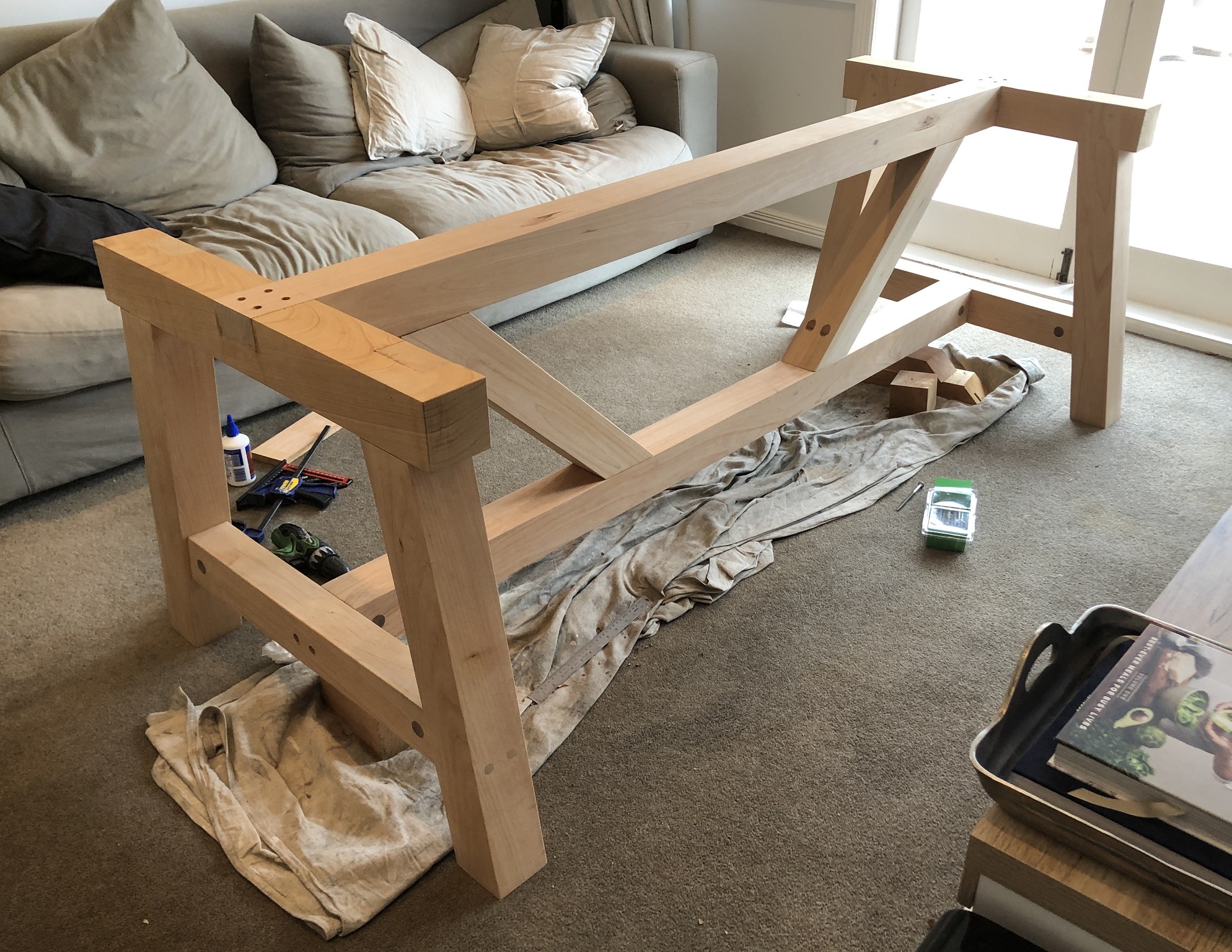
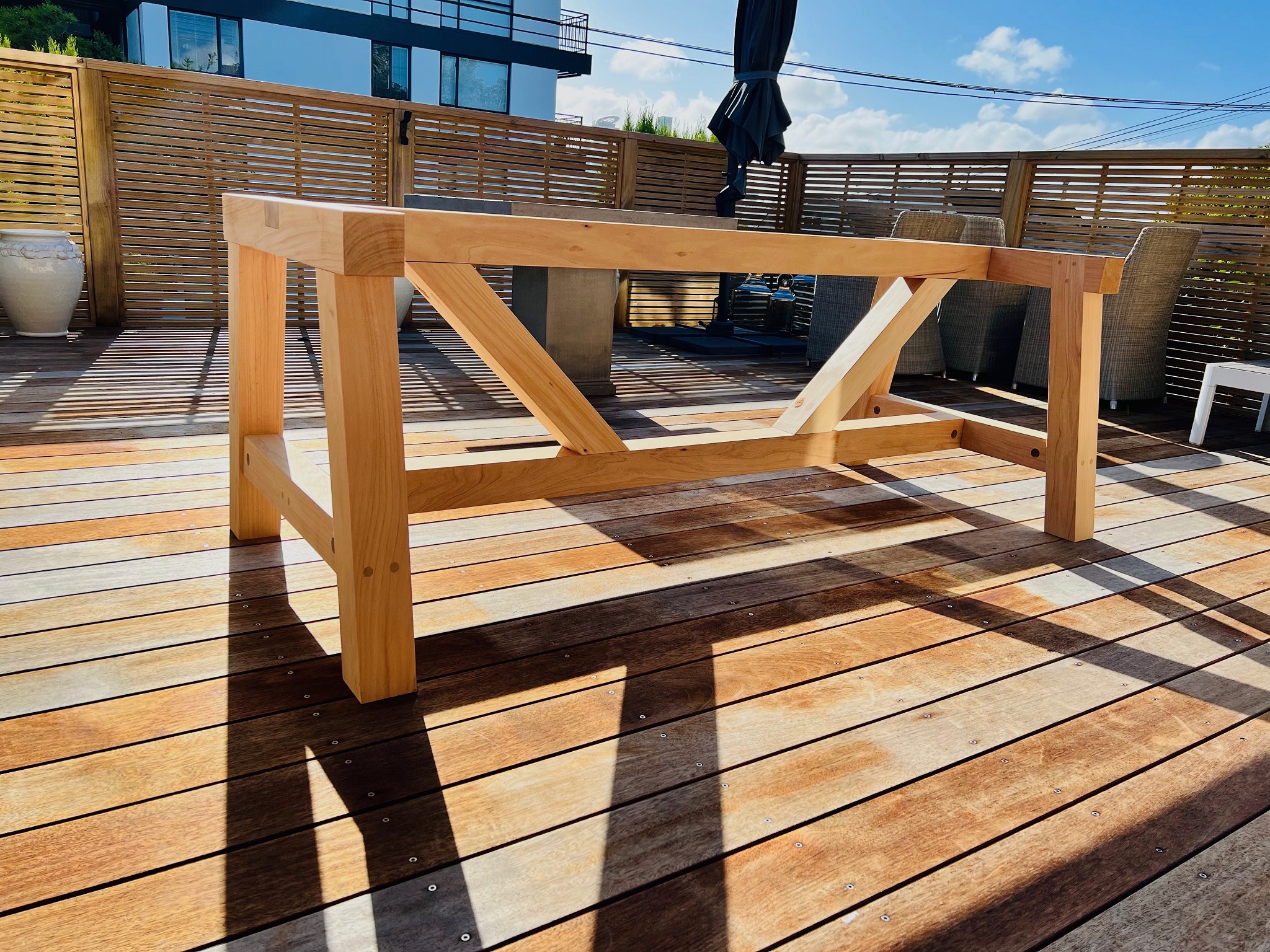
The outdoor table I mentioned a few weeks ago that our son and I are building is nearing completion. Construction is complete - just oiling and mating of base and top to be done:


Sometimes I just sit and think. Other times I just sit.
eracode:
The outdoor table I mentioned a few weeks ago that our son and I are building is nearing completion. Construction is complete - just oiling and mating of base and top to be done:
Wow that thing has presence - nice! Want to build me one?
Is the next project fixing up that wheel rash on the S/RS :D ?
eracode:
The outdoor table I mentioned a few weeks ago that our son and I are building is nearing completion. Construction is complete - just oiling and mating of base and top to be done:
looks amazing!
love your diy shop vac - im going to borrow this idea :)
insane:
eracode:
The outdoor table I mentioned a few weeks ago that our son and I are building is nearing completion. Construction is complete - just oiling and mating of base and top to be done:
Wow that thing has presence - nice! Want to build me one?
You're in the wrong thread - that's a rhetorical question for me. ๐
Has been a lot of fun and thoroughly enjoyed it. We hired a big compound mitre saw for all the cuts - now son is so impressed with what it was able to do, he's going to buy one. The saw made cuts with sub-millimetre accuracy and the finish on end-grain cuts was like silk. We were able to make high-precision joints, particularly the half-joints around the top of the base/legs - even though we had never used one before. I really wish I had one from when I started my DIY career 50 years ago.
Sometimes I just sit and think. Other times I just sit.
|
|
|