Geekzone: technology news, blogs, forums
Guest
Welcome Guest.
You haven't logged in yet. If you don't have an account you can register now.


Filter this topic showing only the reply marked as answer View this topic in a long page with up to 500 replies per page Create new topic
1 | 2 | 3 | 4 | 5 | 6 | 7 | 8 | 9 | 10 | 11
tweake
2648 posts

Uber Geek
+1 received by user: 1139


  #3108170 26-Jul-2023 10:00
Send private message

timbosan:


As for the goal, my new target is the Passive Home standard.  I know I will never get this in a 1910 cottage, but it gives me targets,  such as extra thick insulation in the roof.

I also have a shortlist.

First, read the book A House Needs to Breathe...Or Does It?: An Introduction to Building Science: Bailes III, Allison A: 9781958711125: Amazon.com: Books 

Groundsheet (when it stops raining!)

Ducted heatpump.  Underfloor - (BTW anyone door underfloor ducted?)  I have of course read Ducted heat pump guide / experience / plus Polyaire Airtouch 4 review (geekzone.co.nz).  Have a quote for a Daikin unit

Lossnay Ventilation system with upgraded filters, single room VL1000 model (due to Skillion ceilings)

Double layer insuluation in roof (I can only do parts as the front and back are skillion, so have to stick with the R3.4 I added when we reroofed)

Change underloor from batts to R3.1 Expol

Still to be decided

In wall insulation - the spray type.  Still not sold on it.

Add engineer wood over the current floors (which really need a sanded and polyurethaned) to close up all the gaps and get rid of the drafts through the old floors.


Anything else I am missing?


i would not be to concerned about passive house standard has you will go crazy trying to do that. just focus on reducing air leakage as much as you can (its never going to be air tight) and decent insulation. 


ground sheet highly recommended. it should make no difference if its raining. if its wet under the house you need to sort out drainage first. don't forget to pin it down and add drainage holes in the low spots in case of flooding, burst pipes, wind blown rain.


single room ventilation tends to be expensive as you need to do that to each room. don't forget you need to run power to each one. also if your going to do ducted heatpump then put the ventilation air through that. also if you use lossnay system check if its HRV or ERV.  ERV should really be paired with dehumidifier, but an old house is unlikely to be air tight enough anyway.


i'm not a fan of expol underfloor because it doesn't allow much moisture through. especially problematic when you have moisture tight floor above, eg lino, bathrooms, poly sealed floors. the odd person has mentioned water found on top of the expol, i suspect condensation. i prefer polyester. easy to install (staple it in place) allows moisture through. its downside of being thicker is actually an advantage as you cover more timber. expol is really thin so you leave more of the joists uncovered. the other option is blanket insulation.


spray foam, not a fan of closed cell spray foam for general insulation as its a moisture barrier. open cell will still let some moisture through. you want to make sure your insulation doesn't impede drying. note scott browns setup where he bucked the wall out and left a sizeable gap behind the cladding to allow drying airflow.


tweake
2648 posts

Uber Geek
+1 received by user: 1139


  #3108172 26-Jul-2023 10:05
Send private message

gzt: There's a problem with extraction fans most people miss. The extracted air must be replaced from somewhere. Extraction doesn't really work as designed without it. Bathrooms with a closed door and no vent or other input. It's hard to get right for several reasons and there's no premanufactured easy solution in the market.


true, especially with our smaller bathrooms.


common ploy is undercut doors. you can also get passive door vents which are used to reduce sound coming out of the room while allowing airflow to go in.


but one easy way is to plumb ventilation system into the bathroom. that has a big advantage of pushing air through even after fan is turned off. a small amount of constant airflow helps dry bathrooms out really well.


timbosan

2199 posts

Uber Geek
+1 received by user: 294

Subscriber

  #3108581 26-Jul-2023 20:30
Send private message

tweake:


gzt: There's a problem with extraction fans most people miss. The extracted air must be replaced from somewhere. Extraction doesn't really work as designed without it. Bathrooms with a closed door and no vent or other input. It's hard to get right for several reasons and there's no premanufactured easy solution in the market.


true, especially with our smaller bathrooms.


common ploy is undercut doors. you can also get passive door vents which are used to reduce sound coming out of the room while allowing airflow to go in.


but one easy way is to plumb ventilation system into the bathroom. that has a big advantage of pushing air through even after fan is turned off. a small amount of constant airflow helps dry bathrooms out really well.


Funny enough I watched a video today about this very topic (I have watched a few of Matt's videos; he is US based so products aren't comparable, but ideas still translate) - he has a Fantech unit that is liked to his kitchen extractor that pulls in, and filters, replacement outdoor air, making sure to keep the house pressure the same.  Very clever!  Not sure I would bother with this myself, as I would prefer a ventilation system and use that.

Make Up Air for a Kitchen Exhaust - Most Homes Suck. (Pun intended) - YouTube 


timbosan

2199 posts

Uber Geek
+1 received by user: 294

Subscriber

  #3108586 26-Jul-2023 20:41
Send private message

tweake:


timbosan:


As for the goal, my new target is the Passive Home standard.  I know I will never get this in a 1910 cottage, but it gives me targets,  such as extra thick insulation in the roof.

I also have a shortlist.

First, read the book A House Needs to Breathe...Or Does It?: An Introduction to Building Science: Bailes III, Allison A: 9781958711125: Amazon.com: Books 

Groundsheet (when it stops raining!)

Ducted heatpump.  Underfloor - (BTW anyone door underfloor ducted?)  I have of course read Ducted heat pump guide / experience / plus Polyaire Airtouch 4 review (geekzone.co.nz).  Have a quote for a Daikin unit

Lossnay Ventilation system with upgraded filters, single room VL1000 model (due to Skillion ceilings)

Double layer insuluation in roof (I can only do parts as the front and back are skillion, so have to stick with the R3.4 I added when we reroofed)

Change underloor from batts to R3.1 Expol

Still to be decided

In wall insulation - the spray type.  Still not sold on it.

Add engineer wood over the current floors (which really need a sanded and polyurethaned) to close up all the gaps and get rid of the drafts through the old floors.


Anything else I am missing?


i would not be to concerned about passive house standard has you will go crazy trying to do that. just focus on reducing air leakage as much as you can (its never going to be air tight) and decent insulation. 


ground sheet highly recommended. it should make no difference if its raining. if its wet under the house you need to sort out drainage first. don't forget to pin it down and add drainage holes in the low spots in case of flooding, burst pipes, wind blown rain.


single room ventilation tends to be expensive as you need to do that to each room. don't forget you need to run power to each one. also if your going to do ducted heatpump then put the ventilation air through that. also if you use lossnay system check if its HRV or ERV.  ERV should really be paired with dehumidifier, but an old house is unlikely to be air tight enough anyway.


i'm not a fan of expol underfloor because it doesn't allow much moisture through. especially problematic when you have moisture tight floor above, eg lino, bathrooms, poly sealed floors. the odd person has mentioned water found on top of the expol, i suspect condensation. i prefer F. easy to install (staple it in place) allows moisture through. its downside of being thicker is actually an advantage as you cover more timber. expol is really thin so you leave more of the joists uncovered. the other option is blanket insulation.


spray foam, not a fan of closed cell spray foam for general insulation as its a moisture barrier. open cell will still let some moisture through. you want to make sure your insulation doesn't impede drying. note scott browns setup where he bucked the wall out and left a sizeable gap behind the cladding to allow drying airflow.


Passive houses for me are what I would buy if I could afford to build one.  And I am not concerned too much about the standard, for me it gives me known methods to achieve goals that I can adapt to a leaky bungalow in Auckland :-)

Ground sheet is definitely next, cheap and I can do myself, and big impact.

And sorry I should have clarified, then I said single room ventilation, I meant one in ceiling for the whole house, due to the skillion roof over 2 bedrooms, the kitchen and the bathroom.  The house is small enough (< 70m2) that this shouldn't matter too much.  And yes, heat recovery, Lossnay VL1000  VL-100EU5-E : Single Room Fresh Air Ventilation with Lossnay Energy Recovery // Mitsubishi Electric (mitsubishi-electric.co.nz) 

The Expol I am looking at is a new product, 100mm thick so covers most of the joists.  EXPOL | R3.1 Timber UnderFloor Insulation  I have a floor with many gaps (I can see when the lights are on under the house!!!!) so moisture shouldn't be a problem, but that's good to know.  I didn't think I could get the same R rating with poly / batts in a depth that fits between the joists.

Yeah, Scott Brown's video of insulating from inside makes me think its worth doing, especially if you can reframe the wall to add another 50mm thickness and hence more batts.


neb

neb
11294 posts

Uber Geek
+1 received by user: 10018

Trusted
Lifetime subscriber

  #3108602 26-Jul-2023 22:18
Send private message

timbosan: First, read the book A House Needs to Breathe...Or Does It?: An Introduction to Building Science: Bailes III, Allison A: 9781958711125: Amazon.com: Books


You're not in Devonport are you?


(The library request for this has it currently on loan in Devonport).

Wheelbarrow01
1784 posts

Uber Geek
+1 received by user: 2638

Trusted
Chorus

  #3108608 26-Jul-2023 23:24
Send private message

I have a 1960's house which I've owned for almost 8 years. When I moved in it already had double glazing, but unfortunately not thermally broken. The amount of condensation that forms on the windows and frames in the depths of our Christchurch winters has always been annoying. The dehumidifier we bought a few years ago has helped a lot but it could not eradicate it completely.


This all changed last week when I had a moisture barrier installed under the timber floor. I must say I was skeptical that it would make any material difference but am happy to have been proven wrong. The very next morning the windows and frames were completely dry and this has continued since. We were previously emptying the dehumidifier about once every 3-4 days. I emptied it 9 days ago when the moisture barrier was installed and it's not even half full yet. Our timber floors have always been a bit squeaky in places - I guess we'll see if it gets worse as the timbers dry out.


We have a decent size ULEB log burner which takes care of almost all our heating needs at minimal cost , and good insulation in ceilings (double batts) and walls (Insulmax retrofit dry blown insulation). As I write this it's 11.30 at night, Metservice says 1.9 degrees outside and I'm sitting here in a T shirt and shorts, even though the fire is all but out for the night.


We only have foil underfloor insulation which I'm considering swapping out for Mammoth blanket insulation. I also have a couple of draughts I want to address - under the kitchen cabinetry is particularly bad so I suspect there's unsealed and/or redundant pipe/drain holes down there as the kitchen has been replaced at some point.


HP


Shop now for HP laptops and other devices (affiliate link).

neb

neb
11294 posts

Uber Geek
+1 received by user: 10018

Trusted
Lifetime subscriber

  #3108616 26-Jul-2023 23:48
Send private message

Wheelbarrow01:

We only have foil underfloor insulation which I'm considering swapping out for Mammoth blanket insulation.


Swap it out for anything that isn't foil. Foil "insulation" isn't any kind of insulation, it's just Russian roulette to catch plumbers and electricians when a live wire touches the metallised surface.

timbosan

2199 posts

Uber Geek
+1 received by user: 294

Subscriber

  #3108652 27-Jul-2023 08:30
Send private message

neb:
timbosan: First, read the book A House Needs to Breathe...Or Does It?: An Introduction to Building Science: Bailes III, Allison A: 9781958711125: Amazon.com: Books
You're not in Devonport are you? (The library request for this has it currently on loan in Devonport).


Nope, wrong side of the bridge :-) But good point, I will see if my local has a copy!


timbosan

2199 posts

Uber Geek
+1 received by user: 294

Subscriber

  #3108655 27-Jul-2023 08:38
Send private message

Wheelbarrow01:


I have a 1960's house which I've owned for almost 8 years. When I moved in it already had double glazing, but unfortunately not thermally broken. The amount of condensation that forms on the windows and frames in the depths of our Christchurch winters has always been annoying. The dehumidifier we bought a few years ago has helped a lot but it could not eradicate it completely.


This all changed last week when I had a moisture barrier installed under the timber floor. I must say I was skeptical that it would make any material difference but am happy to have been proven wrong. The very next morning the windows and frames were completely dry and this has continued since. We were previously emptying the dehumidifier about once every 3-4 days. I emptied it 9 days ago when the moisture barrier was installed and it's not even half full yet. Our timber floors have always been a bit squeaky in places - I guess we'll see if it gets worse as the timbers dry out.


We have a decent size ULEB log burner which takes care of almost all our heating needs at minimal cost , and good insulation in ceilings (double batts) and walls (Insulmax retrofit dry blown insulation). As I write this it's 11.30 at night, Metservice says 1.9 degrees outside and I'm sitting here in a T shirt and shorts, even though the fire is all but out for the night.


We only have foil underfloor insulation which I'm considering swapping out for Mammoth blanket insulation. I also have a couple of draughts I want to address - under the kitchen cabinetry is particularly bad so I suspect there's unsealed and/or redundant pipe/drain holes down there as the kitchen has been replaced at some point.


That's really interesting - I went for retrofit and kept the wooden frames, mind you I am in Auckland so no where near as cold (except last night it got down to 7), we get condensation on the OUTSIDE when very cold, but never on the inside.  I read somewhere (Scott Brown??) that double glazed aluminum windows have the same R rating a single glazed wood.

And thanks for the info about the ground sheet, gives me more drive to get it done ASAP, unfortunately the previous owners used he underneath of the house as a dumping ground so I need to clear it out first.  I assume from your reply you didn't do this yourself?  I am keen to hear tips from people who have done it themselves.

And yeah, get rid of the foil, it's an accident waiting to happen.


Bung
6734 posts

Uber Geek
+1 received by user: 2928

Subscriber

  #3108664 27-Jul-2023 09:08
Send private message

If you are removing the foil there is a Work Safe code of practice.

"3.6.3 The only safe course of action to take to achieve safe working conditions where
conductive thermal insulation is present is to eliminate the hazard – that is removing the
source of the power supply from the electrical installation. This can be achieved by
operation of the main switch(es) of the electrical installation to the OFF position while
working in the area where the conductive thermal insulation is fitted."

However it tests before it gets moved could change.

timmmay
20859 posts

Uber Geek
+1 received by user: 5350

Trusted
Lifetime subscriber

  #3108674 27-Jul-2023 09:44
Send private message

I had a ground sheet put down in my very old weatherboard house years ago. We could get it under about 2/3 of the house, maybe a bit more, the soil is close under the floor boards. It reduced moisture and made the house smell a lot better. Later we did some drainage work that probably helped a bit more. Ground sheets are definitely worthwhile.


Stream your favourite shows now on Apple TV (affiliate link).
tweake
2648 posts

Uber Geek
+1 received by user: 1139


  #3108689 27-Jul-2023 10:30
Send private message

timbosan:


Funny enough I watched a video today about this very topic (I have watched a few of Matt's videos; he is US based so products aren't comparable, but ideas still translate) - he has a Fantech unit that is liked to his kitchen extractor that pulls in, and filters, replacement outdoor air, making sure to keep the house pressure the same.  Very clever!  Not sure I would bother with this myself, as I would prefer a ventilation system and use that.

Make Up Air for a Kitchen Exhaust - Most Homes Suck. (Pun intended) - YouTube 


thats because they are super airtight and those big range hoods can depressurize the house badly.  they are more air tight than whats required for passive house in auckland and often those range hoods are far bigger than the baby ones nz often use. 


if a lower amount of make up air is required, some ventilation systems have a boost mode that ramps up when range hood is turned on.


with watching the usa content just remember to put it into context with their climate and what they are trying to achieve. 


tweake
2648 posts

Uber Geek
+1 received by user: 1139


  #3108696 27-Jul-2023 10:45
Send private message

timbosan:

Passive houses for me are what I would buy if I could afford to build one.  And I am not concerned too much about the standard, for me it gives me known methods to achieve goals that I can adapt to a leaky bungalow in Auckland :-)

Ground sheet is definitely next, cheap and I can do myself, and big impact.

And sorry I should have clarified, then I said single room ventilation, I meant one in ceiling for the whole house, due to the skillion roof over 2 bedrooms, the kitchen and the bathroom.  The house is small enough (< 70m2) that this shouldn't matter too much.  And yes, heat recovery, Lossnay VL1000  VL-100EU5-E : Single Room Fresh Air Ventilation with Lossnay Energy Recovery // Mitsubishi Electric (mitsubishi-electric.co.nz) 

The Expol I am looking at is a new product, 100mm thick so covers most of the joists.  EXPOL | R3.1 Timber UnderFloor Insulation  I have a floor with many gaps (I can see when the lights are on under the house!!!!) so moisture shouldn't be a problem, but that's good to know.  I didn't think I could get the same R rating with poly / batts in a depth that fits between the joists.

Yeah, Scott Brown's video of insulating from inside makes me think its worth doing, especially if you can reframe the wall to add another 50mm thickness and hence more batts.


so no ceiling over the bedrooms? walls don't go all the way up? so everyone hears whats going on ??


those gaps in the floor need be filled and sealed.


with older houses you will struggle to get that big polystyrene to fit between the joists due to the unevenness of the timber. insulation needs to seal up against the edge otherwise air flows around the corner and removes the heat. most joist are 150mm, so your 100mm insulation won't cover. while a r2.8 polyester is 150mm thick and will completely fill it, plus it fits old wonky timber easily. not sure on price difference at the mo.


as per scotts video notice the work on the windows to bring them out to suit the wider wall. its a lot of work. if your in southland that may be worth while.


tweake
2648 posts

Uber Geek
+1 received by user: 1139


  #3108714 27-Jul-2023 10:59
Send private message

timbosan:

That's really interesting - I went for retrofit and kept the wooden frames, mind you I am in Auckland so no where near as cold (except last night it got down to 7), we get condensation on the OUTSIDE when very cold, but never on the inside.  I read somewhere (Scott Brown??) that double glazed aluminum windows have the same R rating a single glazed wood.

And thanks for the info about the ground sheet, gives me more drive to get it done ASAP, unfortunately the previous owners used he underneath of the house as a dumping ground so I need to clear it out first.  I assume from your reply you didn't do this yourself?  I am keen to hear tips from people who have done it themselves.

And yeah, get rid of the foil, it's an accident waiting to happen.


i think its branz that has an article on the windows. its because non-thermally broken window frames reduce the insulation value a lot. this is a con that the building industry pulled over consumers eyes. the window spec never included the frames. so while they claimed higher performance with double glazing it was actually lower.


i did my own ground sheet. similar story to the others, window condensation dropped in half over night.


couple of tips, pin the sheet down especially around the edges otherwise wind will make it flap. also add drainage holes in the low spots to drain out wind blown rain, leaks etc.


the old testing i've seen shows nz soil evaporates about 1 liter per 10 square meters per day. so more recent testing shows it being higher but i cannot confirm that. so a 70sqm house has 7 liters of water evaporating every day. that goes up through the floor thanks to stack effect. not only does it add moisture to the home, that amount of evaporation also cools the air as well (think evaporative cooler). so a big improvement after fitting ground sheet.


btw unlike insulation, the more ground you cover the more you reduce the moisture. ie 80% coverage will give you 80% reduction.


timbosan

2199 posts

Uber Geek
+1 received by user: 294

Subscriber

  #3108738 27-Jul-2023 12:06
Send private message

tweake:


timbosan:

Passive houses for me are what I would buy if I could afford to build one.  And I am not concerned too much about the standard, for me it gives me known methods to achieve goals that I can adapt to a leaky bungalow in Auckland :-)

Ground sheet is definitely next, cheap and I can do myself, and big impact.

And sorry I should have clarified, then I said single room ventilation, I meant one in ceiling for the whole house, due to the skillion roof over 2 bedrooms, the kitchen and the bathroom.  The house is small enough (< 70m2) that this shouldn't matter too much.  And yes, heat recovery, Lossnay VL1000  VL-100EU5-E : Single Room Fresh Air Ventilation with Lossnay Energy Recovery // Mitsubishi Electric (mitsubishi-electric.co.nz) 

The Expol I am looking at is a new product, 100mm thick so covers most of the joists.  EXPOL | R3.1 Timber UnderFloor Insulation  I have a floor with many gaps (I can see when the lights are on under the house!!!!) so moisture shouldn't be a problem, but that's good to know.  I didn't think I could get the same R rating with poly / batts in a depth that fits between the joists.

Yeah, Scott Brown's video of insulating from inside makes me think its worth doing, especially if you can reframe the wall to add another 50mm thickness and hence more batts.


so no ceiling over the bedrooms? walls don't go all the way up? so everyone hears whats going on ??


those gaps in the floor need be filled and sealed.


with older houses you will struggle to get that big polystyrene to fit between the joists due to the unevenness of the timber. insulation needs to seal up against the edge otherwise air flows around the corner and removes the heat. most joist are 150mm, so your 100mm insulation won't cover. while a r2.8 polyester is 150mm thick and will completely fill it, plus it fits old wonky timber easily. not sure on price difference at the mo.


as per scotts video notice the work on the windows to bring them out to suit the wider wall. its a lot of work. if your in southland that may be worth while.


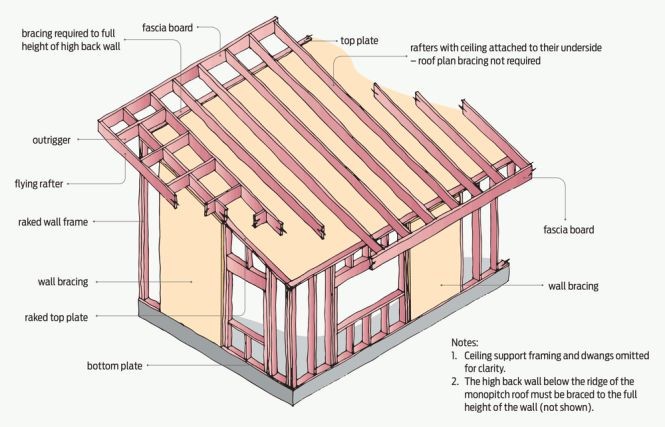
Skillion roof, something like this - the ceiling is up against the joists, and there is insulation between the ceiling and the building paper and then the corrugated iron.  Hence no space for ventilation systems (or for the planned ducted heating, that has to be underfloor)


And good point on the 'straightness' and using Expol :-)   Any recommendations on the poly (brands / where to buy etc.)?


1 | 2 | 3 | 4 | 5 | 6 | 7 | 8 | 9 | 10 | 11
Filter this topic showing only the reply marked as answer View this topic in a long page with up to 500 replies per page Create new topic


Geekzone Live »

Try automatic live updates from Geekzone directly in your browser, without refreshing the page, with Geekzone Live now.


Are you subscribed to our RSS feed? You can download the latest headlines and summaries from our stories directly to your computer or smartphone by using a feed reader.