Geekzone: technology news, blogs, forums
Guest
Welcome Guest.
You haven't logged in yet. If you don't have an account you can register now.


View this topic in a long page with up to 500 replies per page Create new topic
1 | ... | 696 | 697 | 698 | 699 | 700 | 701 | 702 | 703 | 704 | 705 | 706 | ... | 771
HarmLessSolutions
1230 posts

Uber Geek
+1 received by user: 812

Subscriber

  #3317788 7-Dec-2024 13:32
Send private message quote this post

tweake:


HarmLessSolutions:


[This is the best presentation I've seen on the viability and realities of hydrogen. If you want to avoid Robert's preamble skip the first 6 minutes or so. Prof. Cebon is an expert in his field and presents the information very eloquently.


was there any particular point you wanted to make about that ?


i only skimmed through it, it looks like the usual.


the simple problem is batteries don't have enough energy density for the weight for heavy use. plus the massive problem of charging. while green hydrogen can be inefficient and therefore costly, its energy dense enough to be useable and the infrastructure is easier to set up than the massive wide spread upgrades required for charging batteries. 


As stated by Prof Cebon the use of hydrogen in industry has a place to play but transport use doesn't make a lot of sense. As a fuel it is a very inefficient and expensive and the cost of installing infrastructure to distribute it is far from easy and certainly more difficult than charging infrastructure for EVs which can utilise existing electricity grid, with admittedly some improvements on its domestic infrastructure including to allow two way generation conveyance for PV and V2G usage.


My SIL works as an engineer in the natural gas sector and is totally dismissive of hydrogen and definitely wouldn't ever entertain getting a vehicle that uses it.




https://www.harmlesssolutions.co.nz/


tweake
2647 posts

Uber Geek
+1 received by user: 1139


  #3317793 7-Dec-2024 14:06
Send private message quote this post

HarmLessSolutions:


As stated by Prof Cebon the use of hydrogen in industry has a place to play but transport use doesn't make a lot of sense. As a fuel it is a very inefficient and expensive and the cost of installing infrastructure to distribute it is far from easy and certainly more difficult than charging infrastructure for EVs which can utilise existing electricity grid, with admittedly some improvements on its domestic infrastructure including to allow two way generation conveyance for PV and V2G usage.


i think thats incorrect. the simple problem is EV trucks and other heavy uses don't work well with batteries. it would be far cheaper to install hydrogen infrastructure than upgrade power infrastructure to handle large users. you couldn't use the existing grid, you would have to upsize the whole grid including power stations. 


ev cars, thats easy enough. but the amount of power required, plus the density of storage required, is not suitable for heavy users. hence they will be diesel until replaced by something like hydrogen. 


i suspect hes talking about ev cars only, in which case hes right. it makes no sense to have hydrogen for cars, especially with new battery tech coming out. but cars is only one part of the transport market.


tweake
2647 posts

Uber Geek
+1 received by user: 1139


  #3317796 7-Dec-2024 14:18
Send private message quote this post

to give some idea of the numbers, a quick and dirty look a the numbers shows that transport sector uses more energy than the electricity we currently use. so roughly put they would have to double electrical production and upgrade everything to distribute it. 


so clearly heavy users will not be ev's for a very long time. which leaves them being diesel or an alterative fuel such as hydrogen. 


HarmLessSolutions
1230 posts

Uber Geek
+1 received by user: 812

Subscriber

  #3317798 7-Dec-2024 14:26
Send private message quote this post

tweake:


HarmLessSolutions:


As stated by Prof Cebon the use of hydrogen in industry has a place to play but transport use doesn't make a lot of sense. As a fuel it is a very inefficient and expensive and the cost of installing infrastructure to distribute it is far from easy and certainly more difficult than charging infrastructure for EVs which can utilise existing electricity grid, with admittedly some improvements on its domestic infrastructure including to allow two way generation conveyance for PV and V2G usage.


i think thats incorrect. the simple problem is EV trucks and other heavy uses don't work well with batteries. it would be far cheaper to install hydrogen infrastructure than upgrade power infrastructure to handle large users. you couldn't use the existing grid, you would have to upsize the whole grid including power stations. 


ev cars, thats easy enough. but the amount of power required, plus the density of storage required, is not suitable for heavy users. hence they will be diesel until replaced by something like hydrogen. 


i suspect hes talking about ev cars only, in which case hes right. it makes no sense to have hydrogen for cars, especially with new battery tech coming out. but cars is only one part of the transport market.


Hydrogen infrastructure is not cheap to install. The existing natural gas infrastructure is not suitable for hydrogen as it will leak like crazy due to hydrogen's small molecular size and hydrogen embrittles steel leading to early failure.


Our generation capacity is sufficient to cope with charging existing EV numbers and can be upsized over time as the fleet increases, including by incentivisation/installation of distributed solar capacity. Distributed generation takes the load off of both nation demand and transmission and EVs can be utilised as part of the supply buffering strategy by way of V2G. 


Numerous large truck manufacturers are adding battery powered vehicles to their lineups. The success of these will prove the technology's worth over time.


As NZ already has an energy shortfall situation at times (due mainly to a faulty marketing structure) it definitely doesn't have generation capacity to manufacture and distribute hydrogen. If Tiwai was to shut down this situation may change. It is far wiser however to use our generation in charging vehicle batteries. The end to end energy use of various 'fuels' tells the story: 


https://www.harmlesssolutions.co.nz/


HarmLessSolutions
1230 posts

Uber Geek
+1 received by user: 812

Subscriber

  #3317805 7-Dec-2024 15:00
Send private message quote this post

tweake:


to give some idea of the numbers, a quick and dirty look a the numbers shows that transport sector uses more energy than the electricity we currently use. so roughly put they would have to double electrical production and upgrade everything to distribute it. 


so clearly heavy users will not be ev's for a very long time. which leaves them being diesel or an alterative fuel such as hydrogen. 


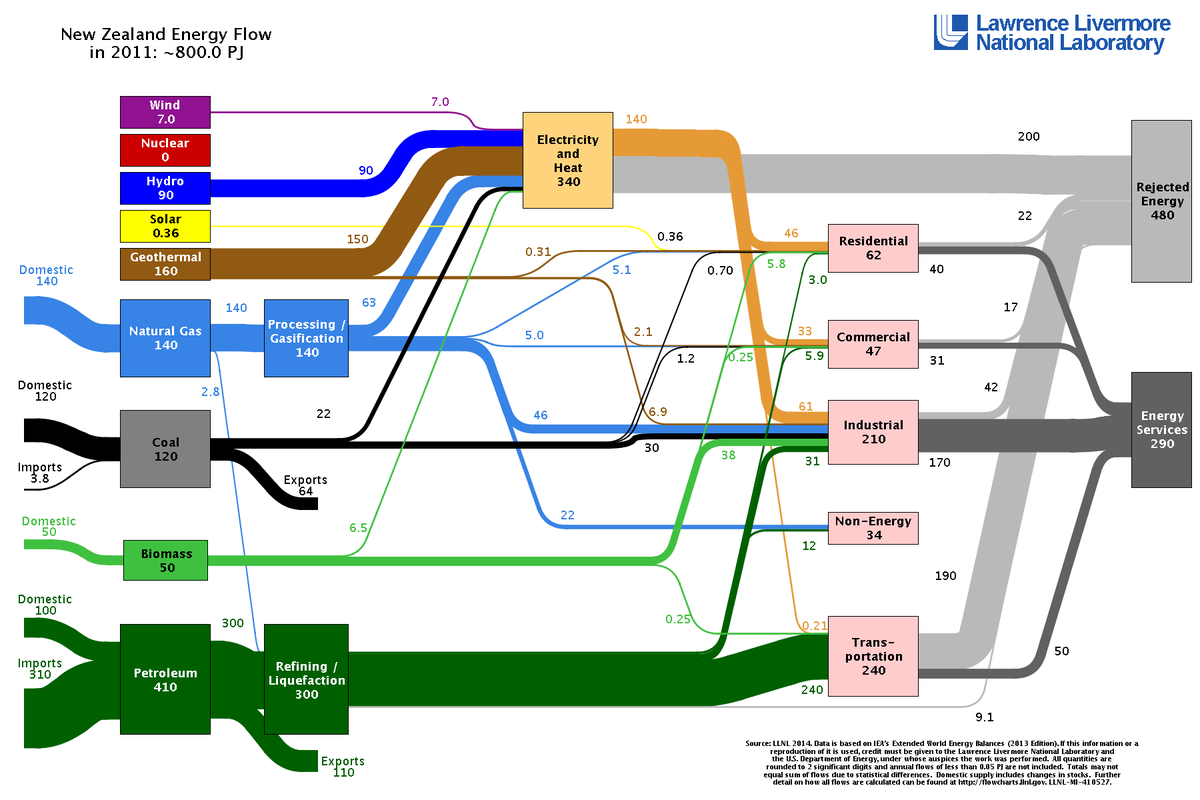
That's a bit simplistic though. Fossil fueled vehicles waste around 80% of the energy contained in their fuel whereas EVs are somewhere near 90% efficient so if the fleet is electrified its overall energy demand reduces significantly. Add to that the possibility for vehicle owners to produce their own 'fuel' by way of solar generation and the demands on NZ's generation capacity reduces further. The chart I posted above illustrates the comparitive energy economies of various 'fuels'.


Also follow the petroleum path in this sankey diagram to the proportion of it that results in "Rejected Energy". 2011 is the last time NZ was evaluated this way but the overall situation won't have changed markedly.


https://www.harmlesssolutions.co.nz/


tweake
2647 posts

Uber Geek
+1 received by user: 1139


  #3317809 7-Dec-2024 15:23
Send private message quote this post

HarmLessSolutions:


Our generation capacity is sufficient to cope with charging existing EV numbers and can be upsized over time as the fleet increases, including by incentivisation/installation of distributed solar capacity. Distributed generation takes the load off of both nation demand and transmission and EVs can be utilised as part of the supply buffering strategy by way of V2G. 


Numerous large truck manufacturers are adding battery powered vehicles to their lineups. The success of these will prove the technology's worth over time.


i think your have missed the bus here, or is that truck <dad joke>


yes i have oversimplified it. there is efficiencies including in distribution, and other factors like what can a charging station even draw.


yes there is ev trucks on the market, a few in nz under trail. they have been somewhat quiet on their results so far. read into that what you like. they are all niche applications. for general use, the energy consumption is huge and energy density (even with the new battery type due to come out) is still poor. theres a story around of a trucking form looking at installing chargers for a fleet of ev trucks. the city comes back and asks if its a joke. it requires a bigger feed than the entire city. no idea if thats true but the point is the energy consumption if huge and requires massive infrastructure change.


heavy ev's are just not practical (outside of small niches), so your left with either diesel or hydrogen. its not a case of if hydrogen is good or better, its a case of its the only practical alternative at this stage.


Shop now for Dyson appliances (affiliate link).
Jase2985
13735 posts

Uber Geek
+1 received by user: 6216

ID Verified
Lifetime subscriber

  #3317811 7-Dec-2024 15:24
Send private message quote this post

tweake:


HarmLessSolutions:


As stated by Prof Cebon the use of hydrogen in industry has a place to play but transport use doesn't make a lot of sense. As a fuel it is a very inefficient and expensive and the cost of installing infrastructure to distribute it is far from easy and certainly more difficult than charging infrastructure for EVs which can utilise existing electricity grid, with admittedly some improvements on its domestic infrastructure including to allow two way generation conveyance for PV and V2G usage.


i think thats incorrect. the simple problem is EV trucks and other heavy uses don't work well with batteries. it would be far cheaper to install hydrogen infrastructure than upgrade power infrastructure to handle large users. you couldn't use the existing grid, you would have to upsize the whole grid including power stations. 


ev cars, thats easy enough. but the amount of power required, plus the density of storage required, is not suitable for heavy users. hence they will be diesel until replaced by something like hydrogen. 


i suspect hes talking about ev cars only, in which case hes right. it makes no sense to have hydrogen for cars, especially with new battery tech coming out. but cars is only one part of the transport market.


you are forgetting you also need the power to generate the hydrogen, so you would also need to upgrade some of the gird infrastructure and or power stations. EV trucks seem to be working ok in Europe on all the motorways they have there. For us the problem is the share amount of single laned roads everywhere outside the main centres which limits technologies like the pantographs they are trialling in a few countries to charge trucks while they are driving.


Hydrogen is still 10 years in the future, BEV is now.


HarmLessSolutions
1230 posts

Uber Geek
+1 received by user: 812

Subscriber

  #3317821 7-Dec-2024 16:37
Send private message quote this post

tweake:


HarmLessSolutions:


Our generation capacity is sufficient to cope with charging existing EV numbers and can be upsized over time as the fleet increases, including by incentivisation/installation of distributed solar capacity. Distributed generation takes the load off of both nation demand and transmission and EVs can be utilised as part of the supply buffering strategy by way of V2G. 


Numerous large truck manufacturers are adding battery powered vehicles to their lineups. The success of these will prove the technology's worth over time.


i think your have missed the bus here, or is that truck <dad joke>


yes i have oversimplified it. there is efficiencies including in distribution, and other factors like what can a charging station even draw.


yes there is ev trucks on the market, a few in nz under trail. they have been somewhat quiet on their results so far. read into that what you like. they are all niche applications. for general use, the energy consumption is huge and energy density (even with the new battery type due to come out) is still poor. theres a story around of a trucking form looking at installing chargers for a fleet of ev trucks. the city comes back and asks if its a joke. it requires a bigger feed than the entire city. no idea if thats true but the point is the energy consumption if huge and requires massive infrastructure change.


heavy ev's are just not practical (outside of small niches), so your left with either diesel or hydrogen. its not a case of if hydrogen is good or better, its a case of its the only practical alternative at this stage.


Mention of "a story around" is hardly worth replying to but in any case such a proposal is a lines company issue, not a city's. Also the installation of a bigger transformer and heavier duty cabling is hardly "massive infrastructure change" and such upgrades are typical for any industrial development. Such upgrades for significant EV charging capacity also come with an upside of those heavy vehicles also being capable of back feeding into the grid at peak demand thereby easing infrastructure loads as is the case for this Auckland bus fleet.


The diagram I posted above comparing fuel efficiencies included distribution/transmission losses for all so that's already covered off. Also for a trucking company upgrading its fleet to EVs a warehouse roof covered in PV panels with battery storage included would make a lot of sense plus negate distribution losses in the wider view.


What I'm stating here is that hydrogen is not a practical alternative in the foreseeable future whereas electrification is already successfully moving into the transport use model.


https://www.harmlesssolutions.co.nz/


tweake
2647 posts

Uber Geek
+1 received by user: 1139


  #3317826 7-Dec-2024 17:24
Send private message quote this post

HarmLessSolutions:


Mention of "a story around" is hardly worth replying to but in any case such a proposal is a lines company issue, not a city's. Also the installation of a bigger transformer and heavier duty cabling is hardly "massive infrastructure change" and such upgrades are typical for any industrial development. Such upgrades for significant EV charging capacity also come with an upside of those heavy vehicles also being capable of back feeding into the grid at peak demand thereby easing infrastructure loads as is the case for this Auckland bus fleet.


The diagram I posted above comparing fuel efficiencies included distribution/transmission losses for all so that's already covered off. Also for a trucking company upgrading its fleet to EVs a warehouse roof covered in PV panels with battery storage included would make a lot of sense plus negate distribution losses in the wider view.


What I'm stating here is that hydrogen is not a practical alternative in the foreseeable future whereas electrification is already successfully moving into the transport use model.


i think you massively underestimate the energy requirements here. a bigger transformer and heavy duty cable is laughable. we are talking upgrading the entire 220/110kv lines, substations the works. the odd transformer is ok for the few things we have on trail and in places where there is capacity. you start rolling out fleets of them, there is no ability to charge them at scale at the speed required.


feeding the grid is only applicable for the small number of niche applications. trucks don't sit idle, they don't make money sitting parked up.


warehouse of solar panels would barely put a dent into the transport power required for a warehouse. solar on the house roof for a car that only goes short range to work and back, sure. but trucks etc use massive amounts more energy, travel long distances and it needs to be able to be charged quickly.


trouble ev trucks have not moved successfully into the transport model. they are still on trail and one thing that has been noted is the lack of infrastructure to be able to charge them. they are still short range, limited cargo, niche application. which of course is why no one is rushing out buying fleets of them.


HarmLessSolutions
1230 posts

Uber Geek
+1 received by user: 812

Subscriber

  #3317877 7-Dec-2024 17:44
Send private message quote this post

tweake:


HarmLessSolutions:


Mention of "a story around" is hardly worth replying to but in any case such a proposal is a lines company issue, not a city's. Also the installation of a bigger transformer and heavier duty cabling is hardly "massive infrastructure change" and such upgrades are typical for any industrial development. Such upgrades for significant EV charging capacity also come with an upside of those heavy vehicles also being capable of back feeding into the grid at peak demand thereby easing infrastructure loads as is the case for this Auckland bus fleet.


The diagram I posted above comparing fuel efficiencies included distribution/transmission losses for all so that's already covered off. Also for a trucking company upgrading its fleet to EVs a warehouse roof covered in PV panels with battery storage included would make a lot of sense plus negate distribution losses in the wider view.


What I'm stating here is that hydrogen is not a practical alternative in the foreseeable future whereas electrification is already successfully moving into the transport use model.


i think you massively underestimate the energy requirements here. a bigger transformer and heavy duty cable is laughable. we are talking upgrading the entire 220/110kv lines, substations the works. the odd transformer is ok for the few things we have on trail and in places where there is capacity. you start rolling out fleets of them, there is no ability to charge them at scale at the speed required.


feeding the grid is only applicable for the small number of niche applications. trucks don't sit idle, they don't make money sitting parked up.


warehouse of solar panels would barely put a dent into the transport power required for a warehouse. solar on the house roof for a car that only goes short range to work and back, sure. but trucks etc use massive amounts more energy, travel long distances and it needs to be able to be charged quickly.


trouble ev trucks have not moved successfully into the transport model. they are still on trail and one thing that has been noted is the lack of infrastructure to be able to charge them. they are still short range, limited cargo, niche application. which of course is why no one is rushing out buying fleets of them.


Maybe link in some factual basis for your 'thinks'. A 5-10MW demand from a reasonable sized HEV charging facility is no more than that required for a decent sized industrial development. Not something that requires upgrading HV transmission lines. How about you back your derogatory criticisms with some actual information?


Heavy Duty Electric Vehicle Charging Stations are being developed now with companies rising to the challenge of doing so.


Also solar canopies with battery storage are more than capable of supplementing grid supply for EV charging facilities.


https://www.harmlesssolutions.co.nz/


huckster
887 posts

Ultimate Geek
+1 received by user: 460

ID Verified
Lifetime subscriber

  #3317878 7-Dec-2024 17:56
Send private message quote this post

And it's tricky to store Hydrogen, tricky to transport. It won't go down the existing pipes either.


So will that be cheaper that upgrading the existing electricity network?


Will that not have to be upgraded in many places anyway to support the extra power generation required to generate hydrogen?


Want to support Geekzone and browse the site without the ads? Subscribe to Geekzone now (monthly, annual and lifetime options).
NzBeagle
971 posts

Ultimate Geek
+1 received by user: 128

Trusted

  #3317891 7-Dec-2024 20:13
Send private message quote this post

In the current environment, there's an option for both. Hydrogen would only be required in key locations to support a significant amount of long haul transport, ie where rail exists but isn't practical. Longer distances, fewer stops, aren't currently well matched. The ability to produce hydrogen on site at a time that suits the network and store it for future demand works quite well, albeit with significant infrastructure cost, not to mention the price final product which I would expect is still greater than Diesel in the equivalent vehicle.

Hydrogen production and storage isn't easy, but it's workable. I think transportation of hydrogen may be a bigger challenge that isn't worth it, otherwise perhaps we'd have more solid evidence of it in the market.

In short haul, or metropolitan, environments there will be plenty of opportunity for electric trucks, using their home base for charging, grid or PV array, without significant compromise to productivity. The advantage here is the energy cost should be lower than fossil fuels, not to mention the reduced long term costs associated with vehicles that can will dwarf most private motor vehicles.

Both options are at work in NZ in some manner, quite practically in the application they're in. Makes sense for some to change if it suits, practically at least.

tweake
2647 posts

Uber Geek
+1 received by user: 1139


  #3317944 8-Dec-2024 09:43
Send private message quote this post

HarmLessSolutions:


Maybe link in some factual basis for your 'thinks'. A 5-10MW demand from a reasonable sized HEV charging facility is no more than that required for a decent sized industrial development. Not something that requires upgrading HV transmission lines. How about you back your derogatory criticisms with some actual information?


Heavy Duty Electric Vehicle Charging Stations are being developed now with companies rising to the challenge of doing so.


Also solar canopies with battery storage are more than capable of supplementing grid supply for EV charging facilities.


exactly.


your talking doubling of the power requirements for just one industrial aera and thats only 10 1mw chargers. how many hundreds of trucks operate there. now add in the next industrial area, and the next, and the next. your talking about doubling the power requirements of the grid and you seam to think that would not take any upgrades, comon use your brain here a bit. one pylon falls over and northland drops off the grid, one power cable failed and auckland cbd went dark.


using the charging space for solar is excellent, but its never going to be enough on its own. to make hydrogen or charge ev we need a big increase in power supply. something that will takes decades to do. hence i don't see diesel going away any time soon.


btw we are also talking about ev trucks which are either range, load, performance, limited. all of that adds to the cost. look at JAC ev trucks on sale here. they have normal load capacity but can't do open road speed, has very limited range and slope limitations. some of the trail trucks, batteries are so heavy they add to go up a size in truck and it requires recharging at stations along the way of its fairly short route. 


probably the better option is plugin hydrogen hybrid. less drain on the grid and use a hydrogen fuel cell as a range extender.


HarmLessSolutions
1230 posts

Uber Geek
+1 received by user: 812

Subscriber

  #3317974 8-Dec-2024 13:27
Send private message quote this post

tweake:


HarmLessSolutions:


Maybe link in some factual basis for your 'thinks'. A 5-10MW demand from a reasonable sized HEV charging facility is no more than that required for a decent sized industrial development. Not something that requires upgrading HV transmission lines. How about you back your derogatory criticisms with some actual information?


Heavy Duty Electric Vehicle Charging Stations are being developed now with companies rising to the challenge of doing so.


Also solar canopies with battery storage are more than capable of supplementing grid supply for EV charging facilities.


exactly.


your talking doubling of the power requirements for just one industrial aera and thats only 10 1mw chargers. how many hundreds of trucks operate there. now add in the next industrial area, and the next, and the next. your talking about doubling the power requirements of the grid and you seam to think that would not take any upgrades, comon use your brain here a bit. one pylon falls over and northland drops off the grid, one power cable failed and auckland cbd went dark.


using the charging space for solar is excellent, but its never going to be enough on its own. to make hydrogen or charge ev we need a big increase in power supply. something that will takes decades to do. hence i don't see diesel going away any time soon.


btw we are also talking about ev trucks which are either range, load, performance, limited. all of that adds to the cost. look at JAC ev trucks on sale here. they have normal load capacity but can't do open road speed, has very limited range and slope limitations. some of the trail trucks, batteries are so heavy they add to go up a size in truck and it requires recharging at stations along the way of its fairly short route. 


probably the better option is plugin hydrogen hybrid. less drain on the grid and use a hydrogen fuel cell as a range extender.


Just more derogatory claims with no facts to support your argument and sadly lacking writing skills. Come back when you've got something to base your statements on or else I'll consider this discussion closed.


https://www.harmlesssolutions.co.nz/


Stu

Stu
Hammered
8743 posts

Uber Geek
+1 received by user: 2409

Moderator
ID Verified
Trusted
Lifetime subscriber

  #3317975 8-Dec-2024 13:34
Send private message quote this post

If you want to discuss hydrogen fuelled vehicles, start a new thread please. If you want to discuss comparisons between hydrogen and battery electric vehicles, start a new thread please.


People often mistake me for an adult because of my age.


Keep calm, and carry on posting.


Referral Links: Sharesies


Are you happy with what you get from Geekzone? If so, please consider supporting us by subscribing.


No matter where you go, there you are.


1 | ... | 696 | 697 | 698 | 699 | 700 | 701 | 702 | 703 | 704 | 705 | 706 | ... | 771
View this topic in a long page with up to 500 replies per page Create new topic


Geekzone Live »

Try automatic live updates from Geekzone directly in your browser, without refreshing the page, with Geekzone Live now.


Are you subscribed to our RSS feed? You can download the latest headlines and summaries from our stories directly to your computer or smartphone by using a feed reader.