|
|
|
Kiwifruta: Redo the graph with both axes startibg at zero. The 1.5 starting point for both axes distorts the facts.
I agree with the other post just above mine. How does that distort the facts?
networkn:
Rikkitic:
networkn:
Also it's a Stupid Title, because Drugs encompass all sorts of drugs and the "drugs" the op speaks of is just Weed!
I focused on weed because that is the one most widely used and discussed, but it is not the only one that falls into this category (soft drugs). My title comes from the 'war on drugs' that was declared by Richard Nixon and again by Nancy Reagan and has recently been used in other publications, which I was effectively quoting. They coined it, not me, and they and people like them saw no difference whatsoever between a joint and shooting up heroin, which the result that a lot of people who never did anything worse than smoke a joint in the privacy of their home had their lives destroyed by long stints in prison. The war on drugs was and is a travesty and now, at long last, attitudes are starting to change. It is long overdue.
Heh, I hate to break it to you, but the "war on drugs" was actually coined in a response to curb Cocaine and Heroin importing and distribution (Primarily) from South America and into North America.
Actually, it was started in part to be enable the targeting of hippies and the anti-war left who were also heavily using marijuana. The effect of criminalization meant the government could break up meetings and break down doors in a legal manner.
freitasm:
networkn: It makes me laugh when I hear people talk about the tax gain from legalizing, when the cost of compliance is about a billion times more.
Do you have a reference? If not, it's not a fact.
A lack of a reference does not mean a statement is not factual.
Kiwifruta:Fred99:
I'm not very interested in anecdotes, no matter how dearly other posters may grasp on their "personal experience with use or abstinence from drugs, it's irrelevant to the topic. Almost all of us use drugs.
Here's how experts see it:
The other point to note is that while experts in the field might favour decriminalisation, many people seem to consider this as "legalisation" - to the extent that there'll be the equivalent of candy stores dispensing cheap methamphetamine and heroin to school kids. Nobody sane wants this.
Perhaps those who are in fear of decriminalisation and treatment of diseases of addiction as diseases, might consider "what if" a child of theirs was addicted.
"Of course it won't happen" (because we're "good" parents) is head in the sand denial of reality - aided/exacerbated by the fact that when something's criminal, then it gets hidden.
Would they want their own child thrown in a prison cell and condemned to a life with a criminal record - or given medical help to manage and overcome their addiction?
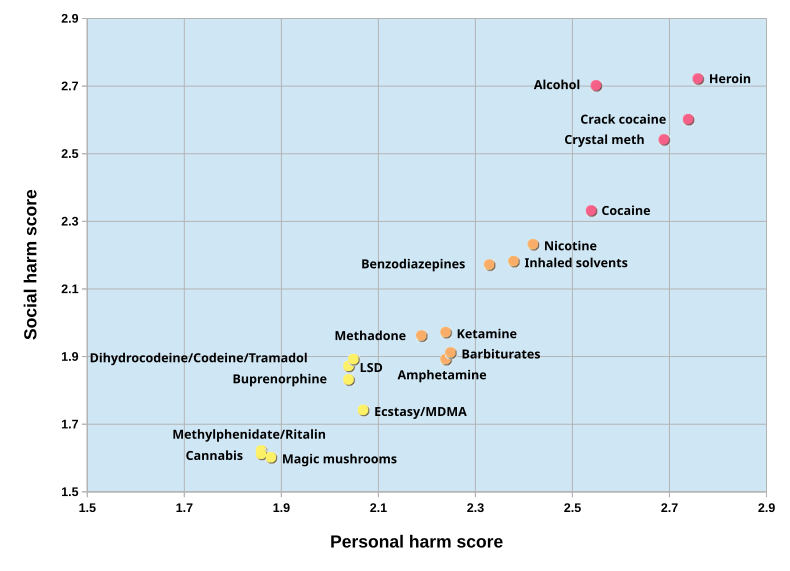
Redo the graph with both axes startibg at zero. The 1.5 starting point for both axes distorts the facts.
Nope, it does not distort anything and that change would only serves to exaggerate meaningless differences. What we want to see are the differences in impact between the various drugs that are commonly used which is what this chart shows. All extending the axes to zero will accomplish is emphasising that no substance has a small impact either societally or personally which is not something that is in dispute. Consider where on the chart sugar would place, for example.
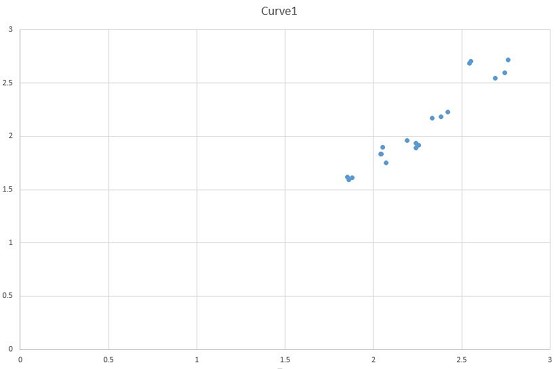
paulchinnz:Less than perfect digitisation of original, but redid graph with 0,0:
Don't think there's much misrepresentation of data - starting at 1.5,1.5 just means less blank space on graph. Looks like a nice linear correlation.
Kiwifruta:paulchinnz:
Less than perfect digitisation of original, but redid graph with 0,0:
Don't think there's much misrepresentation of data - starting at 1.5,1.5 just means less blank space on graph. Looks like a nice linear correlation.
With the original axes, at first glance, alcohol looks about 10-15 x as damaging as cannabis, with the new axes (once labels are put in) it can be immediately seen that alcohol is about twice as damaging as cannabis.
Very interesting graph I had no idea that alcohol was as harmful as hard drugs like cocaine, heroin, crack etc. So glad that I totally quit it 20 years ago.
The first graph does not make Marijuana look 10x worse than alcohol, if you think it looks that way you are unable to read axes. The data should clearly show the differences between data points and may appropriately frame the data from non-zero axes if not doing so makes the data unintelligible or wastes huge amounts of white space.
UHD:Kiwifruta:paulchinnz:Less than perfect digitisation of original, but redid graph with 0,0:
Don't think there's much misrepresentation of data - starting at 1.5,1.5 just means less blank space on graph. Looks like a nice linear correlation.
With the original axes, at first glance, alcohol looks about 10-15 x as damaging as cannabis, with the new axes (once labels are put in) it can be immediately seen that alcohol is about twice as damaging as cannabis.
Very interesting graph I had no idea that alcohol was as harmful as hard drugs like cocaine, heroin, crack etc. So glad that I totally quit it 20 years ago.The first graph does not make Marijuana look 10x worse than alcohol, if you think it looks that way you are unable to read axes. The data should clearly show the differences between data points and may appropriately frame the data from non-zero axes if not doing so makes the data unintelligible or wastes huge amounts of white space.
UHD:freitasm:networkn: It makes me laugh when I hear people talk about the tax gain from legalizing, when the cost of compliance is about a billion times more.Do you have a reference? If not, it's not a fact.
A lack of a reference does not mean a statement is not factual.
Referral links: Quic Broadband (free setup code: R587125ERQ6VE) | Samsung | AliExpress | Wise | Sharesies
Support Geekzone by subscribing (browse ads-free), or making a one-off or recurring donation through PressPatron.

UHD:
freitasm:
networkn: It makes me laugh when I hear people talk about the tax gain from legalizing, when the cost of compliance is about a billion times more.
Do you have a reference? If not, it's not a fact.
A lack of a reference does not mean a statement is not factual.
Tell that to the Pope..! ![]()

Geektastic:
A lack of a reference does not mean a statement is not factual.
Tell that to the Pope..!
The Pope deals in religion, not fact.
Don't get too obsessed with the accuracy of the chart and the way it's presented. It is what it is - the result of a survey, subjective expert "opinion" - not the result of some clinical trial.
Of course it will include sample bias (if you worked in drug counselling or A&E in Glasgow, you'd likely have a completely different bias because of who's routinely presenting in your practice than you might if you were a GP in Inverness). Also, some of the drugs listed (for example MDMA) there'd be very few serious cases (overdose/dehydration) but no way to account for the likelihood that in almost all cases, people would take it and never need to see a health professional because of it, nor probably ever mention their use of it to one.
Friends of mine who are health experts have very different attitudes toward legalisation and decriminalisation. Probably the most against liberalisation is a clinical psychologist dealing mainly with youth. I believe her claim that most of the patients referred to her have substance abuse issues, but I don't accept that the drug abuse caused the psychological disorders she's treating. Perhaps sometimes it does, but IMO she's dealing with individuals who for other reasons had a predisposition (for psychological disorders) and/or subsequently self-medicate and/or were led into living in a sub-culture where drug abuse is rampant, as they didn't "fit" and were ostracised (even if only by their own perception) by "normal" society. I do fully accept that the self medication (subsequent or not) is very harmful.
The most in favour of liberalisation is a GP who now works in public health policy. He's familiar with the secondary results (and futility) of prohibition/criminalisation, overdose and disease (HIV/hepatitis), ill-health due to deprivation (not directly due to substance abuse itself), social issues, then new patients appearing with improbable stories, strong pleas for scripts which are declined (but knowing they'll get what they want elsewhere anyway - from the street if they can't find a gullible GP), and inadequate support services to enable him to do what he's pledged to do - provide the best care he possibly can.
Fred99:
... a clinical psychologist ... dealing with individuals who for other reasons had a predisposition (for psychological disorders) and/or subsequently self-medicate and/or were led into living in a sub-culture where drug abuse is rampant, as they didn't "fit" and were ostracised (even if only by their own perception) by "normal" society.
I believe that there's also an element of protest: "I'll do it *because* it's illegal, as way of showing the Man that I'm not totally in his power". The same goes for lots of other anti-social behaviour.
Fred99:Don't get too obsessed with the accuracy of the chart and the way it's presented. It is what it is - the result of a survey, subjective expert "opinion" - not the result of some clinical trial.
Of course it will include sample bias (if you worked in drug counselling or A&E in Glasgow, you'd likely have a completely different bias because of who's routinely presenting in your practise than you might if you were a GP in Inverness).
Friends of mine who are health experts have very different attitudes toward legalisation and decriminalisation. Probably the most against liberalisation is a clinical psychologist dealing mainly with youth. I believe her claim that most of the patients referred to her have substance abuse issues, but I don't accept that the drug abuse caused the psychological disorders she's treating. Perhaps sometimes it does, but IMO she's dealing with individuals who for other reasons had a predisposition (for psychological disorders) and/or subsequently self-medicate and/or were led into living in a sub-culture where drug abuse is rampant, as they didn't "fit" and were ostracised (even if only by their own perception) by "normal" society. I do fully accept that the self medication (subsequent or not) is very harmful.
The most in favour of liberalisation is a GP who now works in public health policy. He's familiar with the secondary results (and futility) of prohibition/criminalisation, overdose and disease (HIV/hepatitis), ill-health due to deprivation (not directly due to substance abuse itself), social issues, then new patients appearing with improbable stories, strong pleas for scripts which are declined (but knowing they'll get what they want elsewhere anyway - from the street), and inadequate support services to enable him to do what he's pledged to do - provide the best care he possibly can.

It is refreshing to encounter someone prepared to change their mind in the face of facts. +1 for your willingness to reconsider. I have undergone something similar. As I previously posted, I now think the drinking age change was a mistake, at least the way they did it. As a matter of principle, I am strongly against most restrictions on individual freedom as long as it doesn't affect anyone else. A lot of the disagreement here is on the extent to which illegal drug use already affects others, and the extent to which that might change if it was decriminalised or even legalised. I don't like anyone telling me what I am or am not allowed to do, whether I actually want to do it or not, but I am also not prepared to unleash a horde of raging zombies on society if that would be the consequence. I don't believe it would be, certainly not in the case of marijuana and some other drugs. I think the reason marijuana has been demonised and alcohol tolerated is probably at least partly just an accident of history. Another part is the difficulty American puritans have with people enjoying themselves. And some of it may be due to the innocuous nature of unenhanced marijuana itself. Alcohol is highly addictive, dope is not, at least not in any usual sense. When people were deprived of alcohol in the 1920s, they went to great lengths to obtain it anyway. People who enjoy pot will also go out of their way to get it, but I question whether the drive is as strong. Anyway, the current system is not working and it is time to try something else.
Plesse igmore amd axxept applogies in adbance fir anu typos
|
|
|