
Geekzone: technology news, blogs, forums
Guest
Welcome Guest.
You haven't logged in yet. If you don't have an account you can register now.


View this topic in a long page with up to 500 replies per page Create new topic
1 | 2 
D1023319
527 posts

Ultimate Geek
+1 received by user: 90

ID Verified

  #3342357 13-Feb-2025 10:46
Send private message

Kickinbac:


timmmay:


D1023319:
I strongly suggest you dont play with dampers yourself


I've been talking to an HVAC technician in Australia who does warranty and repair work on air touch units. His opinion seems to be that if the airtouch is installed properly with a bypass damper they work great. If the system is set up with a spill zone it tends to be more problematic.


I have the spill zone and I have to mess with the dampers to stop overheating or overcooling. Next time I get any work done like this I will definitely be adding the bypass damper. 


I've recently configured the Daikin to turn off all airflow when the system is at Target temperature both and heating and cooling modes. That has definitely improved comfort. In heating mode having a breeze when it's up to heat makes you feel cold. In cooling mode it overcools the spill zone again making it uncomfortable.


Good points. The only thing I don't like about switching the fan off is the change in noise. I prefer a constant fan noise. Is your system super quiet that you don't notice?


The setting is commonly referred to as 'thermo off' so the fan switches off when the setpoint is achieved. But a problem can be if there is no air flow through the system it may not be sensing correctly. Mostly a problem when using the return air sensor. 


I mainly do commercial A/C so we like the ducted indoor unit fan to be always on as we are usually introducing fresh air into the system through this.


Super quiet - no noise at all in the rooms.
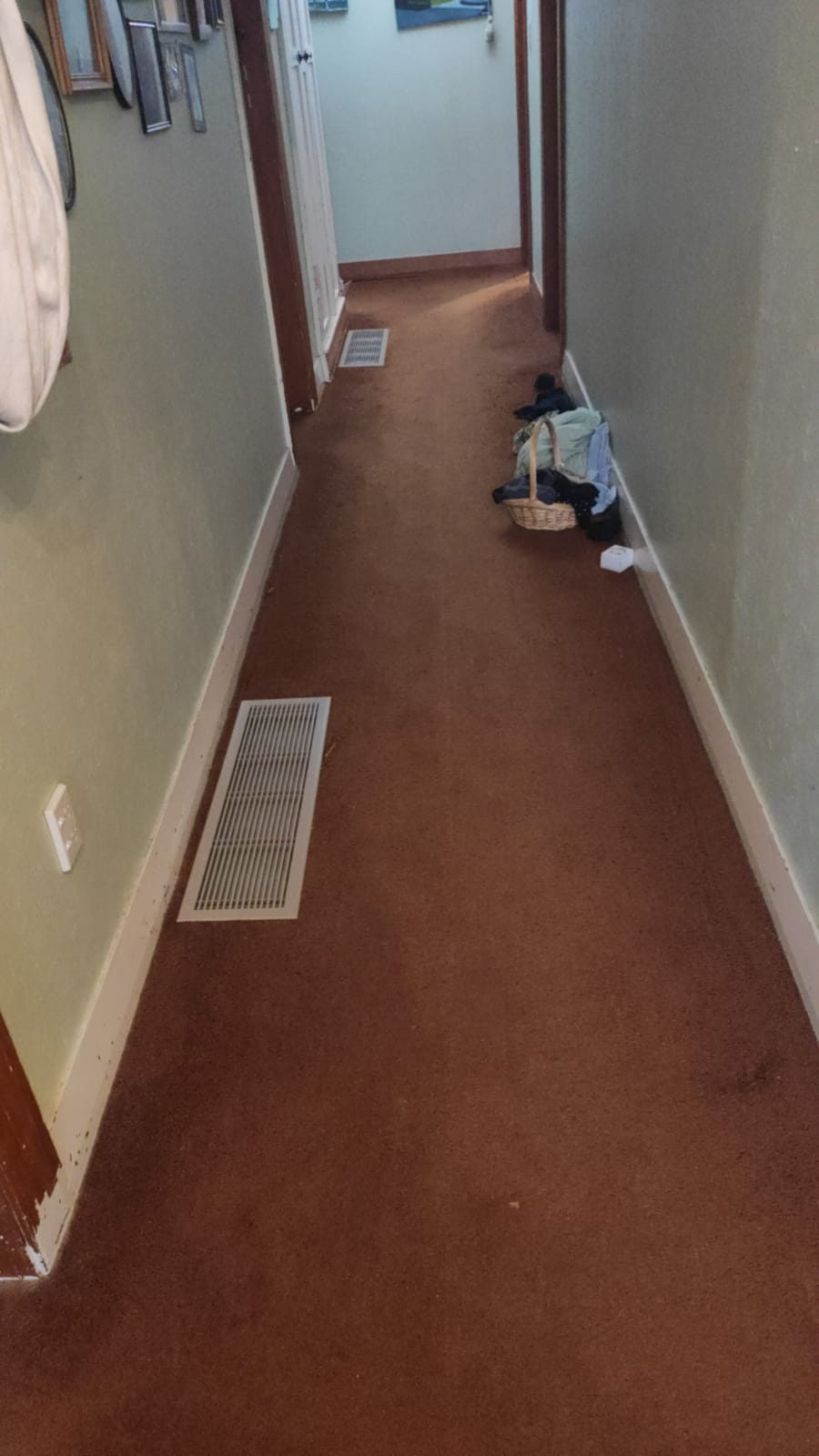
The underfloor distribution unit is located under the inlets in the hallway and I have insulated the floor
the fan is audible if under the house in basement.


timmmay
20859 posts

Uber Geek
+1 received by user: 5350

Trusted
Lifetime subscriber

  #3342494 13-Feb-2025 13:33
Send private message

D1023319:


whats a spill zone or a bypass damper?

FYI - I have no drafts when its in operation and can choose from the app various fan speeds
As to turning off unit at choosen temp - as each room has a different temp so that is damper controlled


Have a read of this thread for info about spill / bypass.


I have the Airtouch as well. My Daikin heat pump by default keeps air circulating at a very low speed when the system is in heating mode and is up to heat, but we found that made us feel colder so we had it turned off. The cooling function does similar but it keeps the fan going at low speed with all the air going through the spill zone. Because of our spill zone that didn't work for us.


tweake
2643 posts

Uber Geek
+1 received by user: 1138


  #3342544 13-Feb-2025 17:10
Send private message

D1023319:


just a small point regardless of system, don't run aircon to cold in kiwi homes, especially in humid areas.  you can cool the gib down enough that humidity will condense on the back side of it and can start growing mold where you can't see it.


D1023319
527 posts

Ultimate Geek
+1 received by user: 90

ID Verified

  #3342875 14-Feb-2025 14:26
Send private message

tweake:


just a small point regardless of system, don't run aircon to cold in kiwi homes, especially in humid areas.  you can cool the gib down enough that humidity will condense on the back side of it and can start growing mold where you can't see it.


With all due respect I disagree
While it may be true for cold liquid in a glass - its doesn't apply to air-conditioned homes.

Cooling rooms has enabling people to live and sleep.
I do not believe that mold is a risk as gib has low thermal transfer properties.  I have not found any research that says otherwise in a housing context.

Plus since we have had the Aircon installed - we no longer have any mold in the bathroom.
And thats using the aircon for heating and cooling without the dehumidifying function.


tweake
2643 posts

Uber Geek
+1 received by user: 1138


  #3342944 14-Feb-2025 17:37
Send private message

D1023319:


With all due respect I disagree
While it may be true for cold liquid in a glass - its doesn't apply to air-conditioned homes.

Cooling rooms has enabling people to live and sleep.
I do not believe that mold is a risk as gib has low thermal transfer properties.  I have not found any research that says otherwise in a housing context.

Plus since we have had the Aircon installed - we no longer have any mold in the bathroom.
And thats using the aircon for heating and cooling without the dehumidifying function.


you need to do a lot more research.


branz even has an article and even some good photos of condensation on the back of gib.


its a very common problem overseas, eg usa, where warm moist air meets cold walls/ceilings etc. also gib is not exactly insulation, its gets cold alright. the problem here is the gib is exposed to the outside. moist air can get access to the back of the gib and if its humid enough, run aircon cold enough, it most certain will condensate.


you can certainly cool rooms just fine, just don't run it to cold for the outdoor humidity. stay above the dew point.


D1023319
527 posts

Ultimate Geek
+1 received by user: 90

ID Verified

  #3343744 17-Feb-2025 14:27
Send private message

tweake:


you need to do a lot more research.


branz even has an article and even some good photos of condensation on the back of gib.


its a very common problem overseas, eg usa, where warm moist air meets cold walls/ceilings etc. also gib is not exactly insulation, its gets cold alright. the problem here is the gib is exposed to the outside. moist air can get access to the back of the gib and if its humid enough, run aircon cold enough, it most certain will condensate.


you can certainly cool rooms just fine, just don't run it to cold for the outdoor humidity. stay above the dew point.


Can you please provide link to the Branz article that shows photos of condensation on the back of gib caused by a heatpump cooling a room as I am genuinely interested
I have looked but cannot find it.


Shop now for Dell laptops and other devices (affiliate link).
tweake
2643 posts

Uber Geek
+1 received by user: 1138


  #3343791 17-Feb-2025 17:41
Send private message

sure if i can find it again and they havn't pulled it.


https://d39d3mj7qio96p.cloudfront.net/media/documents/SR344_Vapour_control_in_New_Zealand_walls.pdf  is similar but not the one i was referring to. the one i was referring to was actually on the effect of smart vapor retarders. tho thats covered in this to a degree "The only walls that did not reach 100% humidity were those that had a smart vapour retarder" but also keep in mind humidity was limited to 70% which is kinda low for many places.


the effect of aircon on that is by extension. if you have walls that already condensate internally, or high humidity in the walls, then you cool the gib/wall down below dew point. simple science says condensation will occur. what was interesting is the condensation soaked in, and no doubt dried out in the heat of the day. as long as drying exceeds wetting, its fine. however when you cool it down you can remove a lot of the drying protentional. (and no aircon doesn't dehumidify our homes all that much due to air leakage.)


so if you have high humidity due to where you are, air leaky walls with poorly done insulation which is the norm, cooling those walls/gib down below dew point is problematic. how much of a problem will depend how long it stays cooled, house usage etc.


1 | 2 
View this topic in a long page with up to 500 replies per page Create new topic


Geekzone Live »

Try automatic live updates from Geekzone directly in your browser, without refreshing the page, with Geekzone Live now.


Are you subscribed to our RSS feed? You can download the latest headlines and summaries from our stories directly to your computer or smartphone by using a feed reader.