Geekzone: technology news, blogs, forums
Guest
Welcome Guest.
You haven't logged in yet. If you don't have an account you can register now.


mattwnz

20515 posts

Uber Geek
+1 received by user: 4795


#257097 15-Sep-2019 00:27
Send private message

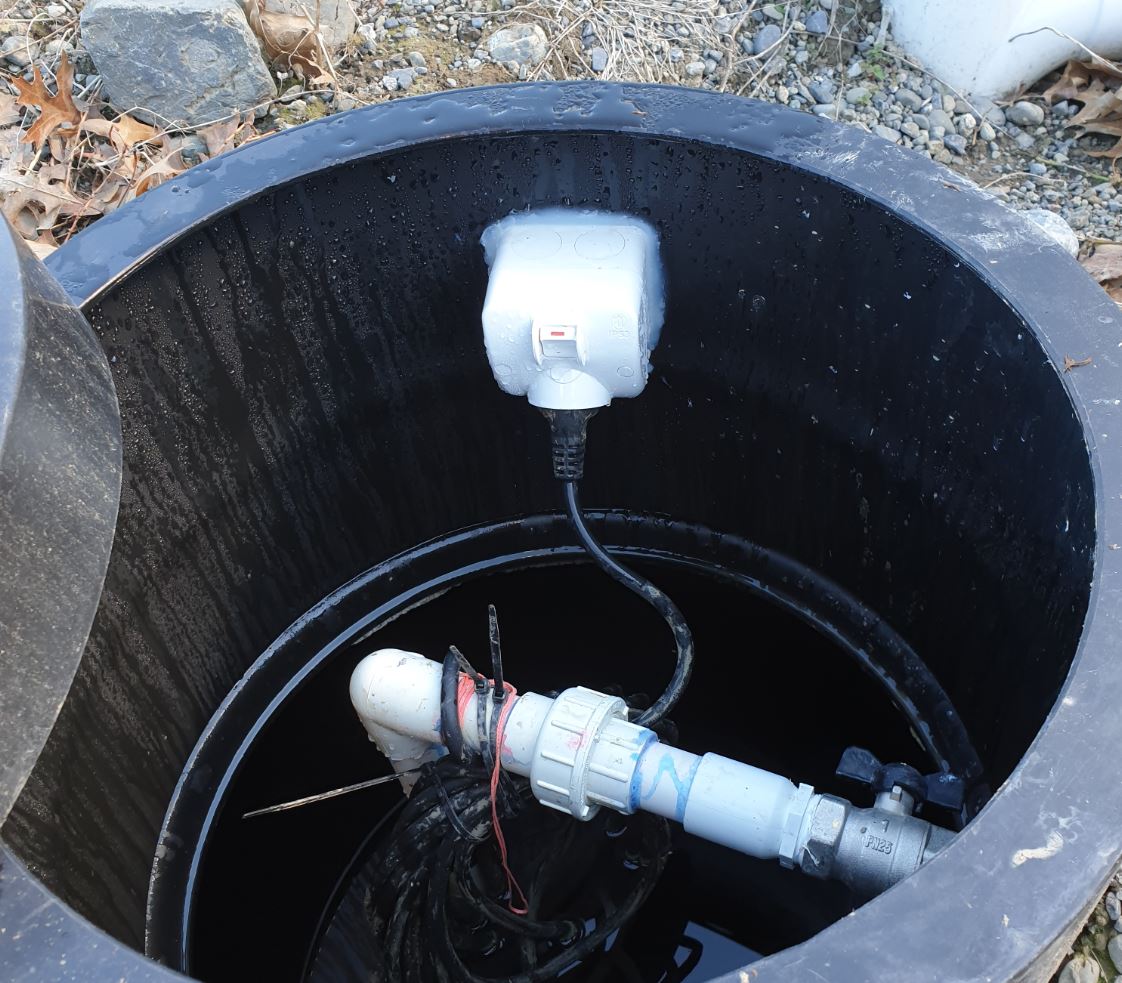
We have had an underground water tank to collect rainwater off the roof. This has a submersible pump with the electrician has wired up for. We noticed however that the electrician installed an IP 53 rated power socket on the wall of the plastic inspection hatch at the top of  water tank, as shown in the photo below. Yes that is waste just below it.  I would have thought it would have made sense to hard wire the pump into a high IP related waterproof connector box. I am not sure if the switch is on an RCD or not, however the plug and socket is always wet with condensation due to the high humidity inside a water tank. I didn't think electricity and water are a good mix when it comes to power points and plugs in wet areas. I am also concerned about durability of the plugs prongs and socket corroding after a short period of time. If I pull the pumps plug out of the socket, it is all soaked on the back of the plug where the prongs are, due to the humidity. Anyone know if how this has been done correct or the best way to do it?


View this topic in a long page with up to 500 replies per page Create new topic

This is a filtered page: currently showing replies marked as answers. Click here to see full discussion.

gregmcc
2173 posts

Uber Geek
+1 received by user: 836

ID Verified
Trusted
Lifetime subscriber

  #2317991 15-Sep-2019 06:08
Send private message

mattwnz:


We have had an underground water tank to collect rainwater off the roof. This has a submersible pump with the electrician has wired up for. We noticed however that the electrician installed an IP 53 rated power socket on the wall of the plastic inspection hatch at the top of  water tank, as shown in the photo below. Yes that is waste just below it.  I would have thought it would have made sense to hard wire the pump into a high IP related waterproof connector box. I am not sure if the switch is on an RCD or not, however the plug and socket is always wet with condensation due to the high humidity inside a water tank. I didn't think electricity and water are a good mix when it comes to power points and plugs in wet areas. I am also concerned about durability of the plugs prongs and socket corroding after a short period of time. If I pull the pumps plug out of the socket, it is all soaked on the back of the plug where the prongs are, due to the humidity. Anyone know if how this has been done correct or the best way to do it?



This is non compliant, this is a fixed water container, AS/NZS3000: 6.2.4.2 does not allow any sockets in zone 0 (zone 0 is in a fixed water container). ask your electrician for a CoC and an ESC saying it is safe and point out this clause, tell them to fix it.


gregmcc
2173 posts

Uber Geek
+1 received by user: 836

ID Verified
Trusted
Lifetime subscriber

  #2318230 15-Sep-2019 20:58
Send private message

Basically nothing electrical is allowed inside a water container (shower/bath/tub/pool etc) unless it has been specifically designed for the application (such as a underwater pool light or a water heater element) so no sockets, switches or permanent connections.


If it was me I would be on the phone 1st thing in the morning with a please explain as to why this blatantly dangerous socket was put in there. If they don't turn up ASAP go right to the EWRB with a complaint.


But most of all make sure this does not get used until it is fixed - it is a death trap waiting to kill someone, I would put good money this is not on a RCD as there would be constant nuisance tripping.


View this topic in a long page with up to 500 replies per page Create new topic


Geekzone Live »

Try automatic live updates from Geekzone directly in your browser, without refreshing the page, with Geekzone Live now.


Are you subscribed to our RSS feed? You can download the latest headlines and summaries from our stories directly to your computer or smartphone by using a feed reader.