Geekzone: technology news, blogs, forums
Guest
Welcome Guest.
You haven't logged in yet. If you don't have an account you can register now.


View this topic in a long page with up to 500 replies per page Create new topic
1 | ... | 10 | 11 | 12 | 13 | 14 | 15 | 16 | 17 | 18 | 19 | 20 | ... | 25
AlDrag

280 posts

Ultimate Geek
+1 received by user: 27


  #3325148 27-Dec-2024 20:13
Send private message quote this post

They came today to finish off the install. I requested them to put the outdoor unit above the existing one via a stand originally. I didn't want it braced into the external cladding in case it resonated and annoyed me inside the house.
I do admit, this is pretty ugly (industrial look), and looked cleaner in the marketing pictures, but oh well. Function over looks hahaha... 


Had a talk with them about our cooling problems. The bypass damper still needs replacing, as he said it isn't fully closing. So that I suspect means I'm being robbed of some throughput. Probably not the sole reason for the performance issues.


He said he will try increase the static pressure when he comes to replace the damper. I did tell him about the fact the unit isn't turning off when at tempt, but will do more testing to be sure.


I remember my mates place in Brisbane, Australia, when he turns his central heatpump on, the return grille is super loud. I don't know what setting he had on, but I suspect it's high fan speed?
When I have high fan speed on, it's louder, but it's still very much a low background noise, so maybe my static pressure really is way too low? Unless my mates setup is abnormal (it was a much bigger house).


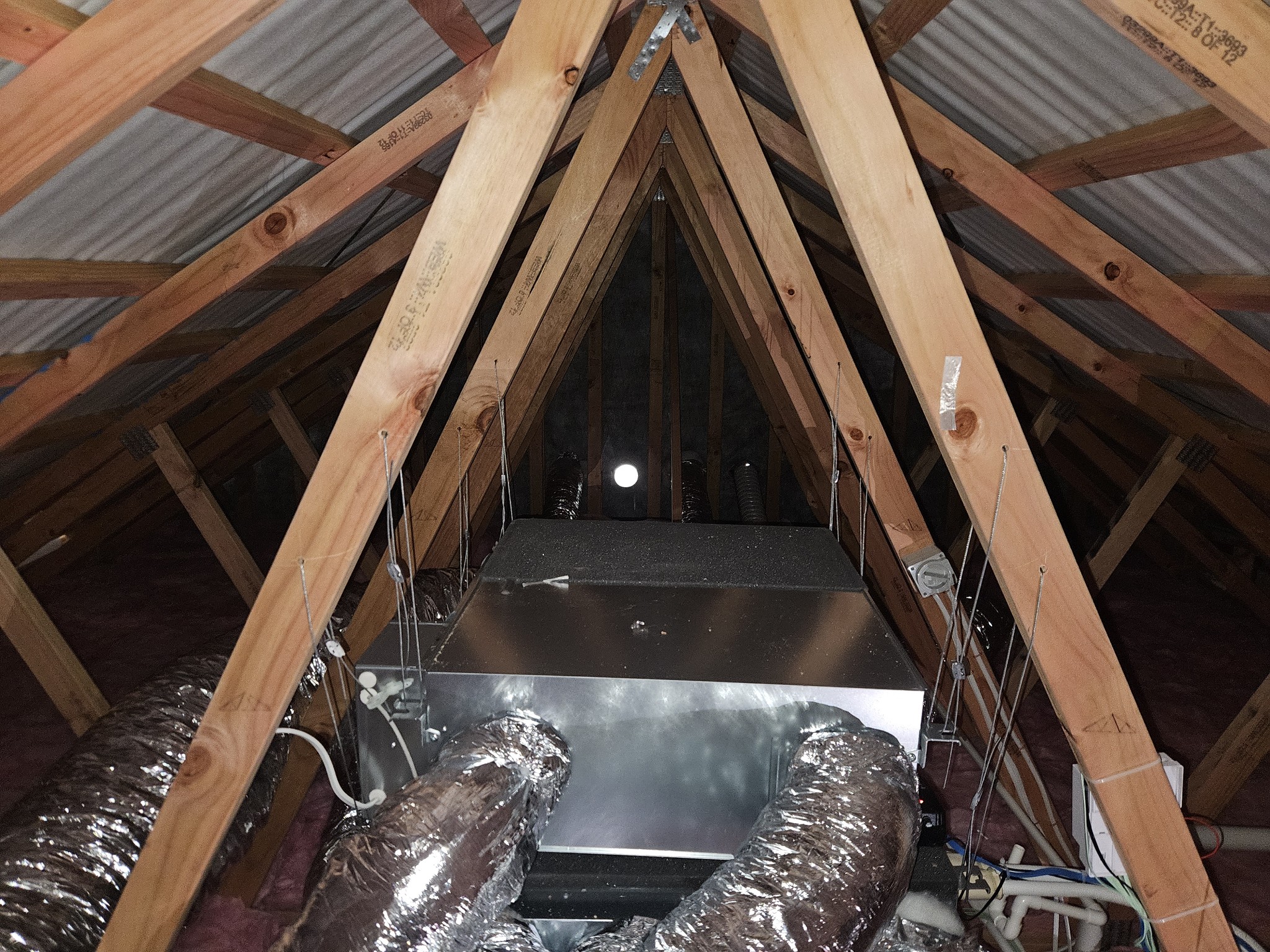
Here's a picture of the setup in the attic. Haven't had a walk around yet, but probably will do when they come around next.


timmmay
20859 posts

Uber Geek
+1 received by user: 5350

Trusted
Lifetime subscriber

  #3325149 27-Dec-2024 20:19
Send private message quote this post

The bypass damper is probably a significant issue. It's basically making a fraction of the air loop from the heat pump output back to the input, pushing the air out and sucking it back in so I guess a LOT of air will be going that way rather than through the house. How much air is coming out your diffusers? With only one room on, on low, is it comparable to a high wall heat pump? It should be similar. Also check if your ceilings are being cooled but the floor isn't, heat stratification.


AlDrag

280 posts

Ultimate Geek
+1 received by user: 27


  #3325157 27-Dec-2024 20:47
Send private message quote this post

timmmay:


The bypass damper is probably a significant issue. It's basically making a fraction of the air loop from the heat pump output back to the input, pushing the air out and sucking it back in so I guess a LOT of air will be going that way rather than through the house. How much air is coming out your diffusers? With only one room on, on low, is it comparable to a high wall heat pump? It should be similar. Also check if your ceilings are being cooled but the floor isn't, heat stratification.


Na no where near similar to a high wall. Wow lower air flow.

I will try get my two heat sensors working for ceiling and floor.


I think you're right. I don't know much physics, but I suspect even with a small gap in the bypass damper, there would be significant loss. I don't know if it's 50/50 regardless of the gap though, I need to relearn physics haha.


timmmay
20859 posts

Uber Geek
+1 received by user: 5350

Trusted
Lifetime subscriber

  #3325158 27-Dec-2024 20:50
Send private message quote this post

I think hold off judgement until that damper is fixed. It could be the only problem. Not much point doing measurements until they fix that.


tweake
2647 posts

Uber Geek
+1 received by user: 1139


  #3325160 27-Dec-2024 20:54
Send private message quote this post

see if you can get up there and get pics of the erv install, especially if any wiring goes from it to the heat pump. if you can open the panel and get a pic of the dip switches, i can work out how its setup. if the erv isn't set right it could be putting a lot of hot air into the heat pump.


also check/ask if they gased the heat pump properly. i did a quick look in the install manual and those units only have enough gas for a 7m long pipe. after that they have to add extra gas, otherwise you will get reduced performance. 


i'm a little concerned at the static pressure comment. the only way to increase that is to increase the fan speed, but fan speed should already be at max. if you run slower fan speed, you get more moisture removal but a reduction in cooling air.


AlDrag

280 posts

Ultimate Geek
+1 received by user: 27


  #3325192 28-Dec-2024 00:56
Send private message quote this post

Ok I'll see if I can get into the attic and get a pick of the ERV details.

One oddity I've noticed, when I run the heatpump in fan-only mode, the humidity increases pretty fast (I have a room humidity sensor). I don't know what could cause that though....

Edit; after about 15mins in fan mode, temperature basically stayed the same (it is colder outside atm) but the relative humidity jumped from a stable 53% to 57%


Shop now on AliExpress (affiliate link).
timmmay
20859 posts

Uber Geek
+1 received by user: 5350

Trusted
Lifetime subscriber

  #3325206 28-Dec-2024 08:37
Send private message quote this post

When a heat pump is been on cooling mode there's a lot of condensation on the coils on the indoor unit. This is drained through a pipe going outside. However, not all the water can drain due to surface tension and such. So after being in air conditioning mode for a while there's probably quite a bit of water in there. If you go to heating mode you'll get a LOT of humidity for 15 minutes while the water in there evaporates. Similar may be happening in fan mode.


AlDrag

280 posts

Ultimate Geek
+1 received by user: 27


  #3325210 28-Dec-2024 08:57
Send private message quote this post

timmmay:

When a heat pump is been on cooling mode there's a lot of condensation on the coils on the indoor unit. This is drained through a pipe going outside. However, not all the water can drain due to surface tension and such. So after being in air conditioning mode for a while there's probably quite a bit of water in there. If you go to heating mode you'll get a LOT of humidity for 15 minutes while the water in there evaporates. Similar may be happening in fan mode.


That makes a lot of sense. When I woke up, the house was still basically at the same temp, but the relative humidity actually dropped to I think 56 or 54.

peng1nz
49 posts

Geek
+1 received by user: 15


  #3325426 28-Dec-2024 17:33
Send private message quote this post

I do admit, this is pretty ugly (industrial look), and looked cleaner in the marketing pictures


Consider covering the whole lot with an air con cover. Various commercial options are available or I've seen DIY using decking timber as slats which looked good. 


Kickinbac
468 posts

Ultimate Geek
+1 received by user: 93


  #3325480 28-Dec-2024 18:54
Send private message quote this post

peng1nz:

I do admit, this is pretty ugly (industrial look), and looked cleaner in the marketing pictures


Consider covering the whole lot with an air con cover. Various commercial options are available or I've seen DIY using decking timber as slats which looked good. 


Don’t use decking timber! For efficiency and performance you need as much unrestricted airflow through the unit as possible.
The covers are good and approved by Mitsubishi Electric but they are not cheap!
https://www.heatpumpcovers.com/

AlDrag

280 posts

Ultimate Geek
+1 received by user: 27


  #3325807 29-Dec-2024 12:23
Send private message quote this post

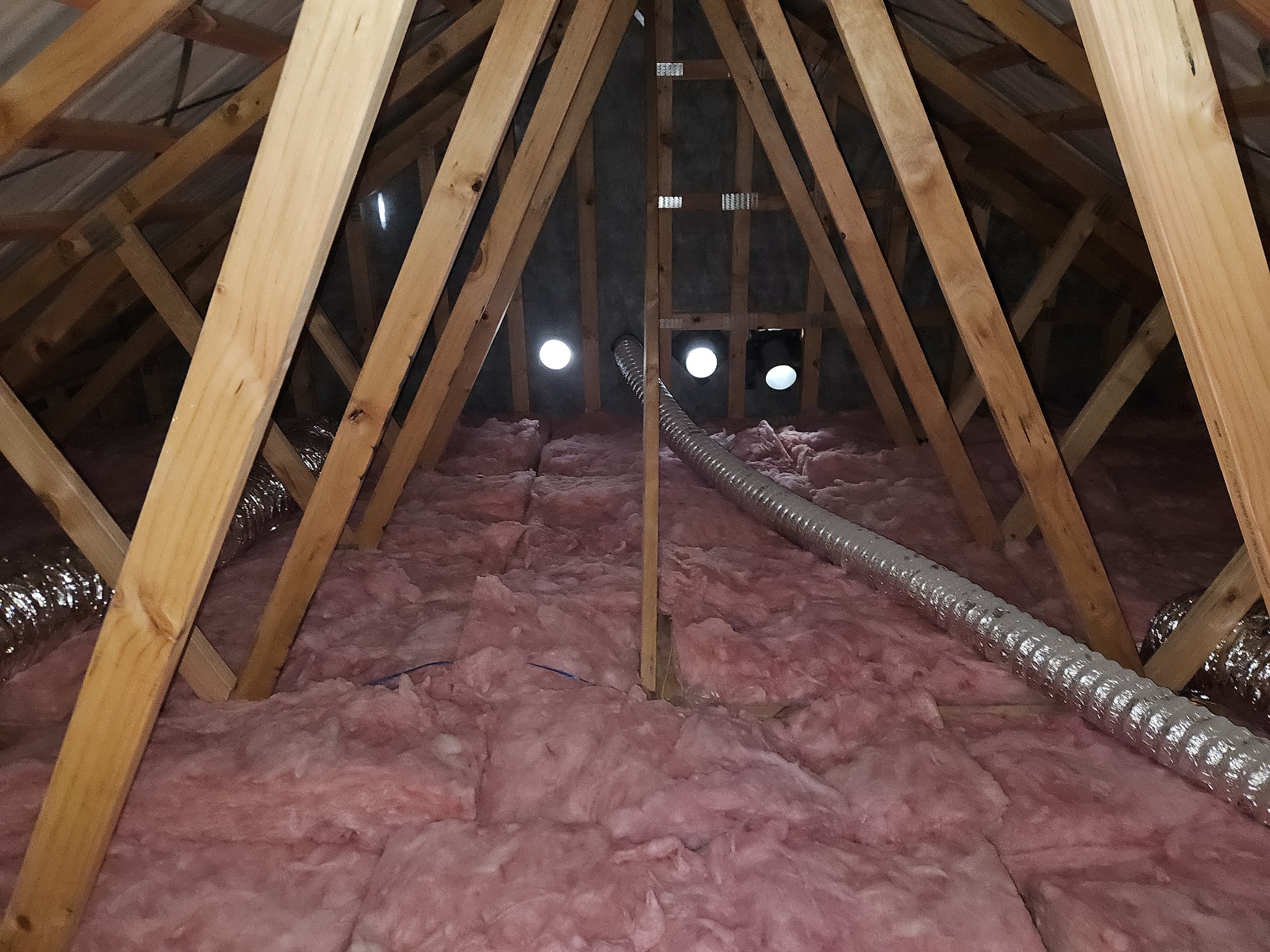
So I've had a quick look in the attic. Haven't looked at the unit itself yet, but might do tonight.

I think I can see that the intake and outtake for the ERV is right next to each other. Basically using the roof vents that are right next to each other, maybe 30cm apart. Surely that's a stupid idea?

HP


Shop now for HP laptops and other devices (affiliate link).
tweake
2647 posts

Uber Geek
+1 received by user: 1139


  #3325808 29-Dec-2024 12:35
Send private message quote this post

AlDrag: So I've had a quick look in the attic. Haven't looked at the unit itself yet, but might do tonight.

I think I can see that the intake and outtake for the ERV is right next to each other. Basically using the roof vents that are right next to each other, maybe 30cm apart. Surely that's a stupid idea?


yes thats a very stupid idea and just lazy. air intake vents must be well apart from any exhaust vent. eg in some places in usa there is a code requirement for the distance the intake is away from an exhaust.


its easy enough to stick them at opposite ends of the roof. i would put the intake well away from any of the exhaust (bathroom, kitchen etc).


AlDrag

280 posts

Ultimate Geek
+1 received by user: 27


  #3325892 29-Dec-2024 14:09
Send private message quote this post

Oh ffs. The stress of all this is going to kill me haha....

AlDrag

280 posts

Ultimate Geek
+1 received by user: 27


  #3325962 29-Dec-2024 15:24
Send private message quote this post

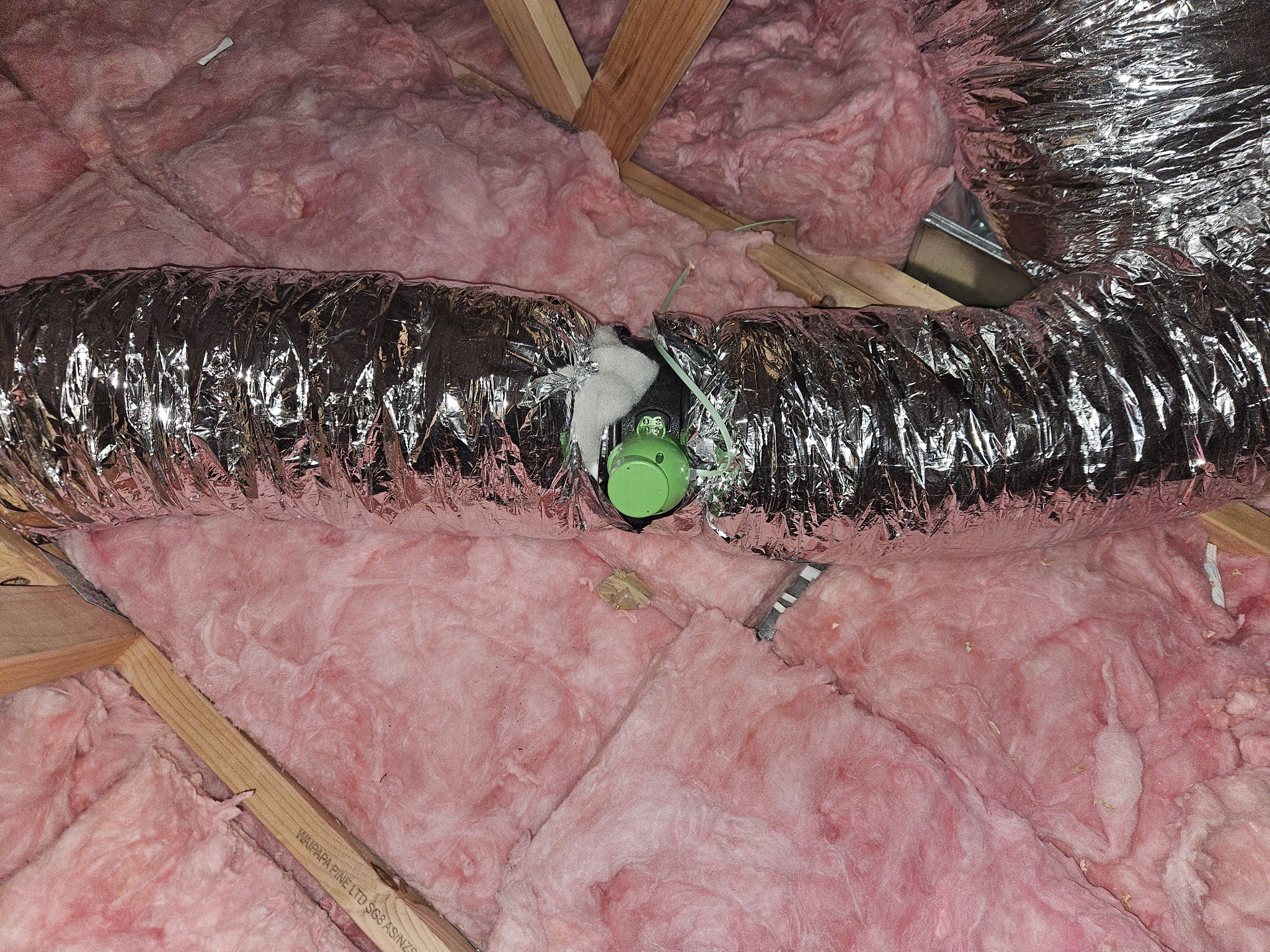
Here's some pictures of the vents. The far right vent is the ensuite bathroom extraction fan.
The other 2 are the Lossnay. Not sure which is intake/outtake.
The otherside of the attic has just the 1 bathroom extraction duct.

So I guess they were limited by options anyway. I assume the best solution is to have the extraction all on the east side of the house (where there is only the 1 bathroom exhaust vent) and all the intake on the otherside.

I guess that'd cost extra, which is fair enough, maybe not trivial. But it'd be nice if they told me about it.

So the Lossnay intake/outtake is about a metre apart.


Kickinbac
468 posts

Ultimate Geek
+1 received by user: 93


  #3325963 29-Dec-2024 15:26
Send private message quote this post

AlDrag: So I've had a quick look in the attic. Haven't looked at the unit itself yet, but might do tonight.

I think I can see that the intake and outtake for the ERV is right next to each other. Basically using the roof vents that are right next to each other, maybe 30cm apart. Surely that's a stupid idea?


I went back to look at the photo of your house gable. There are four cowls. At the minimum the supply and exhaust cowls should use the outer cowls which looks about 1 metre separation.
AS/NZS1668.2 prescribes that at less than 200 L/s the minimum separation between discharge and intake is 1 metre.
What are the other two cowls doing? I think you said the bathroom exhaust was now being done by the Lossnay?
A good design practice is to have the supply and exhaust on the same side of the building so that any wind pressure is the same. lol I didn’t do this on my home as it was not practical.

1 | ... | 10 | 11 | 12 | 13 | 14 | 15 | 16 | 17 | 18 | 19 | 20 | ... | 25
View this topic in a long page with up to 500 replies per page Create new topic


Geekzone Live »

Try automatic live updates from Geekzone directly in your browser, without refreshing the page, with Geekzone Live now.


Are you subscribed to our RSS feed? You can download the latest headlines and summaries from our stories directly to your computer or smartphone by using a feed reader.