Geekzone: technology news, blogs, forums
Guest
Welcome Guest.
You haven't logged in yet. If you don't have an account you can register now.


View this topic in a long page with up to 500 replies per page Create new topic
1 | 2 | 3
WanaGo

153 posts

Master Geek
+1 received by user: 7


  #2994585 11-Nov-2022 09:39
Send private message

Scott3:


I would just own the appearance of an industrial-style switch.


I think the below would look good mounted on a wall near the cooker. Lets face it, that cooker look pritty serious in it's own right:


PDL PDL56SW3632LECG Switch 2Gang 63A 3P 500V IP66 Chemical Grey -  SHOWTECHNIX


https://www.pdl.co.nz/products/detail?CatNo=PDL56SW3632LE&itemno=PDL56SW3632LECG&tab-document-1=0


https://www.showtechnix.co.nz/store/pdl-pdl56sw3632lecg-switch-2gang-63a-3p-500v-ip66-chemical-grey/
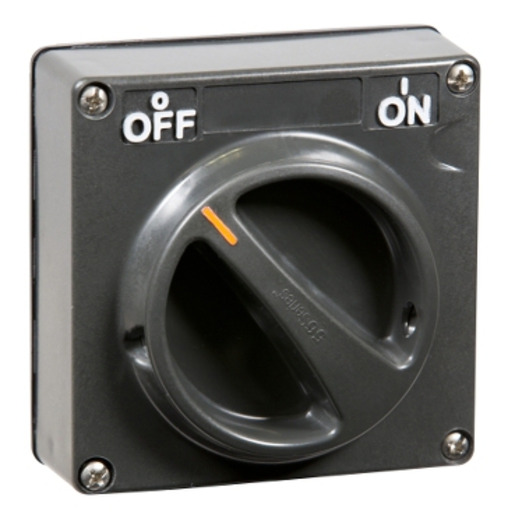


Thanks - but the Wife did a hard No. No keen on an industrial switch like that at all.


WanaGo


WanaGo

153 posts

Master Geek
+1 received by user: 7


  #2994586 11-Nov-2022 09:50
Send private message

Scott3:


I would say, if you have three phase, might as well use it.

Not sure of how the 70A load balanced between phases, but if it is even, it would be 23A per phase, well within the 32A that the existing 6mm^2 run can provide (just need two more cores).

If the load is evenly spread, doing two phase, would have L1 at 23A, and L2+L3 (bridged) at 46A, the latter likely requiring a wire fatter than the common 6mm^2. (And would need to go on a phase that is otherwise lightly loaded)

Altering the appliance to improve load balance doesn't really seem worth it to save a single core of 6mm cable, given wire is already being pulled.


I would agree to running the 3 phase, if there was a residential switch that looked good, that did 3 phase, but there just does not seem to be one.


So I think I am stuck with doing 2 phase or at least 2 circuit, via one of the previously mentioned switches, 2x 32A circuits over 6.0mm TPS etc, and go with that.


Contemplating the contactor which I also put in my first post, single phase switch which switches the contactor on and off, and then 3 phases through the contactor to the oven. But that is more parts.


Seems stupid there is not a residential 3 phase switch to cope with ovens like this.


WanaGo


k1w1k1d
1713 posts

Uber Geek
+1 received by user: 1312


  #2994690 11-Nov-2022 12:59
Send private message

"My reading is that a contactor isn't strictly compliant. The switch has to operate in all active conductors."


Not an ac sparky, but couldn't a 3-pole contactor be considered as a switch operating all active conductors? It just uses a magnetic coil rather than a finger to operate.


WanaGo

153 posts

Master Geek
+1 received by user: 7


  #2994696 11-Nov-2022 13:04
Send private message

k1w1k1d:


"My reading is that a contactor isn't strictly compliant. The switch has to operate in all active conductors."


Not an ac sparky, but couldn't a 3-pole contactor be considered as a switch operating all active conductors? It just uses a magnetic coil rather than a finger to operate.


Thats what I was contemplating already yes. 3 poles switching all 3 phases to the oven from the switchboard, and then just a single pole switch turning the contactor on and off. Certainly would make the whole switch arrangement easier, but then just have to have a 3 pole contactor in the ceiling space or in the meter box I guess.


WanaGo


k1w1k1d
1713 posts

Uber Geek
+1 received by user: 1312


  #2994721 11-Nov-2022 13:44
Send private message

We looked at an inductive cooktop when replacing our kitchen, a couple of years ago. We went through all the options but decided on ceramic. Less hassles to install in a 1950's single phase house. We also didn't have to replace all our copper bottom pots.


The new top and range have been relocated and are not directly below the switch anymore. We don't have to reach through the inferno to switch them off. Probably a rule now on where the switch has to be fitted? 


WanaGo

153 posts

Master Geek
+1 received by user: 7


  #2994725 11-Nov-2022 13:57
Send private message

k1w1k1d:


We looked at an inductive cooktop when replacing our kitchen, a couple of years ago. We went through all the options but decided on ceramic. Less hassles to install in a 1950's single phase house. We also didn't have to replace all our copper bottom pots.


The new top and range have been relocated and are not directly below the switch anymore. We don't have to reach through the inferno to switch them off. Probably a rule now on where the switch has to be fitted? 


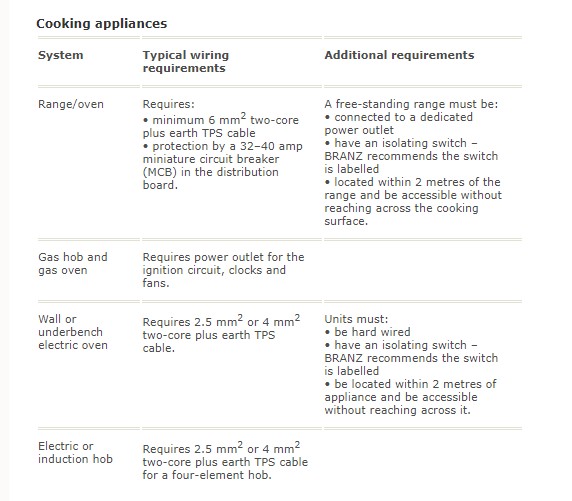
Maybe someone with more knowledge than me on the subject will reply exactly, but this is what I found on that


WanaGo


Shop now at Mighty Ape (affiliate link).
WanaGo

153 posts

Master Geek
+1 received by user: 7


  #2994727 11-Nov-2022 14:04
Send private message

Regarding the whole 3-phase Contactor, with a single phase switch activating it, 3 phases from switchboard MCB to Oven - found this


https://trindservice.co.nz/Products/cwb-contactors/32A-3-Pole-CWB-Contactor-240Vac-coil.html


Something like that should be fine I would think, right? 32A overkill for each phase, could it go down to 25A or 18A? 
https://trindservice.co.nz/Products/cwb-contactors/?range=7,12,18 


Anyone know of a better solution? $270 + gst for the 32A contactor thats all.


2-phase / 2-circuit via the previously mentioned switches, still seems cheaper and likely totally fine too.


WanaGo


SomeoneSomewhere
1882 posts

Uber Geek
+1 received by user: 1086

Lifetime subscriber

  #2994911 11-Nov-2022 21:26
Send private message

> shall be provided with a switch, operating in all active conductors, mounted near the appliance in a visible and readily accessible position.


Still not sold on the contactor idea. 


I would go with the two phase option and just bridge two of the phases, probably L1 & L2 looking at the diagrams. 


I would personally want to use a two-pole breaker, not two separate single poles. 


You could also consider one of these mounted into a blank plate, which may have a slightly higher WAF. Or a slightly plainer switch operator, or a similar product from ABB.


Daynger
444 posts

Ultimate Geek
+1 received by user: 313


  #2994912 11-Nov-2022 21:32
Send private message

WanaGo:


k1w1k1d:


We looked at an inductive cooktop when replacing our kitchen, a couple of years ago. We went through all the options but decided on ceramic. Less hassles to install in a 1950's single phase house. We also didn't have to replace all our copper bottom pots.


The new top and range have been relocated and are not directly below the switch anymore. We don't have to reach through the inferno to switch them off. Probably a rule now on where the switch has to be fitted? 


Maybe someone with more knowledge than me on the subject will reply exactly, but this is what I found on that


Where did you dig this up from?


Im picking its not from the actual wiring rules as there are a few inaccuracies or easily misinterpreted bullet points there.


SomeoneSomewhere
1882 posts

Uber Geek
+1 received by user: 1086

Lifetime subscriber

  #2994914 11-Nov-2022 21:35
Send private message

Yeah. AFAIK there's no requirement for underbench ovens to be hardwired; they're just not required to be on a plug. Also not required to have an isolation switch, but it's good practice to have a switch. Almost none of the switches in domestic use actually meet the requirements to act as isolation, and even range switches are not required to be isolating switches. 


Electric or induction hob generally needs a bigger cable, and does have a requirement to be switched. 


The regs do require the switch to be labelled.


Looks like BRANZ adding as much value as they usually do.


Daynger
444 posts

Ultimate Geek
+1 received by user: 313


  #2994915 11-Nov-2022 21:37
Send private message

Run a 2.5mm 4c+E from the switchboard to the hob. (EDIT may need a 4mm 4c+E depending on instructions and distance to switchboard.)


Run a 1.0mm 3c from the switchboard to a handy power point.


Use an 25a 4p contactor from ABB, acti9, finder etc.


1.0mm 3c cable is used to switch the contactor.


I have done new build kitchens like this for a few years, saves having lots of isolation switches  with lots of heavy cables to get behind them.


Want to support Geekzone and browse the site without the ads? Subscribe to Geekzone now (monthly, annual and lifetime options).
SomeoneSomewhere
1882 posts

Uber Geek
+1 received by user: 1086

Lifetime subscriber

  #2994917 11-Nov-2022 21:39
Send private message

Questionable compliance re 4.7.1 though. I would argue it requires the switch to directly interrupt the actives, not via a contactor. I would generally be happy enough with the contactor, though.


Daynger
444 posts

Ultimate Geek
+1 received by user: 313


  #2994929 11-Nov-2022 21:48
Send private message

SomeoneSomewhere:


Questionable compliance re 4.7.1 though. I would argue it requires the switch to directly interrupt the actives, not via a contactor. I would generally be happy enough with the contactor, though.


Nah, as long as the contactor is NO contacts i consider it fine as it will fail safe.


Never do it with NC contactors as a failure of the contactor control circuit puts power on to the appliance with no way of isolation except via the MCB.


Operation of the switch interrupts the actives.


MadEngineer
4591 posts

Uber Geek
+1 received by user: 2570

Trusted

  #2996422 15-Nov-2022 08:54
Send private message

The standard PDL “Hob” mech switches are 32A


You're not on Atlantis anymore, Duncan Idaho.

Nath5
4 posts

Wannabe Geek
+1 received by user: 2


  #2998250 18-Nov-2022 21:55
Send private message

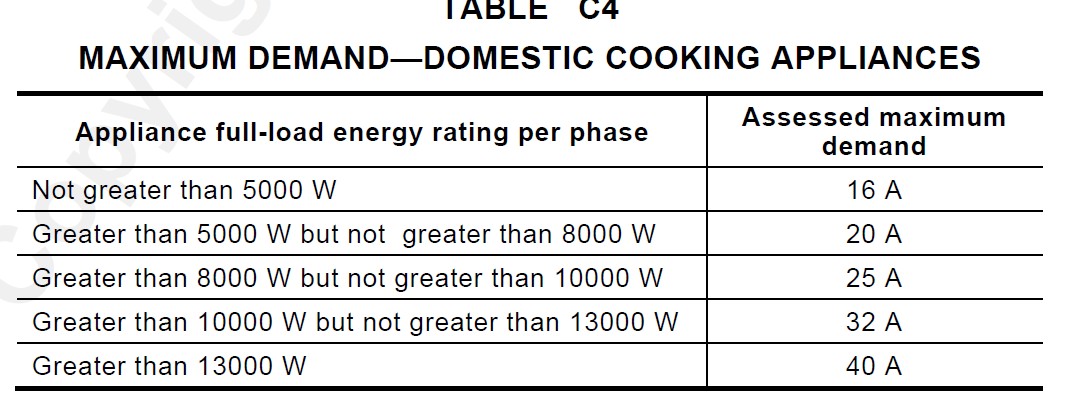
According to the electrical standards you only need to allow 40amps for cooking appliances greater than 13000W


If your sparky runs another 6mm cable and parallels up the conductors that will be more than enough to allow for the 40 amps on one phase and means that you dont have to alter the cooker wiring which may or may not affect the warranty.


Now the next mission will be to find a 40amp plug and socket to plug it in, you might have to put a commercial plug and socket in a cupboard next to it or another option is under the toe kick although thats a bit fiddly 


1 | 2 | 3
View this topic in a long page with up to 500 replies per page Create new topic


Geekzone Live »

Try automatic live updates from Geekzone directly in your browser, without refreshing the page, with Geekzone Live now.


Are you subscribed to our RSS feed? You can download the latest headlines and summaries from our stories directly to your computer or smartphone by using a feed reader.